40 years ago November 11, 1986: India reviewing nuclear option
Source Entity
The Indian Express
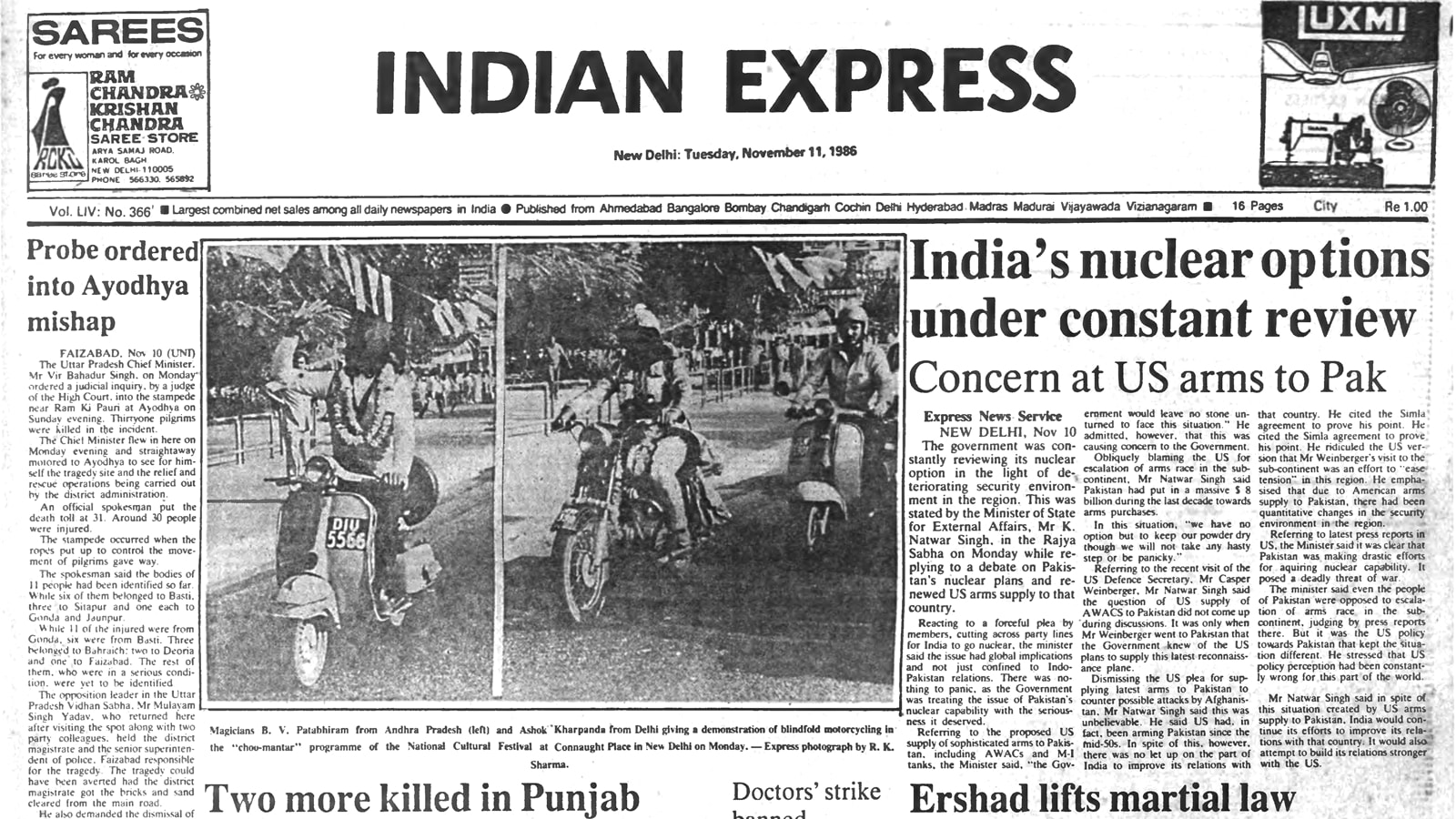
In November 1986, India signaled a strategic review of its nuclear policy amid regional security concerns, while Bangladesh marked a historic return to civilian governance. These events underscore a period of significant geopolitical transition in South Asia during the late 1980s.
A Pivotal Month in South Asian History: November 1986
The Nuclear Debate in the Rajya Sabha
On November 11, 1986, the Indian government, represented by Minister of State for External Affairs K. Natwar Singh, addressed the Rajya Sabha regarding the nation's nuclear policy. Amidst growing concerns over Pakistan’s nuclear ambitions and the resumption of United States arms supplies to Islamabad, the government confirmed it was actively reviewing its nuclear options. This statement reflected the heightened anxieties within the Indian political establishment regarding the regional security architecture.
Strategic Implications of the Nuclear Stance
Minister Natwar Singh emphasized that India’s nuclear considerations were not merely a bilateral issue with Pakistan. Instead, he framed the discourse as having profound global implications. By acknowledging that the government was "constantly reviewing" its position, New Delhi signaled a shift toward a more pragmatic and defensive posture, balancing international non-proliferation pressures with the immediate need to maintain a credible deterrent against evolving regional threats.
Bangladesh: The End of Military Rule
Concurrently, a major political transformation occurred in neighboring Bangladesh, as President Hossain Mohammad Ershad declared the end of four-and-a-half years of military rule. By lifting martial law and renouncing his title as Chief Martial Law Administrator, Ershad initiated a formal process of restoring the suspended constitution. This move was intended to transition the nation back to a democratic framework after years of centralized military authority.
The Interplay of Regional Stability
These two events highlight the volatile nature of South Asian geopolitics in the mid-1980s. While India was grappling with the existential challenges posed by nuclear proliferation and cold-war era proxy dynamics involving the US, Bangladesh was attempting to stabilize its internal governance. The lifting of martial law in Dhaka offered a momentary reprieve from regional authoritarianism, even as India’s security environment remained under significant stress.
Looking Back: A Legacy of Transition
Reflecting on these events four decades later, it is clear that 1986 was a year of profound strategic recalibration. India’s cautious stance on the nuclear option in 1986 laid the intellectual and political groundwork for its eventual transition to an overt nuclear state in 1998. Similarly, the end of Ershad’s martial law set the stage for the democratic struggles that would define Bangladesh's political landscape for the remainder of the 20th century.
Conclusion
The dual developments of India’s nuclear policy review and the restoration of the Bangladeshi constitution illustrate the complexities of nation-building and security management in South Asia. These events serve as a historical benchmark, demonstrating how domestic political shifts and international security pressures have consistently shaped the trajectory of the region.