India blames Pakistan for protests in PoK, seeks accountability
Source Entity
India Latest News: Top National Headlines Today & Breaking News | The Hindu
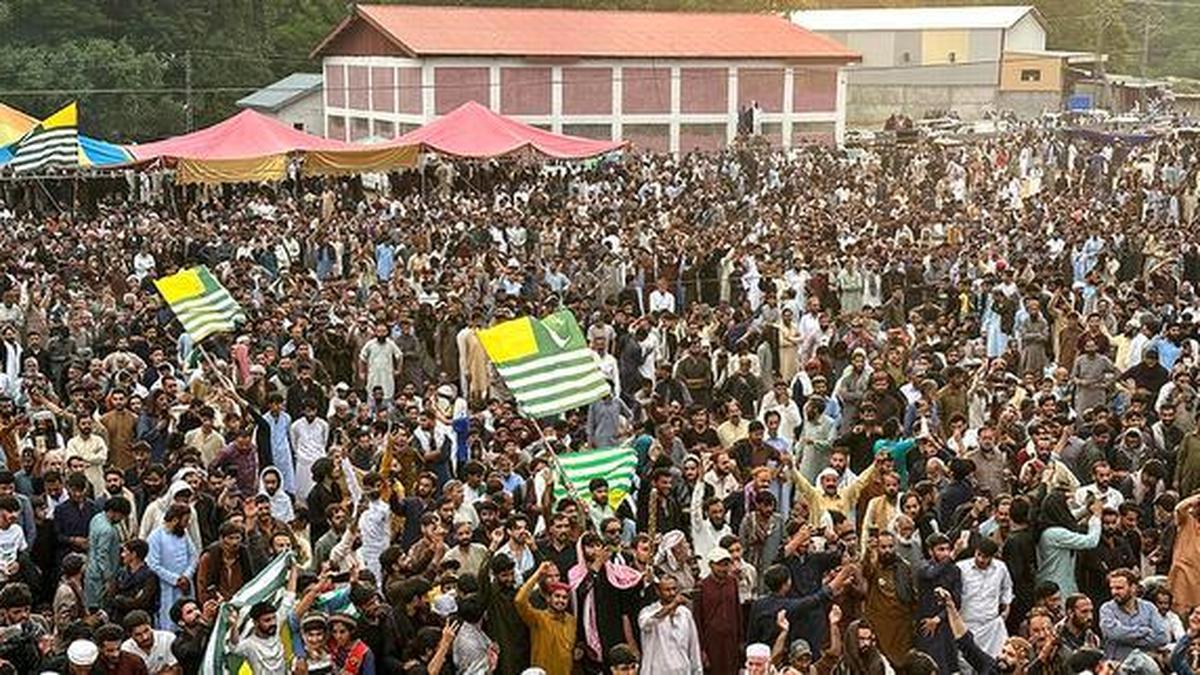
India has urged the international community to hold Pakistan accountable for what it describes as 'egregious abuses and misdeeds' following reports of protests in Pakistan-occupied Kashmir (PoK).
India Demands International Accountability Amid PoK Unrest
In a significant diplomatic escalation, India has formally called upon the international community to hold Pakistan accountable for its actions in Pakistan-occupied Kashmir (PoK). Following reports of widespread protests and civil unrest within the region, the Ministry of External Affairs (MEA) spokesperson emphasized that Pakistan must be held responsible for 'egregious abuses and misdeeds.' This statement underscores New Delhi's strategy of highlighting the internal instability and governance failures within the territories administered by Islamabad, framing the issue not just as a bilateral dispute, but as a matter of international human rights and accountability.
The Catalyst: Unrest in PoK
The protests in PoK typically stem from deep-seated grievances regarding economic mismanagement, exorbitant electricity tariffs, and a perceived lack of political autonomy. When local populations rise against the administration in Islamabad, India views these events as a validation of its long-standing claim that the region is oppressed under Pakistani rule. By amplifying these protests on the global stage, India aims to dismantle the narrative that the residents of PoK are satisfied with the status quo, instead portraying them as victims of a regime that fails to provide basic necessities and fundamental rights.
Diplomatic Strategy and International Pressure
India's insistence on 'international accountability' represents a calculated shift in diplomatic maneuvering. By invoking the global community, India is attempting to internationalize the governance failures of Pakistan. This approach seeks to place Pakistan under a microscope, urging bodies like the United Nations and human rights organizations to scrutinize the 'misdeeds' mentioned by the MEA. This strategy serves a dual purpose: it puts Pakistan on the defensive regarding its internal security apparatus and reinforces India's position as a stable, democratic counterweight in South Asia.
Historical Context of the Kashmir Conflict
To understand the gravity of this statement, one must look at the historical friction since the 1947 partition. The region of Kashmir has been a flashpoint for multiple wars and decades of diplomatic stalemate. While Pakistan maintains that the region should be decided via a plebiscite, India maintains that the entire territory, including PoK, is an integral part of India. The current protests provide India with a timely opportunity to argue that Pakistani administration is not only illegitimate but actively harmful to the local populace, thereby strengthening India's moral and political claim over the territory.
Broader Geopolitical Implications
The timing of this demand for accountability coincides with a period of extreme economic volatility in Pakistan. As the Pakistani state struggles with inflation and debt, its ability to maintain control over PoK through traditional means is being tested. India’s public condemnation adds external pressure to an already fragile internal situation. Furthermore, this move signals to global powers—particularly the United States and China—that India will not remain silent on the human rights situation in PoK, effectively mirroring the international pressure Pakistan often tries to exert on India regarding the administration of Jammu and Kashmir.
Future Trends and Predictions
Moving forward, it is likely that Pakistan will dismiss these claims as 'interference in internal affairs,' continuing a cycle of mutual accusations. However, if the protests in PoK intensify, India may move beyond statements and provide documented evidence of abuses to international forums to trigger formal inquiries. We can expect a period of heightened rhetorical warfare, where both nations use the plight of Kashmiri citizens to score points in the court of global public opinion. The stability of the Line of Control (LoC) will depend on whether this diplomatic friction translates into military posturing.
Conclusion
India's demand for Pakistan's accountability regarding the PoK protests is a clear signal of its intent to highlight the failures of the Pakistani state. By linking local unrest to a broader pattern of 'egregious abuses,' New Delhi is leveraging internal Pakistani instability to advance its geopolitical objectives. As the international community monitors the situation, the focus remains on whether these protests will lead to a fundamental shift in the regional power dynamic or remain a recurring symptom of a long-standing conflict.
Verification Required?