India’s big semiconductor push: PM Modi says 7-8 plants coming up in few years
Source Entity
TOI BUSINESS DESK
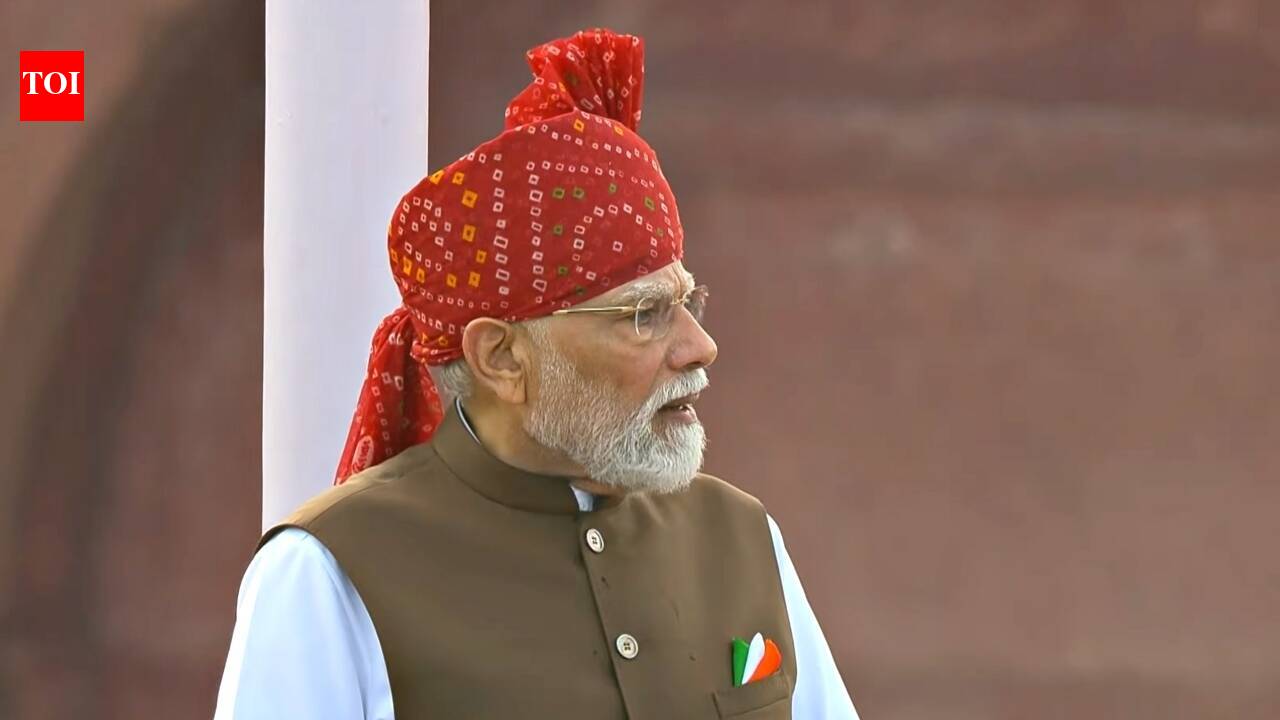
Prime Minister Narendra Modi has announced that India is expanding its semiconductor footprint, with three plants already operational and five to eight more planned. This initiative, coupled with the new National Critical Minerals Mission, aims to bolster India's self-reliance in the global chip supply chain.
India’s Strategic Pivot: The Semiconductor Revolution
Prime Minister Narendra Modi’s recent Independence Day address marked a significant shift in India’s industrial policy, moving from a consumer of technology to a global manufacturing hub. By dedicating substantial time to the semiconductor sector—a topic largely absent from national discourse a decade ago—the government has signaled that chip manufacturing is now a core pillar of India's economic sovereignty. This push is deeply tied to the broader 'Aatmanirbhar Bharat' (Self-reliant India) and 'Viksit Bharat' (Developed India) visions, positioning the nation as a credible alternative in the global electronics supply chain.
Current Infrastructure and Operational Milestones
The current reality is rapidly outpacing historical expectations. With the inauguration of facilities like CG Semi’s OSAT plant in Sanand, Gujarat, India has successfully moved from the planning phase to active production. Current operations by Micron, Kaynes, and CG Power are already shipping products, marking a tangible milestone in the country's industrial capability. These early successes provide the necessary proof-of-concept for global investors, demonstrating that India can host high-precision manufacturing environments that meet international standards for export.
The Roadmap for Semicon 2.0
Looking toward the future, the government has projected the establishment of an additional five to eight semiconductor plants over the next seven to eight years. This expansion is described as 'Semicon 2.0,' which moves beyond basic assembly and testing (OSAT) toward more complex fabrication and advanced chip design. This transition is essential for India to move up the value chain, as fabrication remains the most capital-intensive and technologically demanding segment of the semiconductor ecosystem.
Integrating Critical Minerals
Semiconductor manufacturing is inextricably linked to the availability of rare earth elements and specialized materials. Recognizing this, the Prime Minister has launched the National Critical Minerals Mission and announced a Critical Mineral Corridor. By securing the upstream supply chain of essential minerals, India is mitigating the risks of geopolitical volatility and supply chain disruptions. This holistic approach ensures that the ambitious chip-manufacturing goals are supported by a sustainable and secure resource strategy.
Broader Economic and Global Implications
As semiconductor chips become indispensable across all sectors—ranging from automotive and consumer electronics to defense and telecommunications—India’s move to localize production is a strategic necessity. By reducing import dependence, India is not only insulating its economy from global price fluctuations but also creating a robust ecosystem for high-tech employment. If the projected growth in plant infrastructure is realized, it will likely catalyze a massive influx of foreign investment and solidify India’s role as a vital node in the global technology architecture.