Modi government revives plan for three more Kalvari-class submarines at ₹33,000 crore
Source Entity
Latest News: Todays Latest News Headlines from India & World | Hindustan Times | Hindustan Times
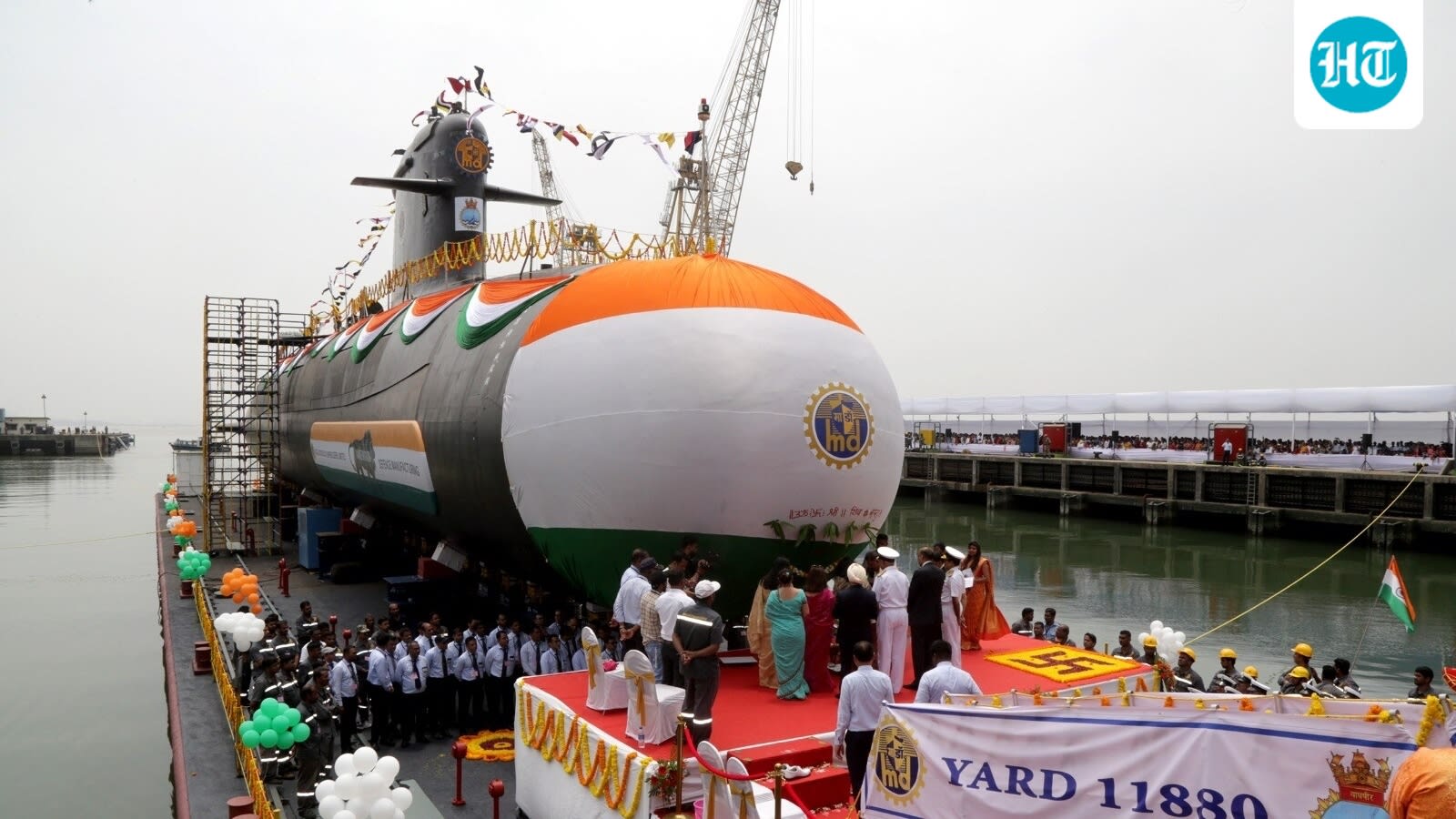
The Indian government is advancing a ₹33,000 crore proposal to construct three additional Kalvari-class submarines at Mazagon Dockyards. This strategic move aims to bolster naval force levels amid rising submarine competition in the Indian Ocean.
Strengthening India's Underwater Deterrence
The Indian government, under the leadership of Prime Minister Narendra Modi, has prioritized the procurement of three additional Kalvari-class (evolved Scorpene-class) submarines. With a project valuation estimated at ₹33,000 crore, the proposal is currently being prepared for the Cabinet Committee on Security (CCS). This initiative represents a critical effort to maintain the operational readiness and force levels of the Indian Navy's diesel-attack submarine fleet, ensuring that the nation remains prepared for evolving maritime security challenges.
Strategic Industrial Collaboration
The construction of these vessels is slated to take place at the Mazagon Dockyards Limited (MDL), leveraging the established technical expertise and infrastructure developed through previous collaborations. By continuing to work with the French Naval Group, India is opting for a proven platform that has already demonstrated its capability with the launch of the sixth vessel, INS Vaghsheer, on April 20, 2022. This continuity in design and production minimizes development risks and accelerates the induction timeline, which is vital for maintaining naval parity.
Geopolitical Shifts in the Indian Ocean
The urgency behind this procurement is largely driven by shifting power dynamics in the Indian Ocean Region (IOR). The Indian Navy is currently preparing to face a more robust challenge from its western neighbor, Pakistan, which is projected to acquire eight Type 039 Yuan-class submarines by 2028-2030. These vessels are expected to be equipped with Air Independent Propulsion (AIP) systems, significantly enhancing their stealth and endurance capabilities. The acquisition of these platforms, backed by China, represents a direct attempt to challenge India's traditional maritime dominance in the region.
Implications of AIP Technology
The integration of AIP technology into the regional submarine fleet is a game-changer for underwater warfare. Unlike conventional diesel-electric submarines that must surface frequently to recharge batteries, AIP-equipped vessels can remain submerged for significantly longer periods, making them much harder to detect. India’s decision to expedite the Kalvari-class program serves as a necessary counter-measure, ensuring that the Indian Navy possesses the technological and numerical depth to monitor and deter incursions from advanced, non-nuclear platforms.
Future Trends and Regional Stability
Looking ahead, the expansion of the submarine fleet at MDL is likely to be just one component of a broader naval modernization strategy. As China continues to expand its naval footprint through support for neighboring programs, India will likely prioritize the indigenous development of next-generation submarine technology, including future AIP integration and improved sonar suites. The ongoing investment at Mazagon Dockyards is not merely a tactical procurement but a strategic necessity to safeguard India's maritime interests and project power in a highly contested geopolitical theater.
Concluding Summary
In conclusion, the government's move to revive the Kalvari-class submarine production is a timely response to the intensifying naval competition in the Indian Ocean. By balancing the need for immediate force expansion with the realities of regional technological advancements, India is positioning itself to maintain its strategic edge. The successful execution of this ₹33,000 crore project will be instrumental in ensuring that the Indian Navy remains a formidable force capable of safeguarding national interests against complex, evolving threats.
Verification Required?