Rice, Paratha, Dal and more: Check full IRCTC food menu on Varanasi-New Delhi Vande Bharat Sleeper
Source Entity
Anish Mondal
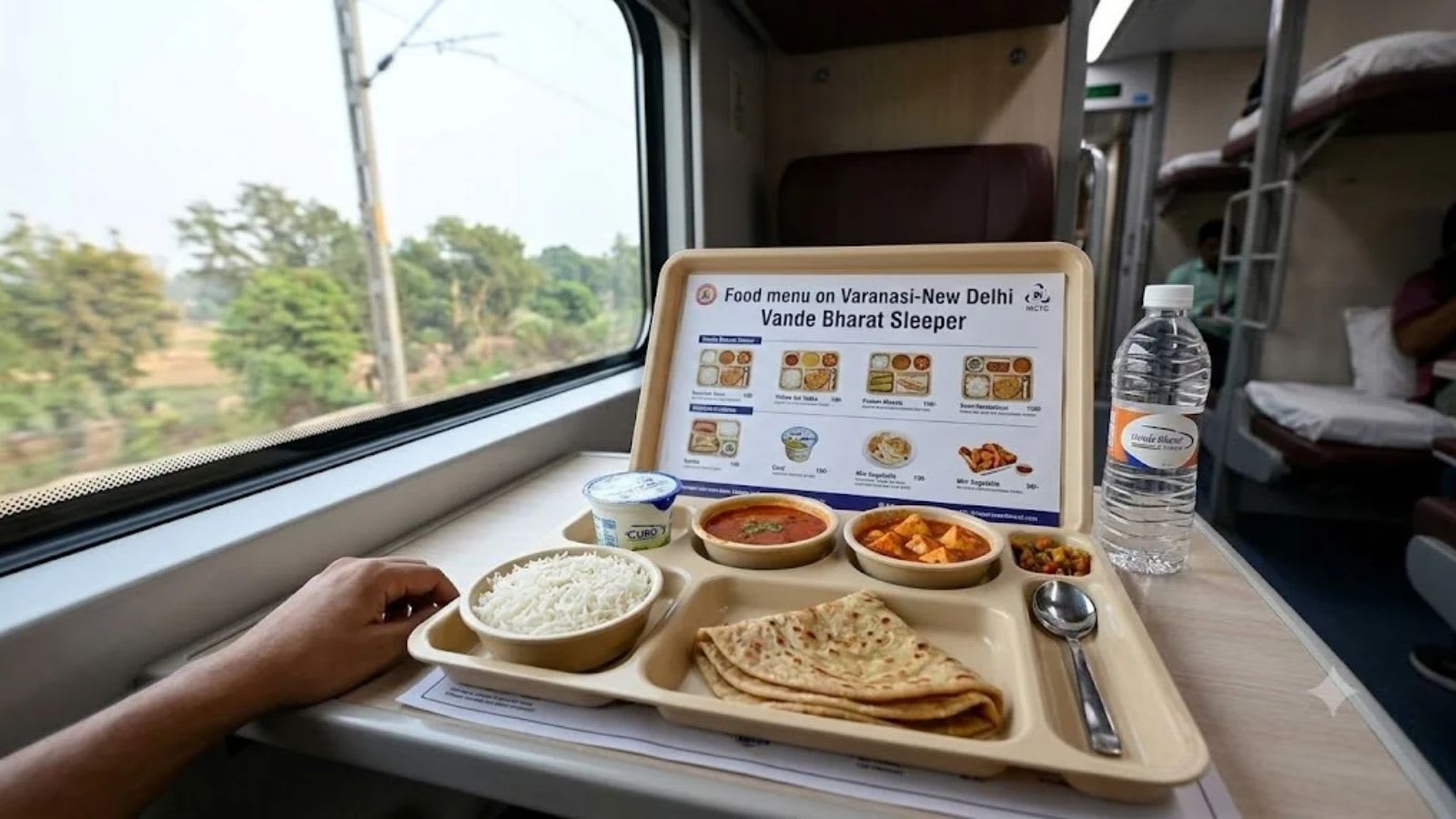
Indian Railways has expanded its premium rail network with the launch of the Varanasi-New Delhi Vande Bharat Sleeper and the announcement of a new Bengaluru-Mumbai route. Additionally, progress on the Mumbai-Ahmedabad bullet train continues with the first prototype expected by early next year.
The Evolution of India’s Rail Infrastructure
India’s railway network is undergoing a historic transformation, transitioning from traditional coach designs to high-speed, modern rolling stock. The recent commencement of ticket bookings for the Varanasi-New Delhi Vande Bharat Sleeper service marks a significant milestone in this journey. As the second train of its kind, it promises to bridge the gap between luxury and efficiency, offering a semi-high-speed transit experience that aligns with the government's broader vision of modernizing national connectivity.
Technical Capabilities and Operational Standards
The Varanasi-New Delhi Vande Bharat Sleeper is engineered for superior performance, boasting a maximum design speed of 180 kmph. While operational constraints on the route will see it running at speeds between 130 kmph and 160 kmph, this still represents a substantial upgrade over standard express trains. Managed by the Northern Railway (NR) zone, the service is scheduled to begin its commercial operations on November 2, 2026, signaling a new era of reliability for commuters on this high-demand corridor.
Expanding the Vande Bharat Footprint
Beyond the capital, the Ministry of Railways is aggressively expanding the Vande Bharat Sleeper network to other metropolitan hubs. Railway Minister Ashwini Vaishnaw recently unveiled plans for a second Vande Bharat Sleeper train originating from Bengaluru. This specific route is designed to connect Bengaluru with Pune and Mumbai via Hubballi, effectively serving the northern Karnataka region. By integrating major industrial and commercial hubs, this expansion aims to facilitate better economic mobility and passenger convenience.
Strategic Connectivity and Station Integration
The logistical planning for these routes is extensive. The first Bengaluru-Mumbai Vande Bharat Sleeper service includes key stops at Anantapur, Guntakal, Raichur, Yadgir, Kalaburagi, Solapur, Pune, and Kalyan. This stop-wise distribution is critical, as it ensures that the high-speed benefits of the Vande Bharat are extended to tier-2 and tier-3 cities, rather than limiting the service to major endpoints alone.
The Future of High-Speed Rail: The Bullet Train Project
While Vande Bharat trains focus on upgrading existing tracks, India is simultaneously advancing its dedicated high-speed rail aspirations. The Mumbai-Ahmedabad High-Speed Rail (MAHSR) corridor represents the next frontier. Recent updates from BEML’s Aditya plant in Bengaluru confirm that the first bullet trainset prototype is currently under production following a contract awarded by the Integral Coach Factory (ICF) in October 2024.
Timeline and Future Outlook
The Ministry of Railways has set ambitious targets for these projects, specifically aiming to make the 97-km Surat-Vapi stretch of the MAHSR corridor operational by August 2027. With the prototype rollout expected by early next year, India is moving from the planning phase to active implementation. These developments collectively indicate a long-term strategy to reshape Indian transit, prioritizing speed, safety, and indigenous manufacturing capabilities.
Multiple Citing Sources