Railways’ plan for Durga Puja rush: Special trains on key routes to Bengal
Source Entity
Anish Mondal
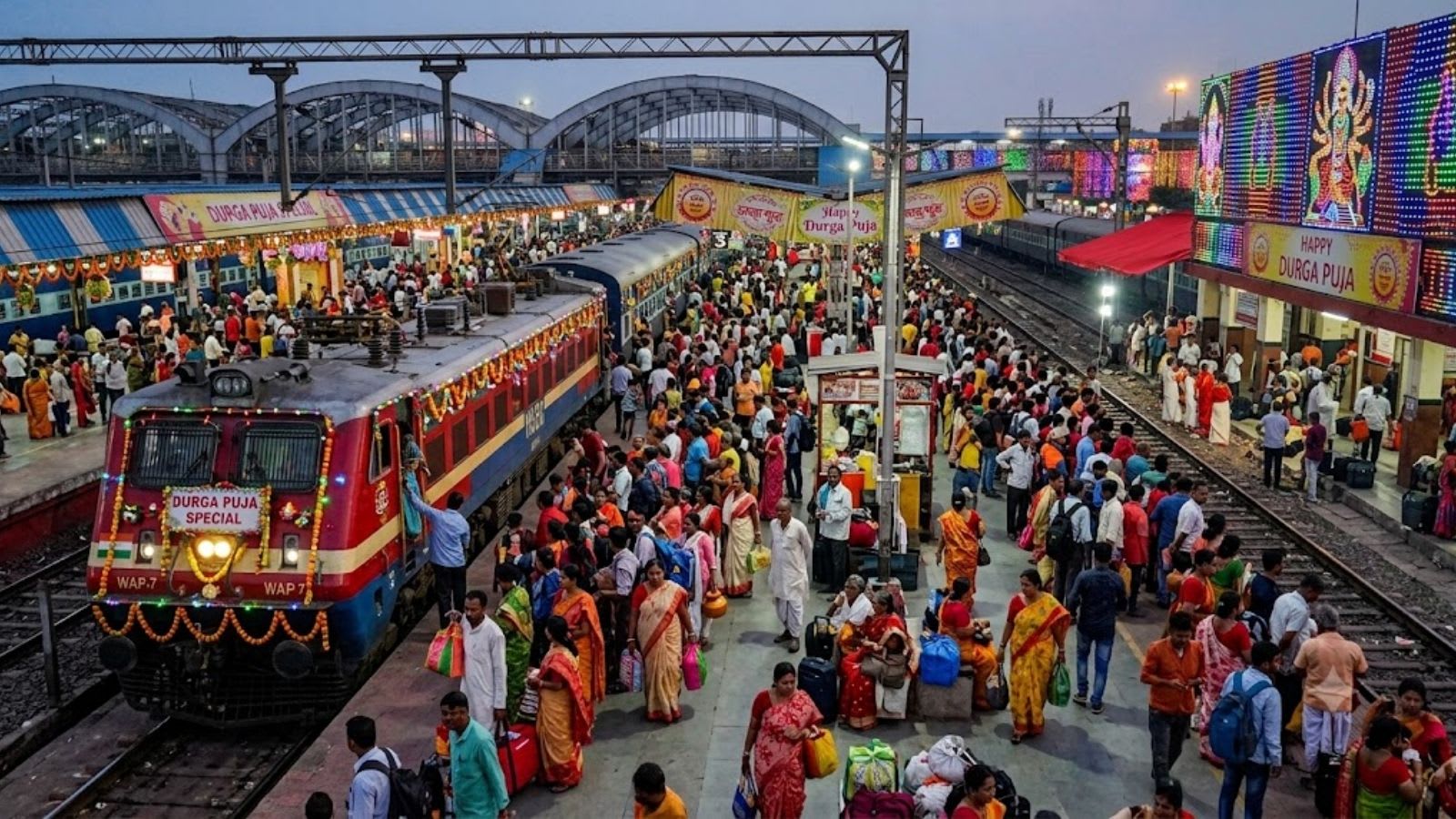
Indian Railways is proactively managing travel surges by launching special trains for Durga Puja and providing critical transit support for passengers impacted by Nepal's devastating floods. These dual operations highlight India's logistical capability in balancing domestic festive demand with international humanitarian crisis response.
Indian Railways’ Strategic Response to Festive Demand and Regional Crisis
Indian Railways is currently navigating a complex logistical landscape, balancing the massive seasonal surge of the Durga Puja festival with the urgent need to support passengers displaced by the catastrophic flooding in Nepal. As the festive season approaches—with Durga Puja scheduled from October 16 to October 21—the Eastern Railway has announced a comprehensive plan to deploy special trains on high-demand routes leading to West Bengal. This initiative aims to alleviate the strain on regular services, ensuring that the millions of citizens traveling to their hometowns can do so with greater accessibility and comfort.
Managing the Festive Surge
Durga Puja represents one of the most significant demographic movements in India, characterized by a mass exodus from metropolitan work hubs back to West Bengal. The decision to introduce special trains is a tactical response to the saturation of existing rail infrastructure. By identifying key routes that historically experience peak demand, the Railways seeks to mitigate overcrowding and prevent the travel bottlenecks that often plague the festive period. This proactive capacity expansion is essential for maintaining systemic stability during a time when passenger volume reaches its annual zenith.
Humanitarian Logistics Amidst Nepal Floods
Simultaneously, the East Central Railway (ECR) has been tasked with a sensitive humanitarian operation: assisting passengers returning from flood-ravaged Nepal. The scale of the disaster in the neighboring country has necessitated immediate intervention. According to CPRO Saraswati Chandra, the ECR successfully facilitated the transit of 106 passengers from Patna to Maharashtra by attaching additional Third AC coaches to the Patna-Purna Express. This underscores the agility of the Indian rail network to adapt its rolling stock at short notice to accommodate emergency surges.
Integrated Relief and Support
Beyond mere transportation, the Railways has integrated welfare measures into its crisis response. Passengers arriving from the flood-affected regions are receiving essential support, including food, water, and medical assistance. The operational decision to open an additional ticket counter overnight at Patna Junction demonstrates a commitment to reducing passenger inconvenience. This level of service is crucial when dealing with vulnerable travelers who have already endured the hardships of a natural disaster.
India’s Broader Role in Regional Stability
The internal railway efforts are mirrored by India’s external humanitarian commitments. Since the onset of the flooding, India has dispatched 57.6 tonnes of relief material to Nepal. This "exceptionally generous" support, as acknowledged by Nepalese officials, highlights the symbiotic relationship between India’s domestic logistical capacity and its foreign policy objectives. By coordinating the safe movement of individuals alongside the delivery of physical relief, India is reinforcing its role as a stable, reliable partner in the South Asian region.
Conclusion and Future Outlook
As the festive season continues to place pressure on national infrastructure, the ability of the Indian Railways to pivot between commercial festive management and emergency disaster relief serves as a testament to its institutional resilience. Looking forward, the integration of real-time passenger tracking and rapid-response coaching protocols will likely become standard practice. By prioritizing both the cultural importance of Durga Puja and the humanitarian necessity of the Nepal relief efforts, the Railways is successfully navigating a period of unprecedented operational demand.