India’s first Vande Bharat freight train reaches 145 kmph during trial run: Key details
Source Entity
Anish Mondal
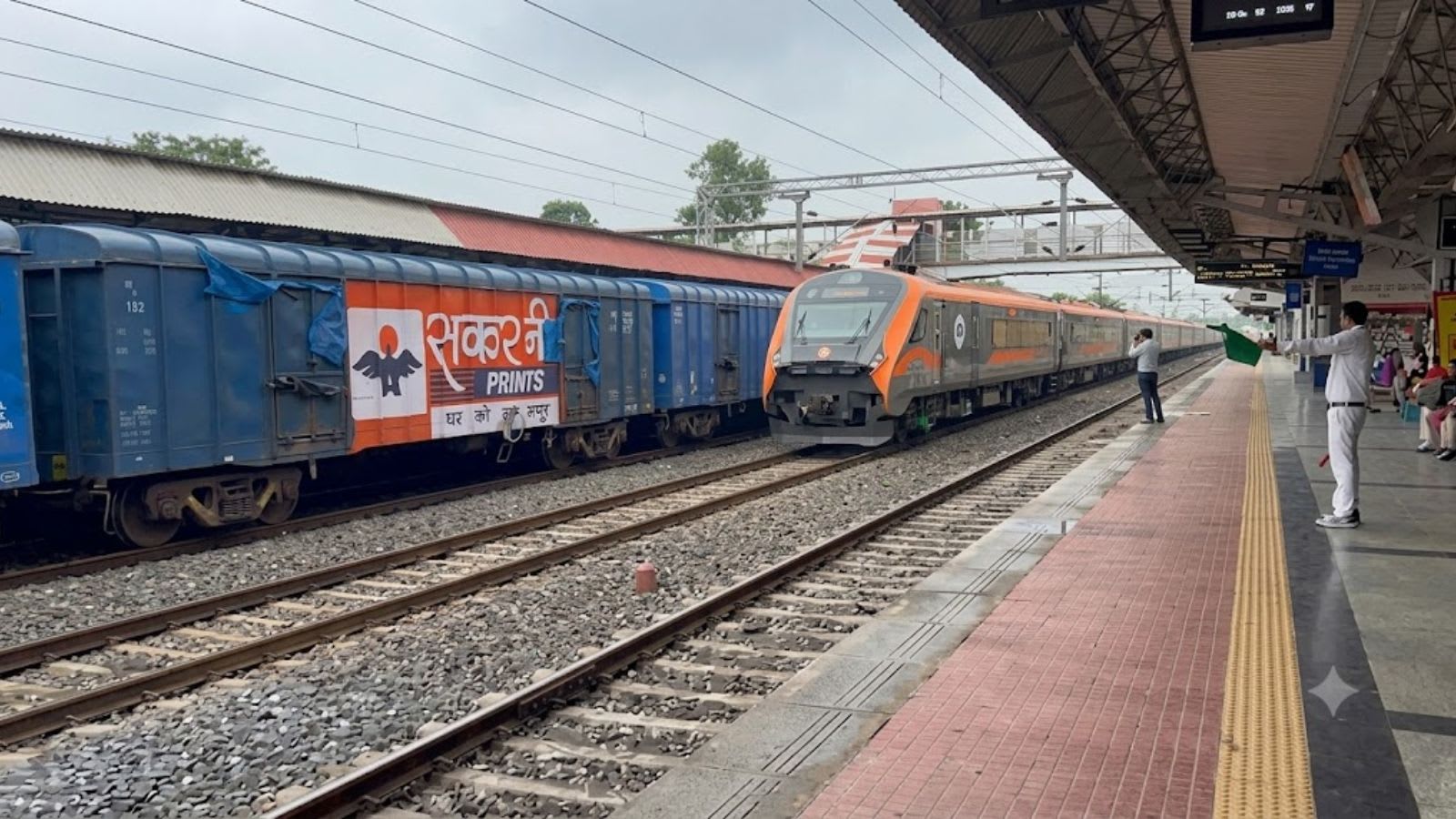
Indian Railways is advancing its infrastructure with high-speed Vande Bharat trials reaching 145 kmph and successful 100 kmph runs on the Chenab Bridge. Simultaneously, authorities are enforcing stricter food safety standards across Karnataka railway stations to curb hygiene violations.
Modernizing Indian Rail: Speed, Safety, and Service Standards
Indian Railways is currently navigating a dual mandate: aggressively modernizing its physical infrastructure to enhance speed and connectivity while simultaneously addressing critical gaps in passenger-facing services. Recent developments highlight a significant push toward high-speed logistics and transit, juxtaposed with intensified regulatory scrutiny of food safety protocols within station premises.
Advancing Speed and Engineering Feats
Technological progress in India’s rail sector has reached new milestones. The Vande Bharat Express recently achieved a significant operational feat by clocking nearly 100 km/h on the Chenab Railway Bridge in Jammu and Kashmir. This bridge, recognized as the world’s highest railway bridge, serves as a critical link on the 111-km broad gauge stretch between Katra and Banihal. The increase in permissible speed to 100 km/h on this challenging terrain underscores the success of Northern Railway’s efforts to integrate high-speed transit into the Himalayan topography.
Revolutionizing Freight Logistics
Beyond passenger transit, the integration of Vande Bharat technology into freight operations marks a shift in national logistics capabilities. The successful trial of India’s first Vande Bharat freight train, which reached speeds of 145 km/h on the West Central Railway’s Chaumahla-Shamgarh-Gurla section, signals a move toward high-velocity cargo movement. Developed by the Integral Coach Factory (ICF) and monitored by the Research Designs and Standards Organisation (RDSO), these trials—which included emergency braking and oscillation tests—are essential for creating a safer, more efficient supply chain network.
The Challenge of Food Safety
While engineering achievements are accelerating, the ground-level reality of passenger services requires rigorous oversight. A special inspection drive by the Food Safety and Drugs Administration Department across 36 railway stations in Karnataka revealed systemic failures. Inspections of 112 establishments, ranging from pantry cars to food stalls, uncovered hazardous practices such as the use of newspapers for serving food, improper storage in cardboard boxes, and the use of non-permitted food coloring. These violations of the Food Safety and Standards Act, 2006, highlight a disconnect between the modernization of rail transit and the quality of basic amenities provided to travelers.
Broad Implications and Future Trends
These events illustrate a broader trend of institutional maturation. As the Indian railway network adopts world-class infrastructure and speed standards, the regulatory burden on food and hygiene management must grow proportionally. The enforcement action in Karnataka suggests that the government is shifting toward a more proactive, zero-tolerance approach to hygiene to match the technological upgrades being rolled out nationwide. Future success will depend on whether maintenance and service standards can keep pace with the rapid deployment of high-speed assets.
Conclusion
In summary, the simultaneous pursuit of high-speed rail and improved public health standards defines the current trajectory of the Indian railway system. While engineering advancements like the Chenab bridge crossing and high-speed freight trials are setting global benchmarks, the findings of the Karnataka food safety drive serve as a necessary reminder that the passenger experience remains grounded in basic health and safety compliance. Balancing these technological leaps with consistent regulatory enforcement will be the cornerstone of the system's long-term modernization.
Multiple Citing Sources