Knowledge Nugget | Pacific Ring of Fire: What makes this region a tectonic hotspot?
Source Entity
Raveena Baneta
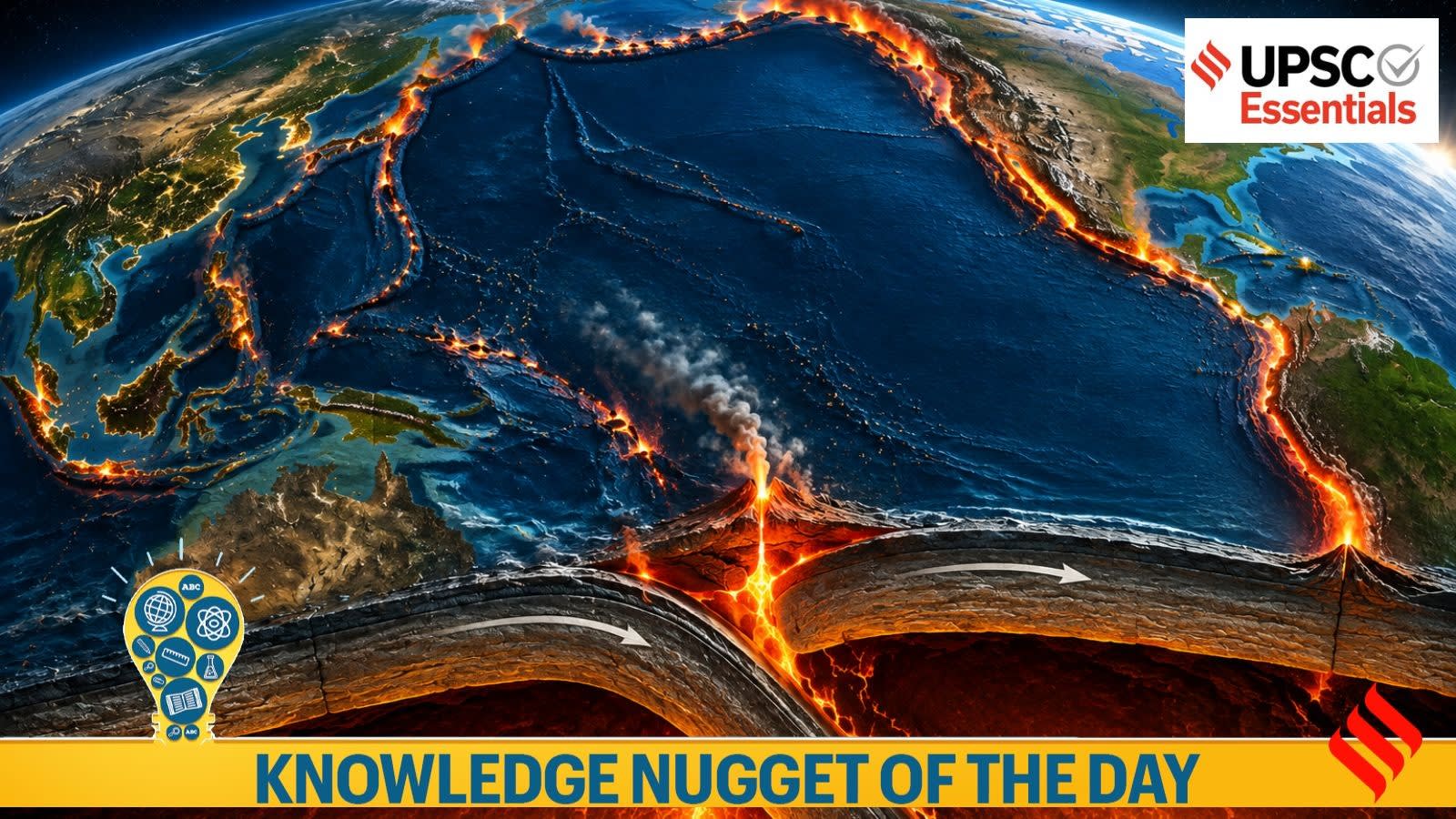
A 7.7-magnitude earthquake near Indonesia's Flores region has highlighted the extreme seismic risks of the Pacific Ring of Fire. The disaster underscores the volatile tectonic activity inherent to this global hotspot.
The Seismic Volatility of the Pacific Ring of Fire
The recent 7.7-magnitude earthquake occurring off the coast of Indonesia’s Flores region serves as a stark reminder of the geological instability characterizing the Pacific Ring of Fire. Occurring at 5:58 am local time at a shallow depth of approximately 10 kilometers, this seismic event underscores the immediate and devastating impact that tectonic shifts can have on coastal communities. With its epicenter situated 68 kilometers north-northwest of Ende in East Nusa Tenggara, the quake caused significant loss of life, with reports confirming at least 51 fatalities and numerous others affected.
Understanding the Tectonic Mechanism
The Pacific Ring of Fire is not a singular structure but a vast, horseshoe-shaped zone tracing the edges of the Pacific Ocean where major tectonic plates converge. This region is the site of constant subduction, where oceanic plates are forced beneath lighter continental plates. The immense pressure and friction generated at these boundaries are periodically released as catastrophic earthquakes and volcanic eruptions. The Indonesian archipelago, positioned at a complex intersection of several major tectonic plates, remains one of the most seismically active areas globally.
The Danger of Shallow-Depth Earthquakes
Geologists emphasize that the depth of an earthquake is a critical factor in determining its destructive potential. The Flores quake, originating at a depth of only 10 kilometers, is categorized as a shallow-focus earthquake. Shallow quakes are generally more destructive than their deeper counterparts because the seismic energy has less distance to travel before reaching the surface, resulting in stronger shaking and more intense ground motion. This physical reality explains the rapid and lethal consequences observed in East Nusa Tenggara.
Broader Regional Implications
The frequency of seismic activity within the Ring of Fire necessitates robust disaster management and infrastructure resilience. Indonesia’s disaster management agency remains on the front lines of these recurring crises, tasked with both immediate search-and-rescue operations and long-term mitigation strategies. The tragic loss of 51 lives highlights the persistent challenge of balancing rapid urbanization in high-risk zones with the need for earthquake-resistant architecture and effective early warning systems.
Future Trends and Preparedness
As tectonic plates continue their slow but inexorable movement, the Ring of Fire will remain a perpetual source of seismic and volcanic risk. Experts anticipate that as climate change influences sea levels and coastal erosion, the vulnerability of populations living along these plate boundaries may increase. Moving forward, the focus must shift toward enhanced interdisciplinary research—combining USGS seismic monitoring data with local disaster preparedness policies—to minimize future casualties and improve community resilience in the face of inevitable geological shifts.