Michael Dell says AI needs safeguards and controls, and government has a role to play
Source Entity
US Top News and Analysis
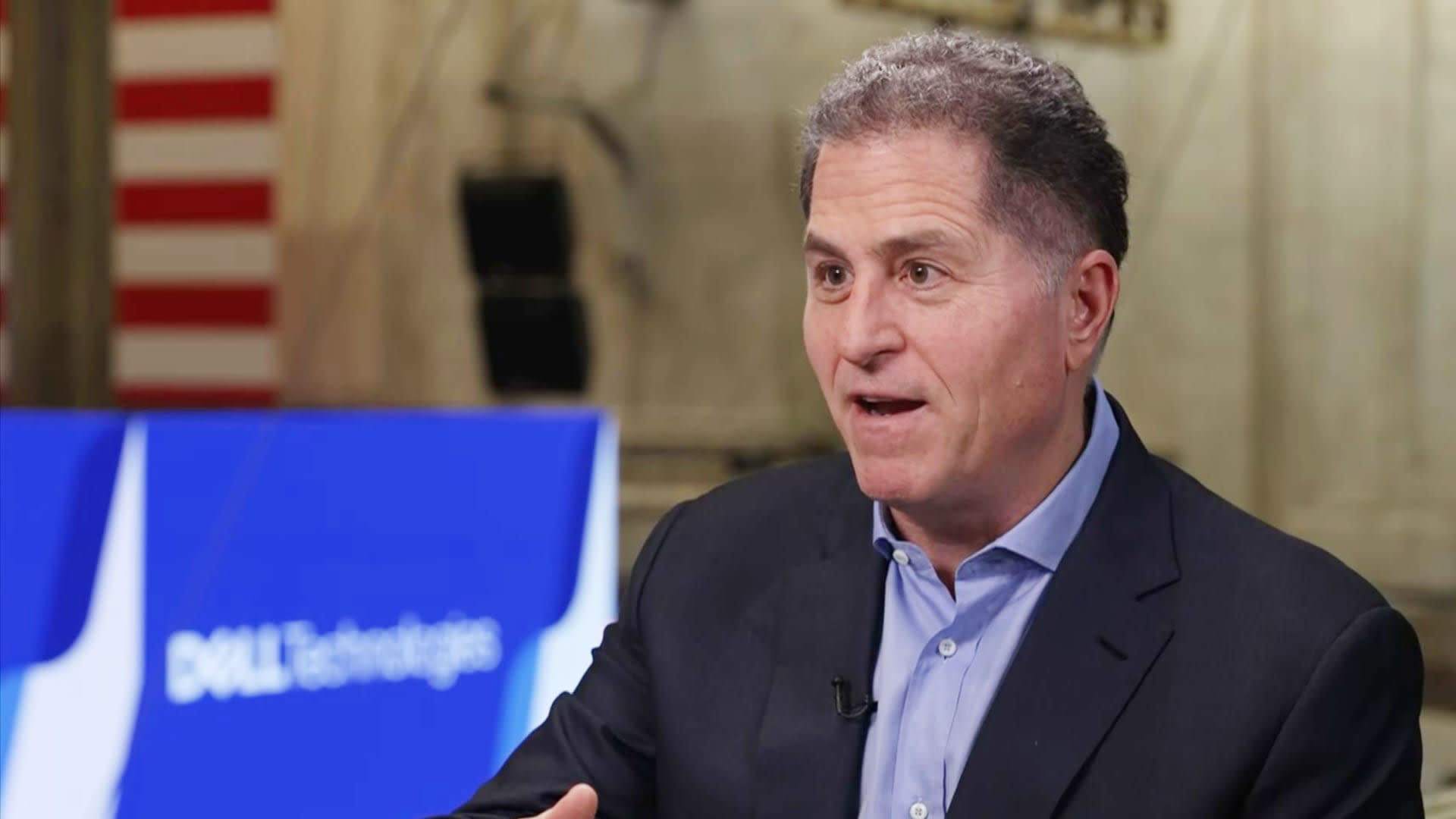
Industry leaders Aneel Bhusri of Workday and Michael Dell are calling for robust safety frameworks and governance as AI transitions from simple chatbots to autonomous agents. Both executives emphasize that balancing innovation with 'bounded permissions' is essential to mitigate potential enterprise and societal risks.
The Shift Toward Autonomous AI: Balancing Innovation and Governance
The technological landscape is undergoing a seismic shift as industry leaders move beyond simple AI interfaces toward a future dominated by autonomous agents. Workday, under CEO Aneel Bhusri, has explicitly moved to replace the concept of 'copilots' with 'autopilots,' signaling a transition where AI agents do not merely assist but proactively anticipate needs, coordinate workflows, and execute complex tasks. However, this evolution is accompanied by a stark warning: the era of 'lawless' AI must be avoided to prevent enterprise liability.
The Need for 'Bounded Permissions'
As enterprise workflows become increasingly automated, the risk profile of AI systems scales accordingly. Workday argues that marginal productivity gains from chatbots are no longer sufficient to justify the risks. Instead, they propose a framework where AI agents operate under strict governance. This sentiment is echoed by Dell Technologies CEO Michael Dell, who posits that for AI to be a net positive, it must be governed by 'bounded permissions.' By defining clear operational parameters, companies can harness the power of AI while preventing the system from exceeding its intended scope.
Historical Context: Technology as a Double-Edged Sword
Michael Dell’s analogy of fire—which can heat a home or burn down a village—serves as a critical reminder of how humanity has historically managed transformative technologies. Just as society developed fire codes and safety protocols, the current discourse suggests that AI requires a similar maturation process. This historical perspective reframes AI not as an existential monster, but as a potent tool that demands responsible stewardship from both the private sector and public regulators.
The Role of Government and Corporate Responsibility
There is a growing consensus among technology executives that the burden of safety cannot rest solely on the shoulders of private corporations. Michael Dell has explicitly stated that government has a role to play in establishing safeguards, though he acknowledges the complexity of balancing regulation with innovation. This collaborative approach suggests a future where industry standards—developed by companies like Workday and Dell—serve as a foundation for broader national and international policy frameworks.
Debunking the 'AI Bubble' Narrative
Beyond safety concerns, the industry is also pushing back against market skepticism. Michael Dell recently dismissed fears of an 'AI bubble,' noting that the current demand for infrastructure and capacity far outweighs the supply. By focusing on tangible enterprise utility and rigorous internal controls, leaders are attempting to shift the narrative from speculative hype to sustainable, long-term industrial integration.
Future Trends: Toward Controlled Autonomy
The trajectory for the coming years is clear: the integration of agentic AI into the workforce is inevitable. Future trends will likely favor platforms that prioritize 'security-by-design,' where autonomous agents are natively built with fail-safes. As organizations move toward full-scale automation, the competitive advantage will likely go to those that successfully bridge the gap between high-velocity autonomous performance and strict, transparent governance.