Show HN: MCP Memory – Fast Agent Memory Using Google's OKF and SQLite FTS5
Source Entity
Hacker News
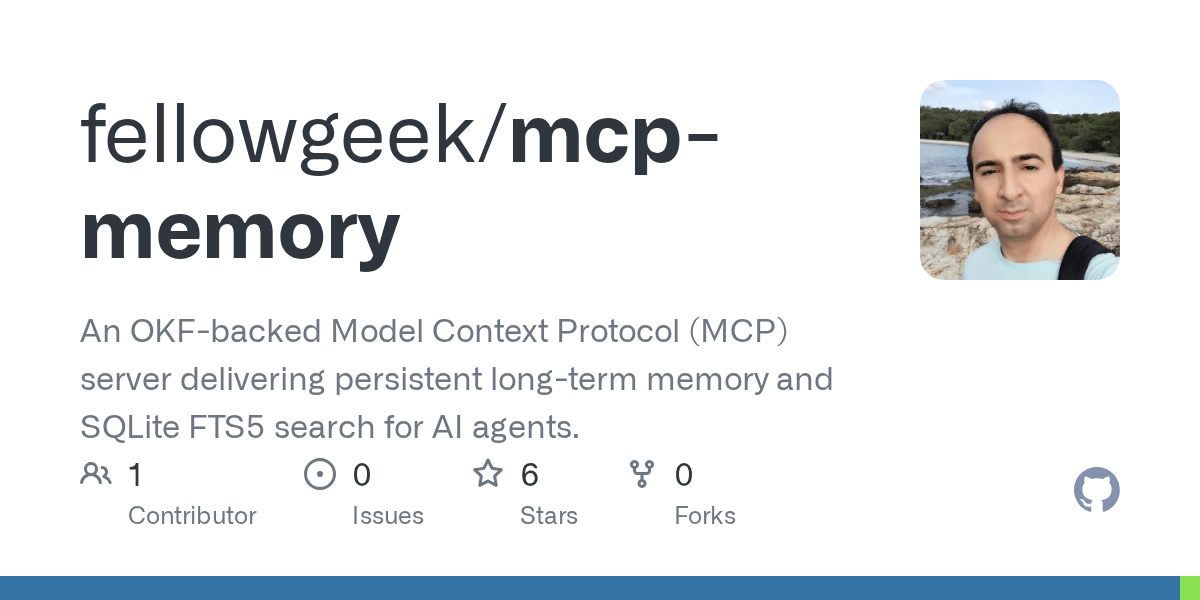
Recent developer-focused launches introduce specialized tools to enhance AI agent productivity, including MCP-Memory for persistent state, Ballet for dynamic API integrations, and Bullet for faster coding workflows. These innovations address critical bottlenecks in existing AI frameworks like latency and memory limitations.
The Evolution of AI Agent Infrastructure
The landscape of AI-driven software development is undergoing a significant shift as developers move beyond simple chatbot interfaces toward autonomous agentic workflows. Recent announcements, including MCP-Memory, Ballet, and Bullet, highlight a growing industry focus on overcoming the inherent limitations of current LLM-based systems: memory persistence, integration friction, and latency.
Solving the Memory Gap with MCP-Memory
One of the most persistent hurdles for AI agents has been the 'amnesia' that occurs between chat sessions. MCP-Memory addresses this by leveraging the Model Context Protocol (MCP) to provide a structured, persistent storage layer. By utilizing the Open Knowledge Format (OKF v0.2) and SQLite FTS5 for high-speed indexing, this tool allows agents to move beyond transient context. This is a critical development for complex projects where agents must recall specific stateful snippets, tag-filtered data, and historical user preferences across multiple development environments like Cursor or Claude Desktop.
API Integration and the Death of Brittle Workflows
Ballet introduces a departure from traditional 'connector' libraries, which often fail when encountering proprietary stacks or highly complex API graphs. Instead of relying on static, pre-built integrations, Ballet generates the integration code dynamically at the moment of need. By treating workflow automation as inspectable code rather than a brittle visual graph, Ballet offers developers greater transparency and debugging capabilities, effectively reducing the technical debt often associated with rigid automation platforms.
Tackling Latency in Coding Agents
Bullet (YC S26) arrives as a direct response to the performance bottlenecks inherent in current coding agents. Many developers report significant 'wait time' when using tools like Claude Code, often caused by inefficient routing or overly broad context reading. Bullet optimizes these workflows by reading only relevant information, routing simple tasks through faster paths, and preventing the infinite loops that often plague autonomous agents. This focus on performance is essential for scaling AI assistance in production-grade software environments.
Broader Implications for AI Engineering
These developments signify a maturation of the 'Agentic Era.' We are seeing a move away from monolithic, 'do-it-all' models toward modular, specialized infrastructure. By decoupling memory (MCP-Memory), integration logic (Ballet), and execution speed (Bullet), the developer community is essentially building a new operating system for AI agents. This modular approach allows for better testing, lower latency, and more reliable outcomes in complex software engineering tasks.
Future Trends and Conclusion
Looking ahead, we can expect the integration of these specialized components to become standard practice. As agents become more autonomous, the need for robust, performant, and inspectable backends will only increase. These tools are the first steps toward a future where AI agents act less like experimental chatbots and more like reliable, high-velocity teammates capable of managing complex, stateful, and integrated technical projects with minimal human intervention.