Get a closer look at the iPhone 18 Pro’s mechanical camera
Source Entity
Jess Weatherbed
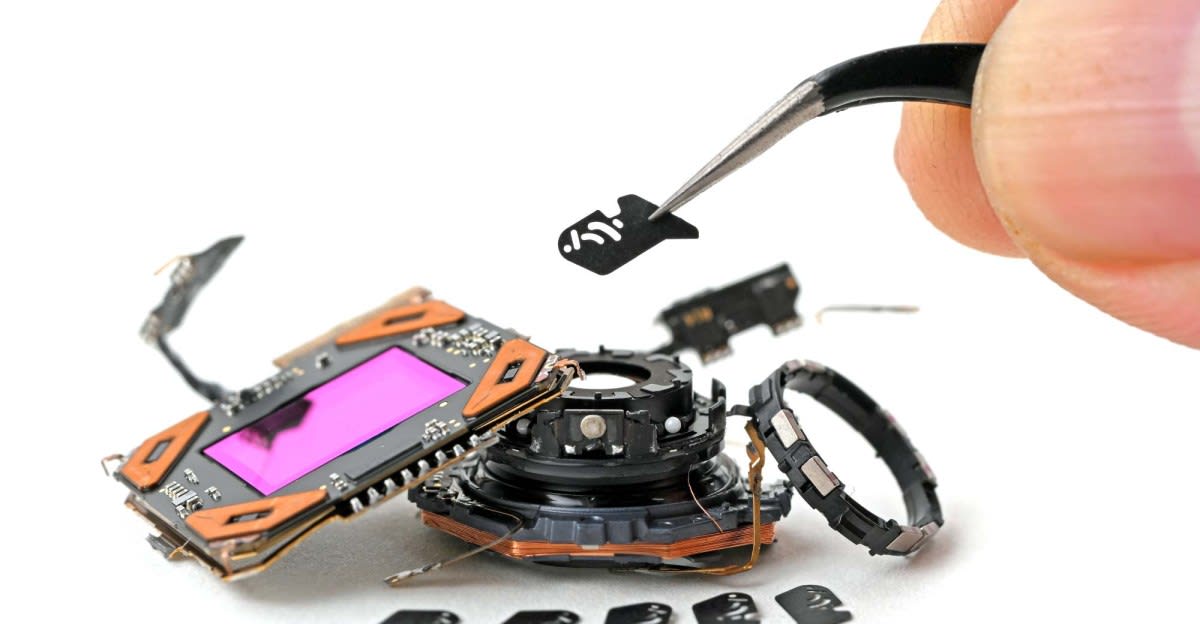
Apple's iPhone 18 Pro series introduces a complex mechanical variable aperture camera and a clever firmware-based battery shipping solution. Meanwhile, the company is managing a $250 million legal settlement regarding unfulfilled AI promises for earlier iPhone models.
Engineering Marvels and Regulatory Hurdles: The iPhone 18 Pro
Apple’s latest flagship, the iPhone 18 Pro and 18 Pro Max, represents a significant leap in smartphone hardware engineering. Recent teardowns conducted by iFixit have unveiled a sophisticated mechanical variable aperture lens system. This component utilizes six ultra-thin, leaf-like blades that move magnetically to regulate light intake. By achieving this level of precision within the same physical footprint as the previous iPhone 17 Pro, Apple has demonstrated a high degree of miniaturization, though this complexity naturally raises questions regarding long-term repairability and the vulnerability of such intricate mechanical parts.
Navigating Shipping Regulations with Firmware
Beyond optics, Apple has pioneered a novel software approach to address international logistics constraints. The iPhone 18 Pro Max features a “battery-firmware solution” designed to keep battery capacity below the 20Wh limit mandated by global shipping regulations for single-cell batteries. This clever workaround effectively restricts capacity during transit and only restores the device’s full, rated capacity—approximately 21.75Wh for US models and 21.06Wh for European models—once the end user boots the device for the first time. This ensures compliance without sacrificing the high-performance battery life consumers expect.
The Cost of Innovation and Marketing Claims
While hardware advancements continue to push boundaries, Apple remains tethered to past performance claims through legal channels. The company is currently settling a $250 million lawsuit concerning the failure to deliver on promised AI-upgraded Siri features. This settlement underscores the tension between aggressive marketing of AI capabilities and the reality of software development timelines, highlighting the risks companies face when promoting features that may not meet consumer expectations at launch.
Eligibility and Consumer Recourse
For those affected by the Siri AI settlement, the process for seeking compensation is now active. US residents who purchased an iPhone 15 Pro, 15 Pro Max, or any iPhone 16 model between June 10, 2024, and March 29, 2025, are eligible to file claims. Payouts are estimated at $25 per device but could fluctuate up to $95 based on total claim volume, serving as a reminder of the financial accountability tech giants face regarding their product promises.
Future Trends in Hardware and Policy
The intersection of these events—mechanical camera innovation, firmware-based regulatory compliance, and legal settlements—points to a future where Apple must balance rapid hardware iteration with increasingly complex legal and logistical frameworks. As devices become more mechanically dense, repair ecosystems like iFixit will become even more critical for transparency. Furthermore, the use of software locks to bypass shipping regulations may become a new standard for high-capacity electronics, provided the firmware-based restoration process remains secure and reliable for the end user.