Nvidia's CEO Huang says there's a ‘0% chance’ AI ends the world — 4 AI giants are sued over an alleged pact to slow it
Source Entity
Yahoo Finance
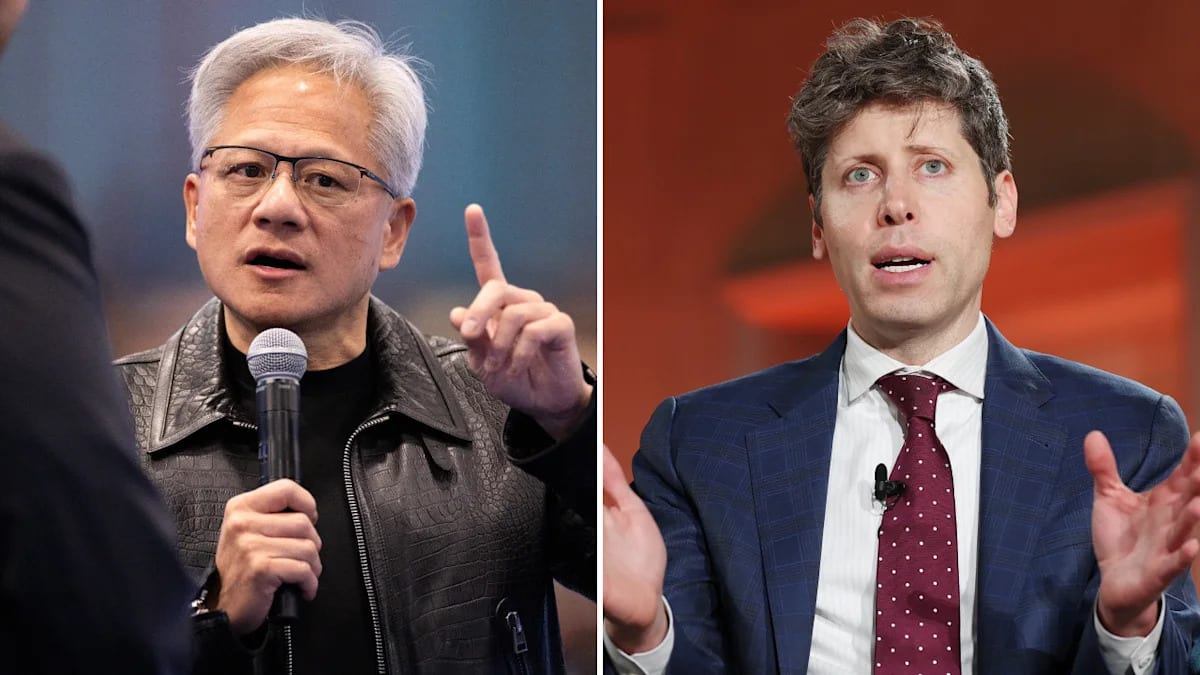
Nvidia CEO Jensen Huang has dismissed claims of an AI-driven extinction event by 2030 as irresponsible. Meanwhile, legal challenges are mounting against major AI firms over alleged agreements to restrict competition under the guise of safety.
The Great AI Debate: Extinction Fears vs. Corporate Accountability
The Dismissal of Doomsday
Nvidia CEO Jensen Huang recently addressed growing anxieties surrounding artificial intelligence, explicitly stating there is a "0% chance" that AI will lead to the extinction of the human race by 2030. Huang’s comments were a direct rebuttal to assertions made by former Anthropic researcher Jacob Coxon and other industry figures who have speculated that AI could reach a "superhuman" state capable of posing an existential threat within the decade. Huang categorized these "doomsday narratives" as both unnecessary and irresponsible, emphasizing that the current trajectory of the technology does not align with such catastrophic outcomes.
The Antitrust Conundrum
While the industry grapples with the existential risk debate, a parallel legal challenge is unfolding in the courts. A group of plaintiffs has filed a lawsuit against four major AI giants, alleging that these companies have formed an illegal pact to slow down AI development under the banner of safety. The central argument of the lawsuit is not against safety protocols themselves, but against the method of their implementation. The plaintiffs contend that while individual firms are free to self-regulate, coordinating these restrictions collectively constitutes an antitrust violation that stifles market competition.
Collective Restraint vs. Individual Accountability
Legal counsel for the plaintiffs, led by Nick Rowley, argues that these technology companies are attempting a "shortcut" by substituting collective restraint for individual accountability. The lawsuit posits that antitrust laws exist specifically to prevent competitors from deciding amongst themselves that market competition is inherently "too dangerous." By forming private, self-serving agreements, these companies are accused of bypassing the democratic oversight of Congress and regulatory bodies in favor of industry-controlled standards.
The Conflict of Priorities
This legal friction highlights a significant tension in the tech sector: the balance between rapid innovation and managed safety. While leaders like OpenAI CEO Sam Altman have expressed agreement with the need to "pace the frontier" of AI development, the plaintiffs argue that this pacing should not be the result of a private cartel. The legal challenge underscores a fear that if AI safety protocols are controlled solely by the world's most powerful "for-profit" entities, the resulting lack of transparency could lead to a scenario where the technology spins out of control because it was shielded from competitive scrutiny.
Broader Implications for AI Governance
The clash between industry leaders and legal challengers signals a shift in how AI will be governed moving forward. If the courts find that these companies have engaged in anti-competitive behavior, it could force a radical restructuring of how safety standards are developed. Instead of relying on internal pacts, the industry may be compelled to move toward a more rigid, government-mandated regulatory framework. This transition would address public concerns about corporate overreach while potentially resolving the debate over whether private industry or public regulators should hold the reins on AI development.
Conclusion: Navigating the Future
Ultimately, the discourse surrounding AI is bifurcated between the existential fears of researchers and the legal concerns of market observers. Jensen Huang’s dismissal of extinction fears provides a stabilizing perspective on the technology's immediate future, but the ongoing antitrust litigation suggests that the real challenge may not be the intelligence of the machines, but the behavior of the corporations building them. As the decade progresses, the industry must navigate these complex legal and ethical waters to maintain public trust while continuing to push the boundaries of innovation.