NIT-Srinagar to open campus observatory with 14-inch telescope
Source Entity
India Latest News: Top National Headlines Today & Breaking News | The Hindu
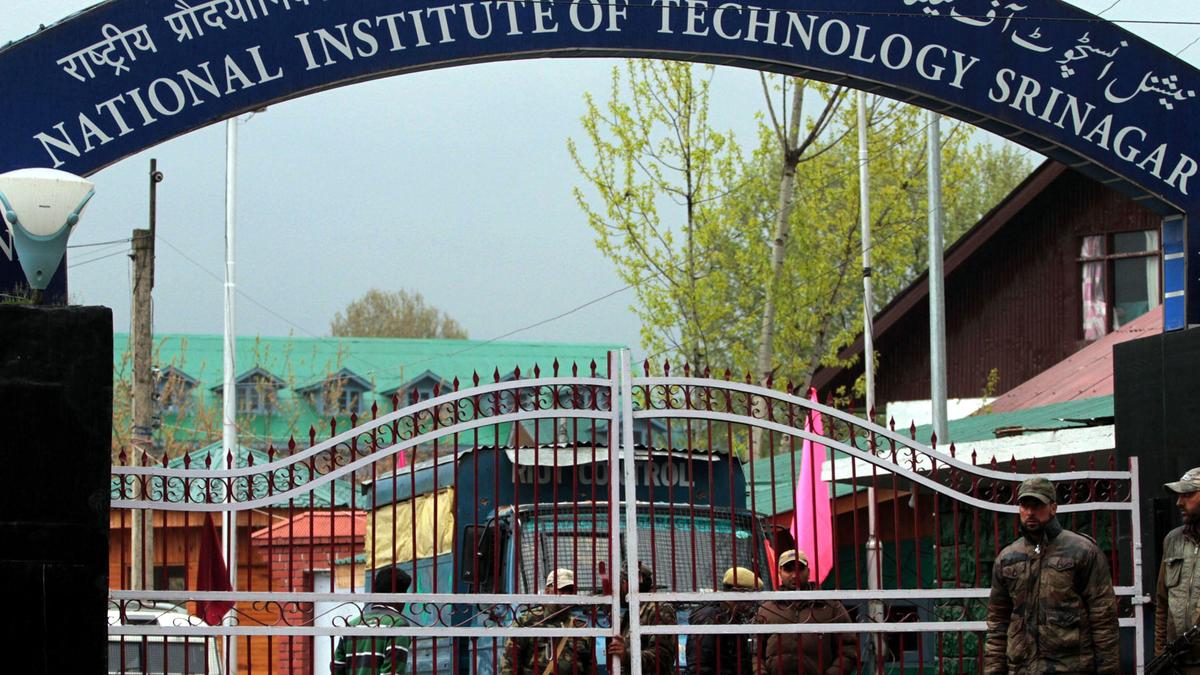
NIT-Srinagar is launching the first campus-based observatory among all National Institutes of Technology in India. Equipped with a 14-inch Schmidt-Cassegrain telescope, the facility aims to bolster research and hands-on astronomical education.
A New Frontier in Astronomical Research at NIT-Srinagar
On September 21, 2026, officials announced a landmark achievement for higher education in India: the establishment of the NIT-Srinagar Observatory for Astronomy and Astrophysics (NSOAA). As the first National Institute of Technology (NIT) in the country to host a dedicated on-campus observatory, the institution is positioning itself as a leader in observational science. This development represents a significant shift in how engineering institutes integrate pure science and astrophysical research into their traditional curricula.
Advanced Technical Capabilities
The centerpiece of this new facility is a 14-inch aplanatic Schmidt-Cassegrain telescope. This specific optical configuration is renowned for its ability to provide aberration-free, flat-field images, which are critical for high-quality astrophotography and detailed planetary observation. By utilizing this technology, the observatory ensures that students are not merely observing the night sky through basic equipment, but are engaging with professional-grade tools that demand precision and technical rigor.
Collaborative Scientific Synergy
The project was brought to fruition through a strategic collaboration with the Indian Institute of Astrophysics (IIA). This partnership is essential, as it bridges the gap between academic instruction at NIT-Srinagar and the institutional expertise of India’s premier astronomical research organization. Such inter-institutional cooperation is vital for the sustainability of the observatory, ensuring that the facility remains aligned with national research standards and pedagogical best practices.
Educational and Community Impact
Beyond technical specifications, the NSOAA aims to serve as a platform for both academic and public engagement. By providing students and researchers with hands-on access to observational data, the institute is fostering a culture of scientific inquiry that extends beyond the classroom. The spokesperson for NIT-Srinagar emphasized that the facility is designed to engage the wider community, effectively democratizing access to astronomy and potentially inspiring future generations of scientists in the region.
Future Implications for NITs
The inauguration of the observatory on September 22, 2026, sets a new precedent for the NIT network. As India continues to expand its footprint in space research and satellite technology, having foundational observational infrastructure at the collegiate level becomes increasingly relevant. The success of the NSOAA could serve as a pilot program, potentially encouraging other NITs across India to invest in similar high-tech facilities to enhance their STEM research capabilities.
Conclusion
The establishment of the NIT-Srinagar Observatory is a testament to the evolving nature of engineering education in India. By bridging the gap between theoretical physics and practical observational astronomy, NIT-Srinagar is providing its student body with a unique competitive advantage. This facility not only enhances the institute's academic profile but also contributes to the broader national objective of promoting scientific literacy and research excellence.
Verification Required?