Iran claims fresh missile strikes on US bases in Jordan, Bahrain and Kuwait; releases videos
Source Entity
Majid Alam
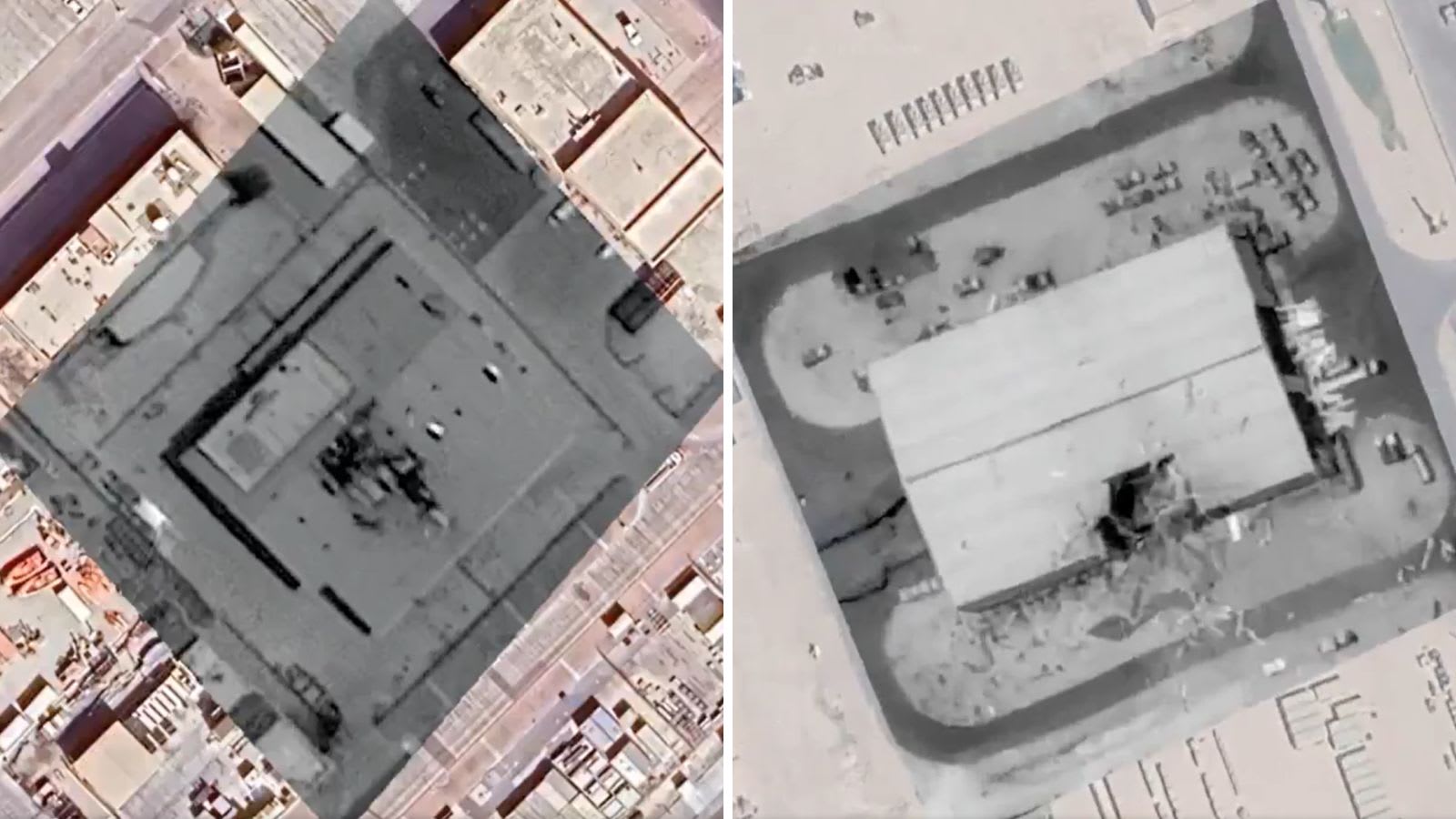
Iran's Islamic Revolutionary Guard Corps (IRGC) has claimed to carry out missile strikes targeting US military installations in Jordan, Bahrain, Kuwait, and Qatar, supporting these claims with satellite imagery released via the Tasnim News Agency.
Escalation in West Asia: Analyzing Iran's Claims of Strikes on US Bases
In a significant escalation of regional tensions, Iranian state-affiliated media, specifically the Tasnim News Agency, has reported that the Islamic Revolutionary Guard Corps (IRGC) conducted a series of missile strikes targeting United States military facilities. The claims specify that bases in Jordan, Bahrain, and Kuwait were hit, while satellite imagery was released to purportedly show the aftermath of strikes on facilities in Qatar and Bahrain. This development signals a bold shift in the kinetic confrontation between Tehran and Washington, moving beyond proxy warfare into direct targeting of US strategic hubs across the Gulf and West Asia.
Strategic Implications of Multi-Nation Targeting
By targeting bases across four different nations—Jordan, Bahrain, Kuwait, and Qatar—Iran is demonstrating a capability for wide-area synchronization. These locations are not merely military outposts; they are the nerve centers of US power projection in the Middle East. For instance, the presence of US forces in Qatar (notably Al Udeid Air Base) and Bahrain provides the US with critical surveillance and air-strike capabilities. By striking these diverse locations, Iran aims to signal that no US asset in the region is beyond its reach, effectively attempting to challenge the security guarantees the US provides to its regional allies and creating a psychological environment of vulnerability.
Historical Context and the Cycle of Retaliation
This event must be viewed through the lens of the long-standing "shadow war" between the US and Iran. Historically, Iranian responses to US pressure—such as sanctions or the 2020 assassination of General Qasem Soleimani—have followed a pattern of calculated escalation. Iran typically employs a strategy of "proportional deterrence," where it strikes targets to save face domestically and signal resolve to the West without triggering a full-scale conventional war. However, the breadth of these latest claims suggests a heightened state of aggression, possibly linked to broader regional conflicts or a perceived shift in the US's strategic posture in the region.
Information Warfare and the Role of Satellite Imagery
The release of satellite imagery via the Tasnim News Agency is a critical component of Iran's strategy. In modern conflict, the narrative is as important as the kinetic strike. By providing visual evidence, Tehran seeks to validate its claims to a global audience and project an image of military competence. This form of "transparent aggression" serves two purposes: it bolsters the IRGC's prestige within Iran and acts as a deterrent to the US by showing that Iranian intelligence has precisely mapped US facility coordinates. The use of state media to disseminate these images ensures that the message of defiance is loud and clear, leaving little room for quiet diplomatic deniability.
Impact on Regional Stability and Sovereign Allies
The involvement of Jordan, Bahrain, and Kuwait as the sites of these strikes places these sovereign nations in an incredibly precarious position. These countries host US forces under bilateral agreements, but becoming the launchpad or target for Iranian missiles risks drawing them directly into a conflict they wish to avoid. The strikes likely exacerbate the internal tension within these nations between their strategic alliance with the US and the need to maintain a functional, non-hostile relationship with a powerful neighbor like Iran. This creates a volatility that could lead to shifts in regional alliances or increased demands for local defense autonomy.
Future Trends: Predicting the US Response
Looking forward, the US faces a complex dilemma: a failure to respond could be perceived as weakness, potentially emboldening further Iranian strikes, while an overly aggressive response could ignite a regional conflagration. We can expect the US to conduct a rigorous damage assessment before deciding on a course of action. Future trends likely include an increase in the deployment of missile defense systems (such as THAAD or Patriot batteries) across the Gulf to mitigate the IRGC's strike capabilities. Simultaneously, the US may lean on diplomatic pressure and increased sanctions to constrain Tehran's operational freedom.
Conclusion
Iran's claim of missile strikes across Jordan, Bahrain, Kuwait, and Qatar represents a dangerous inflection point in West Asian geopolitics. By targeting the very infrastructure that allows the US to maintain regional stability, Iran has upped the ante in its struggle for regional hegemony. Whether these strikes are a prelude to a larger conflict or a calibrated piece of political theater, they underscore the fragile nature of security in the Gulf and the enduring volatility of the US-Iran relationship.