BRICS leaders meet in India as wars and U.S. tensions test the bloc
Source Entity
India Latest News: Top National Headlines Today & Breaking News | The Hindu
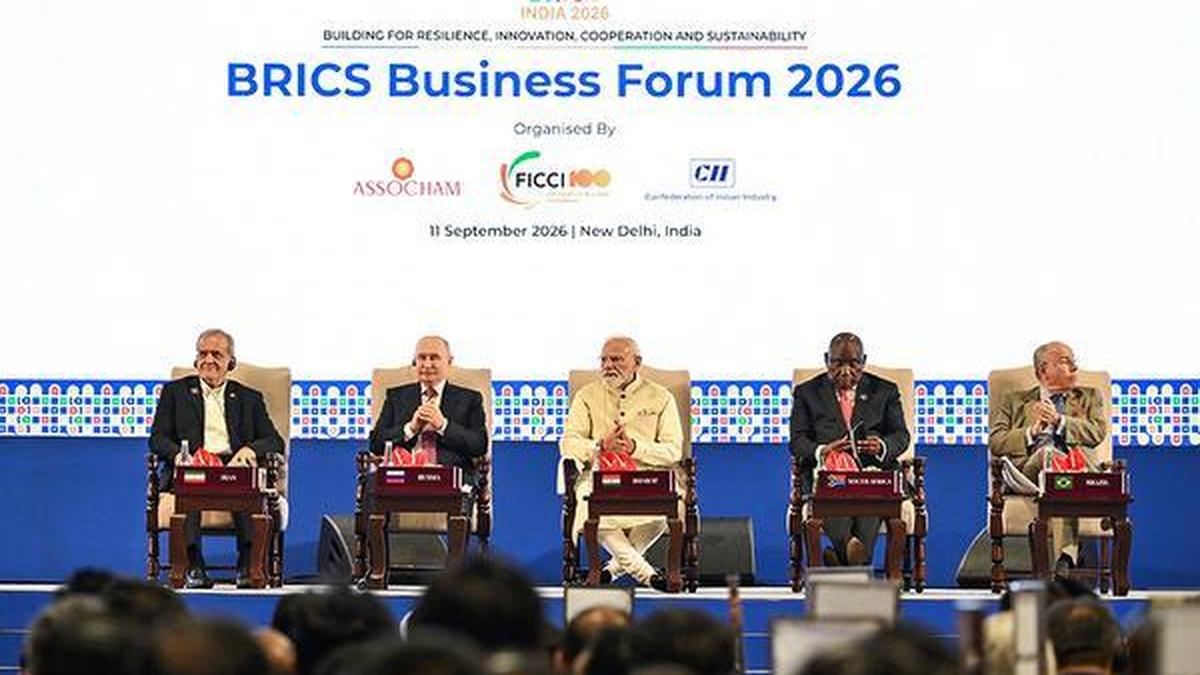
Iranian President Masoud Pezeshkian met with PM Modi at the 2026 BRICS summit to address rising Middle East tensions and economic sanctions. The discussions centered on energy security, the impact of US-Israel military aggression, and the critical need for freedom of navigation in the Strait of Hormuz.
Escalating Tensions: Iran’s Strategic Pivot at the 2026 BRICS Summit
Iranian President Masoud Pezeshkian’s arrival in New Delhi for the 18th BRICS summit marks a pivotal moment in contemporary geopolitics. As the Middle East faces an acute security crisis, Pezeshkian has utilized the international platform to characterize the recent escalation of U.S. and Israeli economic and military actions as a "far more dangerous phase" of aggression. This diplomatic visit highlights Iran's urgent need to bolster its strategic alliances as it grapples with the severe ramifications of intensified international sanctions.
The Intersection of Economic and Regional Security
During the BRICS Business Forum, President Pezeshkian argued that economic stability is inextricably linked to national and regional sovereignty. He highlighted that the "extensive" sanctions imposed by the United States have evolved, moving beyond conventional economic pressure into what he describes as active military aggression. This narrative serves as the cornerstone of Iran’s current foreign policy strategy: framing domestic economic hardship as a direct consequence of external hostile maneuvers by the U.S.-Israel coalition.
Modi’s Diplomatic Intervention
Prime Minister Narendra Modi’s meeting with President Pezeshkian emphasizes India’s commitment to a balanced, multipolar foreign policy. By advocating for "dialogue and diplomacy," Modi is attempting to mediate a path toward de-escalation. The meeting is particularly significant given the ongoing disruption to global energy supply chains, which has been exacerbated since the U.S.-Israel coalition operations commenced on February 28, 2026.
The Strait of Hormuz: A Global Chokehold
Central to the discussions in New Delhi is the precarious state of the Strait of Hormuz. As a vital artery for global oil and gas transport, the waterway has been effectively paralyzed by the current conflict. PM Modi’s emphasis on "freedom of navigation" reflects the international community's anxiety regarding energy security. If the current standoff persists, the global economy faces a long-term threat of energy shortages and volatile commodity pricing, placing the Strait at the heart of the current crisis.
Future Trends and Geopolitical Implications
Looking ahead, the collaboration between Iran and the BRICS bloc may serve as a buffer against Western economic isolation. President Pezeshkian’s expressed optimism regarding energy and commercial ties with India suggests that Iran is actively seeking alternative trade corridors to mitigate the impact of punitive economic measures. The success of these initiatives will depend on whether India can maintain its strategic autonomy while navigating the intense pressures exerted by the U.S.-Israel coalition.
Conclusion
The summit in New Delhi underscores the widening rift between Western-led sanctions and the emerging economic interests of the Global South. While President Pezeshkian remains defiant, asserting that "Iran will not be bullied," the need for a diplomatic resolution remains paramount. The outcome of these high-level talks will likely determine the stability of the West Asian region and the future reliability of critical international maritime trade routes.
Multiple Citing Sources
Verification Required?