Big reunion at Brics: PM Modi, Xi & Putin meet for 3rd time in 3 yrs; PM shares photo
Source Entity
AADRITA HALDER
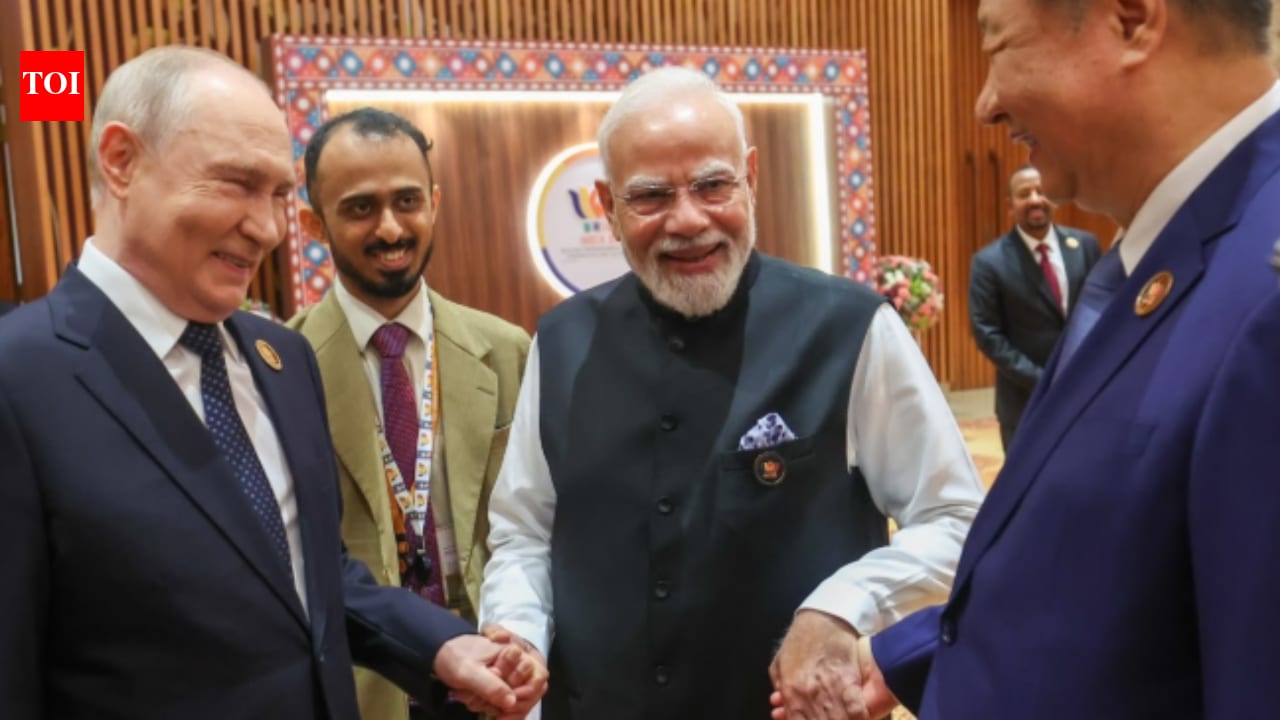
Iranian President Masoud Pezeshkian visited New Delhi for the 18th BRICS summit, highlighting the severe impact of US and Israeli sanctions on Iran. Prime Minister Narendra Modi urged for diplomatic resolutions to the West Asian conflict, emphasizing the critical need for maritime security in the Strait of Hormuz.
The Geopolitical Stakes of the 18th BRICS Summit
The 18th BRICS summit in New Delhi, held on September 12-13, 2026, has become a pivotal theater for addressing the escalating crisis in West Asia. Iranian President Masoud Pezeshkian’s arrival in India marks a significant moment, as he seeks to navigate his nation through what he describes as a 'far more dangerous phase' of economic and military pressure. By engaging with the BRICS platform, Iran is attempting to counterbalance the 'extensive' sanctions imposed by the United States and the ongoing active aggression attributed to the U.S.-Israel coalition.
Economic Security as National Security
President Pezeshkian’s address at the BRICS Business Forum underscored a fundamental shift in Tehran’s strategic rhetoric: the inextricable link between economic stability and national security. With the U.S. having recently implemented new punitive economic measures, the Iranian administration is signaling that these 'pressures' are no longer merely financial burdens but existential threats. Pezeshkian’s characterization of his adversaries as 'bullies' highlights a hardening stance, suggesting that Iran is prepared to resist further isolation through regional alliances rather than capitulation.
The Strategic Importance of the Strait of Hormuz
Central to the discussions in New Delhi is the volatile situation surrounding the Strait of Hormuz. Prime Minister Narendra Modi, recognizing the global dependency on this critical energy chokepoint, has expressed deep concern regarding the disruption of energy supply chains. Since the coalition attacks on February 28, the region has faced a 'chokehold' that threatens global fuel prices and maritime security. PM Modi’s explicit call for the protection of sea lanes and seafarers reflects India’s broader interest in maintaining stability in its extended neighborhood.
Diplomacy Amidst Escalating Tensions
During their bilateral meeting, Prime Minister Modi emphasized the urgent need for 'dialogue and diplomacy' to address the West Asian conflict. This diplomatic outreach serves as a critical bridge between Iran and the broader international community represented within the BRICS bloc. By positioning India as a mediator, Modi is attempting to mitigate the fallout of the U.S.-Iran friction, which has reached a fever pitch in recent months following the February military escalations.
Future Trends and Regional Implications
Looking ahead, the trajectory of Iran-India relations remains tied to the success of these diplomatic efforts. President Pezeshkian noted that his discussions with Prime Minister Modi are expected to bolster energy and commercial ties, which are vital for Iran’s economic survival. However, the success of these initiatives depends heavily on whether the 'dangerous phase' of aggression can be de-escalated. If the Strait of Hormuz remains a flashpoint, the global economy will likely continue to experience volatility, forcing nations within the BRICS framework to seek alternative security architectures for energy transit.
Conclusion
The 2026 BRICS summit in New Delhi serves as a microcosm of the current global divide. While President Pezeshkian remains defiant against U.S.-led sanctions, the diplomatic insistence from leaders like PM Modi highlights a growing desire for regional stability. As the conflict in West Asia continues to evolve, the ability of global powers to facilitate dialogue will determine whether the world avoids a more catastrophic disruption of essential trade and energy corridors.
Multiple Citing Sources