What is Iran’s Pickaxe Mountain? The nuclear site Trump says he will attack
Source Entity
The Indian Express
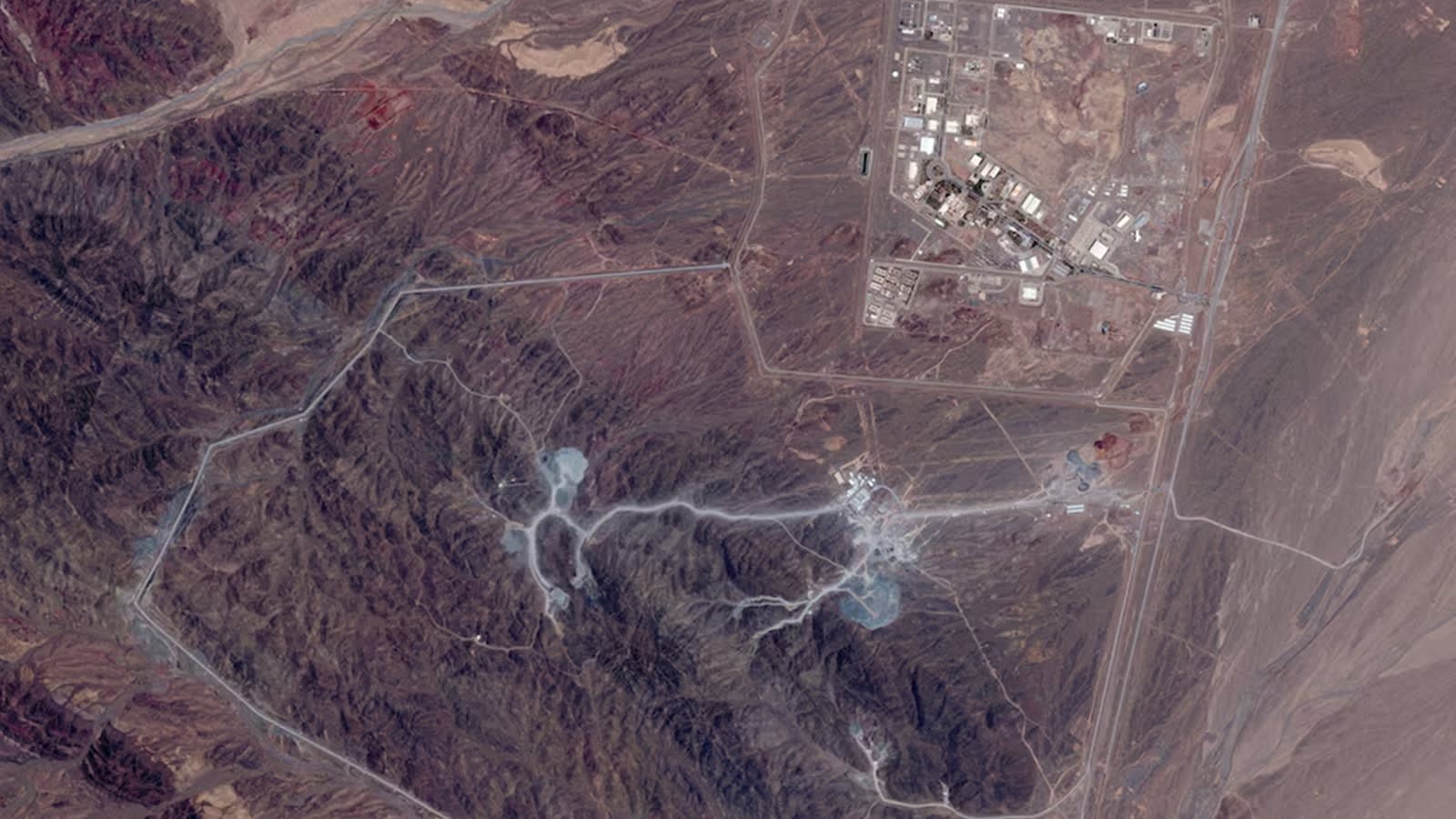
Donald Trump has identified 'Pickaxe Mountain,' a deeply buried underground nuclear facility near Natanz, Iran, as a potential target for military strikes, signaling a heightened risk of escalation regarding Iran's nuclear capabilities.
The Strategic Significance of Pickaxe Mountain
The emergence of 'Pickaxe Mountain' (Kūh-e Kolang Gaz Lā) as a focal point of US-Iran tensions marks a critical escalation in the geopolitical struggle over nuclear proliferation. Located near the well-known Natanz enrichment complex, this facility is not merely another site but a sophisticated attempt by Iran to 'harden' its nuclear infrastructure. By burying critical assets deep within a mountain, Tehran aims to render its nuclear program immune to conventional aerial bombardments, creating a strategic sanctuary for uranium enrichment and research that is shielded from traditional intelligence and military strikes.
Hardening the Nuclear Core: Technical and Strategic Logic
The decision to construct facilities like Pickaxe Mountain reflects a broader Iranian strategy of survival against superior air power. In military terms, 'hardening' involves the use of reinforced concrete and natural geological barriers to protect high-value targets. For Iran, the proximity to Natanz—already a hub of nuclear activity—suggests a desire to integrate these buried facilities into an existing logistics chain while minimizing the risk of total program decapitation. This move forces adversaries to consider specialized, high-cost munitions, such as 'bunker-busters,' which complicates the military calculus for any nation contemplating a strike.
Historical Context: From JCPOA to Underground Expansion
To understand the urgency surrounding Pickaxe Mountain, one must look at the collapse of the Joint Comprehensive Plan of Action (JCPOA). Following the US withdrawal from the nuclear deal in 2018, Iran gradually stepped beyond the limits on uranium enrichment and centrifuge research. The shift toward deeply buried sites is a direct response to the perceived threat of 'maximum pressure' campaigns. Historically, Iran has used its rugged geography to hide military assets, and the construction at Pickaxe Mountain is the culmination of a long-term effort to ensure that its nuclear ambitions cannot be erased by a single military operation.
Analyzing the Trump Threat and Military Implications
Donald Trump's specific mention of Pickaxe Mountain as a target signals a shift from diplomatic pressure to explicit military signaling. Targeting such a facility would require the deployment of the Massive Ordnance Penetrator (MOP) or similar heavy-duty munitions capable of penetrating hundreds of feet of rock and reinforced concrete. Such an action would not only be a tactical strike but a strategic declaration of war, likely triggering a massive regional response. The rhetoric surrounding this site underscores a willingness to employ extreme force to prevent Iran from achieving 'breakout capacity'—the point at which it has enough fissile material for a nuclear weapon.
Future Trends: Escalation or Diplomatic Pivot?
Looking forward, the existence of Pickaxe Mountain creates a 'security dilemma': as Iran hardens its sites to feel secure, the US feels more threatened and considers more aggressive weaponry, which in turn encourages Iran to dig deeper. We are likely to see an increase in intelligence-gathering efforts, including advanced seismic monitoring and satellite imagery, to map the interior of the mountain. If diplomacy fails to re-establish a monitoring framework via the IAEA, the window for a 'surgical' strike closes, making a full-scale kinetic conflict more probable as the facility nears completion.
Conclusion
Pickaxe Mountain represents the physical manifestation of the stalemate between Tehran and Washington. It is a site where geology meets geopolitics, serving as both a shield for Iran's nuclear ambitions and a lightning rod for US military threats. Whether this facility becomes a catalyst for a new diplomatic agreement or the ground zero for a regional conflict depends on whether the strategic value of the site is outweighed by the catastrophic risks of an attempted strike.