Mojtaba’s secret ace: Iran's unlikely ally poised to bleed Trump’s ground invasion plan?
Source Entity
Latest News: Todays Latest News Headlines from India & World | Hindustan Times | Hindustan Times
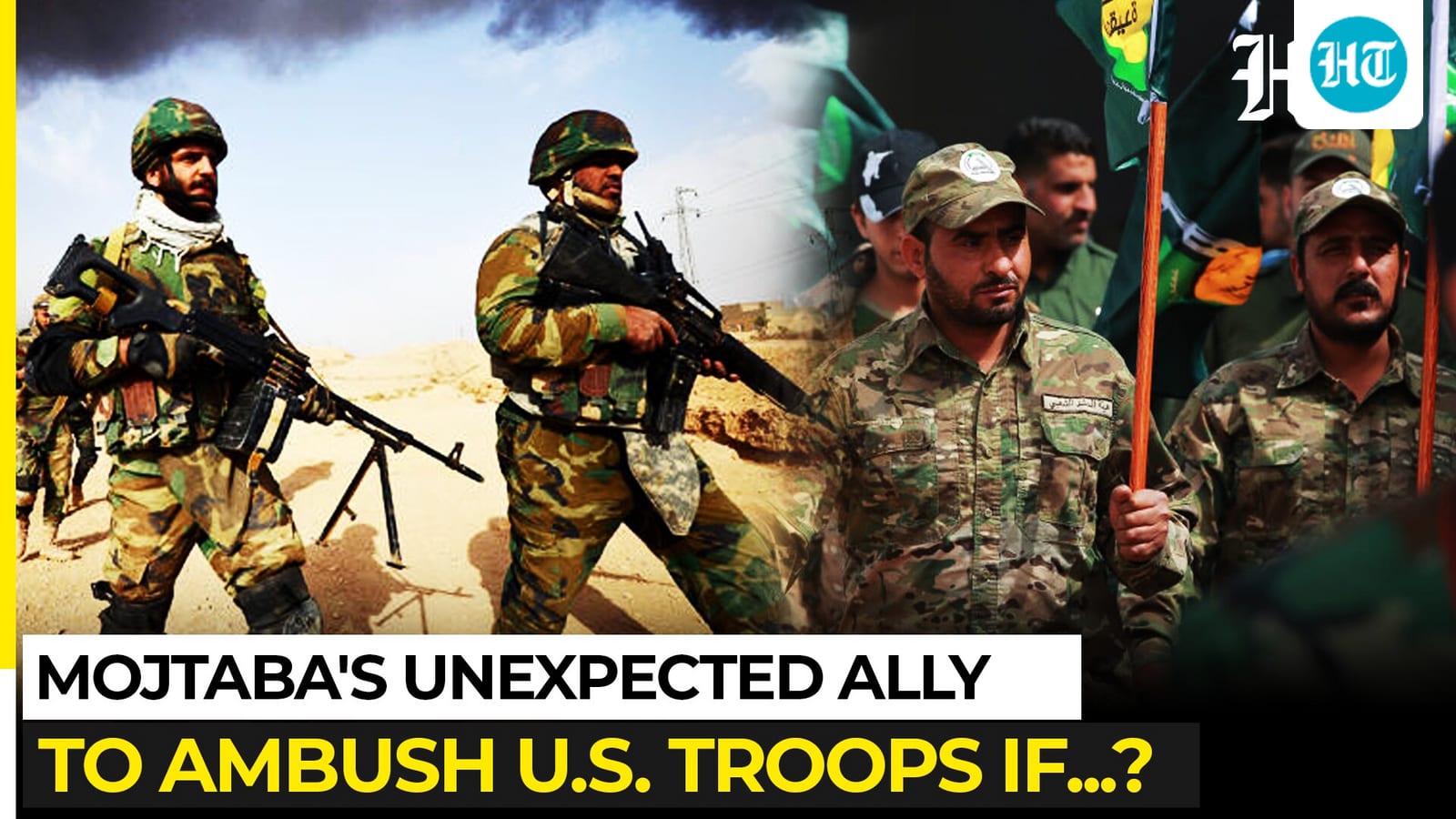
Iraqi fighters affiliated with the Popular Mobilization Forces have reportedly entered southern Iran to potentially support the Islamic Republic against a potential U.S. ground invasion. These combatants describe their presence as ideologically motivated rather than an official organizational deployment.
The Shadow Deployment: Iraqi Militias and the Iran-US Tensions
Recent reports indicate that fighters affiliated with Iraq’s Popular Mobilization Forces (PMF), or Hashd al-Shaabi, have positioned themselves within southern Iran. This development arrives amidst escalating fears of a potential United States ground invasion, suggesting a decentralized, ideological network is mobilizing to bolster Iranian defenses. While the presence is framed by commanders as a spontaneous, religiously motivated act, the strategic implications point toward a sophisticated shadow proxy network designed to complicate any potential Western military engagement.
Ideological Alignment vs. Formal Command
The commander’s assertion that this deployment is "completely natural" and not under formal PMF orders highlights the fluid nature of regional militant organizations. By framing the movement as an expression of ideological and religious solidarity, these groups effectively bypass formal state accountability. This allows the PMF to maintain a degree of plausible deniability while simultaneously providing Iran with a ready-to-deploy force that operates outside the rigid constraints of traditional military hierarchies.
Parallels to Regional Proxy Warfare
The current situation echoes historical precedents, specifically the support provided by these same militia networks to the Houthi movement in Yemen. By mirroring the tactical cooperation seen in other regional theaters, these fighters demonstrate a high level of operational mobility. This cross-border maneuverability serves as a force multiplier for the Islamic Republic, ensuring that any ground conflict would not be restricted to conventional Iranian forces but would instead involve a complex web of non-state actors deeply embedded in the terrain.
Strategic Implications of a Ground War
Should a ground conflict materialize, the presence of these Iraqi fighters suggests a strategy of attrition. By preparing for a ground war, these units are likely establishing local logistics, reconnaissance, and defensive positioning meant to turn a potential invasion into a protracted, high-cost struggle. This strategy seeks to neutralize the technological superiority of conventional military forces by forcing them into an asymmetric conflict where the front lines are blurred and the opposition is decentralized.
Future Trends and Regional Stability
The involvement of paramilitary groups in sovereign border defense signals a deepening integration of the 'Axis of Resistance.' As these groups continue to coordinate across national boundaries, the likelihood of a localized skirmish escalating into a multi-theater conflict increases significantly. Future trends will likely show an increased reliance on these informal networks, as they provide the Islamic Republic with a flexible shield that can be deployed or retracted based on the evolving threat landscape, ultimately complicating international diplomatic efforts to maintain regional stability.
Verification Required?