Israeli settlers set fire to West Bank mosques after deadly clash kills 6
Source Entity
Latest News: Todays Latest News Headlines from India & World | Hindustan Times | Hindustan Times
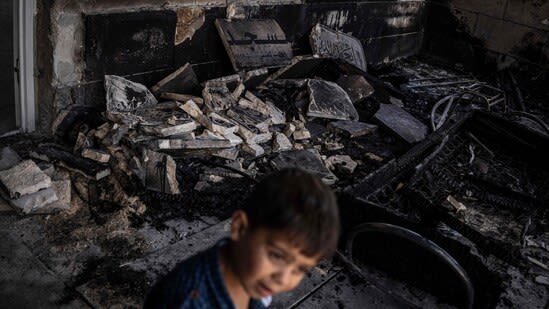
Israeli settlers set fire to two mosques in the West Bank following a violent clash that left six people dead. This escalation highlights the deepening cycle of violence between settlers and Palestinian villagers near Nablus.
Escalation in the West Bank: A Cycle of Violence
The recent surge of violence in the Israeli-occupied West Bank, characterized by the burning of two mosques and the death of six individuals, marks a significant and dangerous escalation in regional instability. Following an initial confrontation on Friday near the village of Tal, southwest of Nablus, tensions reached a boiling point when a group of Israeli settlers, some of whom were armed, approached the Palestinian community. The ensuing standoff resulted in the deaths of four Palestinians and two Israeli soldiers, including a security coordinator for a nearby settlement.
The Aftermath: Retaliatory Attacks
Following the deadly clash on Friday, the situation deteriorated rapidly on Sunday morning. Palestinian officials reported that Israeli settlers entered Palestinian villages to conduct retaliatory attacks, specifically targeting religious infrastructure. The burning of two mosques and the defacement of local buildings with graffiti reflect a pattern of provocation intended to intimidate local populations. These acts of vandalism serve to deepen the resentment and fear within the West Bank, further complicating the already volatile security landscape.
Historical Context and Regional Tensions
This incident is not an isolated event but rather part of a broader, intensifying trend of friction between settlers and Palestinian villagers. Throughout the current year, dozens of Palestinians have been killed in various clashes involving settlers across the occupied territories. The proximity of these events to Nablus, a frequent flashpoint for regional conflict, underscores the structural fragility of the area. The presence of armed settlers and the involvement of security coordinators highlight the blurred lines between civilian actions and state-sanctioned security operations.
Broader Implications for Security
The involvement of an Israeli security coordinator in the initial clash raises critical questions regarding the oversight and management of settlement security. When non-state actors or local security coordinators engage in direct conflict with neighboring Palestinian villages, it risks drawing official military units into broader, uncontrolled escalations. This dynamic creates a cycle where individual grievances quickly transform into communal violence, making de-escalation efforts increasingly difficult for both Palestinian authorities and the Israeli military.
Future Trends and Outlook
Given the current trajectory, the risk of further retaliatory cycles remains high. The deliberate targeting of cultural and religious sites, such as the mosques in Qusra, suggests a move toward ideological conflict that transcends simple territorial disputes. Unless there is significant intervention to de-escalate these localized confrontations, the trend of increasing casualties and property destruction is likely to continue, further isolating these communities and destabilizing the wider West Bank region.
Verification Required?