Why ISRO’s latest success matters more than it appears | The Hindu Editorial
Source Entity
India Latest News: Top National Headlines Today & Breaking News | The Hindu
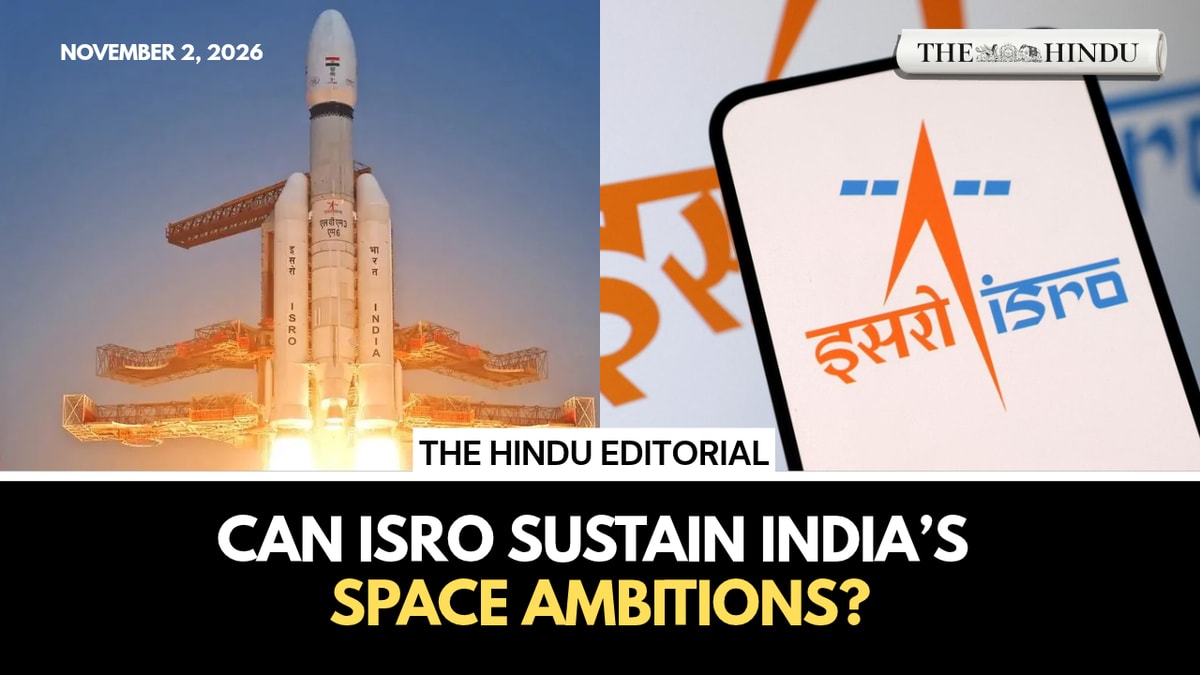
The successful GSLV-F18 mission marks a pivotal step in restoring India's NavIC navigation capabilities. However, experts emphasize that sustained growth requires increased funding, manufacturing capacity, and structural reforms.
Strengthening India’s Celestial Footprint: The GSLV-F18 Milestone
The successful execution of the GSLV-F18 mission stands as a testament to the Indian Space Research Organisation's (ISRO) technical resilience. By deploying critical assets, this mission directly addresses the restoration of the NavIC (Navigation with Indian Constellation) system’s operational capabilities. As India seeks to reduce its reliance on foreign global positioning systems, the reinforcement of this indigenous infrastructure is a strategic necessity for both civilian and security-related navigation requirements.
The Strategic Significance of NavIC
NavIC is not merely a satellite network; it is a vital pillar of India's technological sovereignty. By maintaining a robust, independent navigation system, India ensures that its terrestrial, maritime, and aerial navigation services remain impervious to external disruptions or geopolitical leverage. The GSLV-F18 mission acts as a crucial bridge in maintaining the constellation's health, ensuring that the network provides precise timing and location data across the Indian subcontinent and its surrounding regions.
Challenges in Scaling Space Ambitions
While the GSLV-F18 success is a cause for celebration, it also illuminates the systemic bottlenecks currently facing the Indian space sector. The transition from mission-based success to a scalable space economy requires a paradigm shift. Experts have highlighted that current manufacturing capacities are stretched, potentially limiting the frequency and scale of future launches. Without a significant expansion in industrial output, ISRO may struggle to keep pace with the rapidly evolving demands of global space commerce.
The Need for Structural Reform
To achieve the long-term ambitions envisioned by the Indian government, incremental progress is insufficient. The sector requires comprehensive structural reforms that foster greater private-sector participation, streamline bureaucratic processes, and encourage innovation. By decentralizing certain manufacturing aspects and integrating private industry into the supply chain, India can optimize its resource allocation and accelerate its launch cadence.
Financial Implications and Future Trends
Funding remains the lifeblood of space exploration. The current fiscal allocation, while supportive, must be re-evaluated against the backdrop of global competitors who are aggressively investing in reusable launch vehicles and satellite constellations. Future trends suggest that the nations that master cost-effective, high-frequency launch technology will dominate the space-based economy. For ISRO, this means balancing the immediate need for mission success with the long-term imperative of financial sustainability and technological evolution.
Conclusion: A Path Forward
The GSLV-F18 mission serves as both a victory and a bellwether for India’s space program. While it successfully demonstrates ISRO's operational excellence, it also acts as a clear call to action. By prioritizing increased manufacturing capacity, sustainable funding models, and deeper structural reforms, India can translate these individual successes into a permanent and dominant presence in the global space sector.
Verification Required?