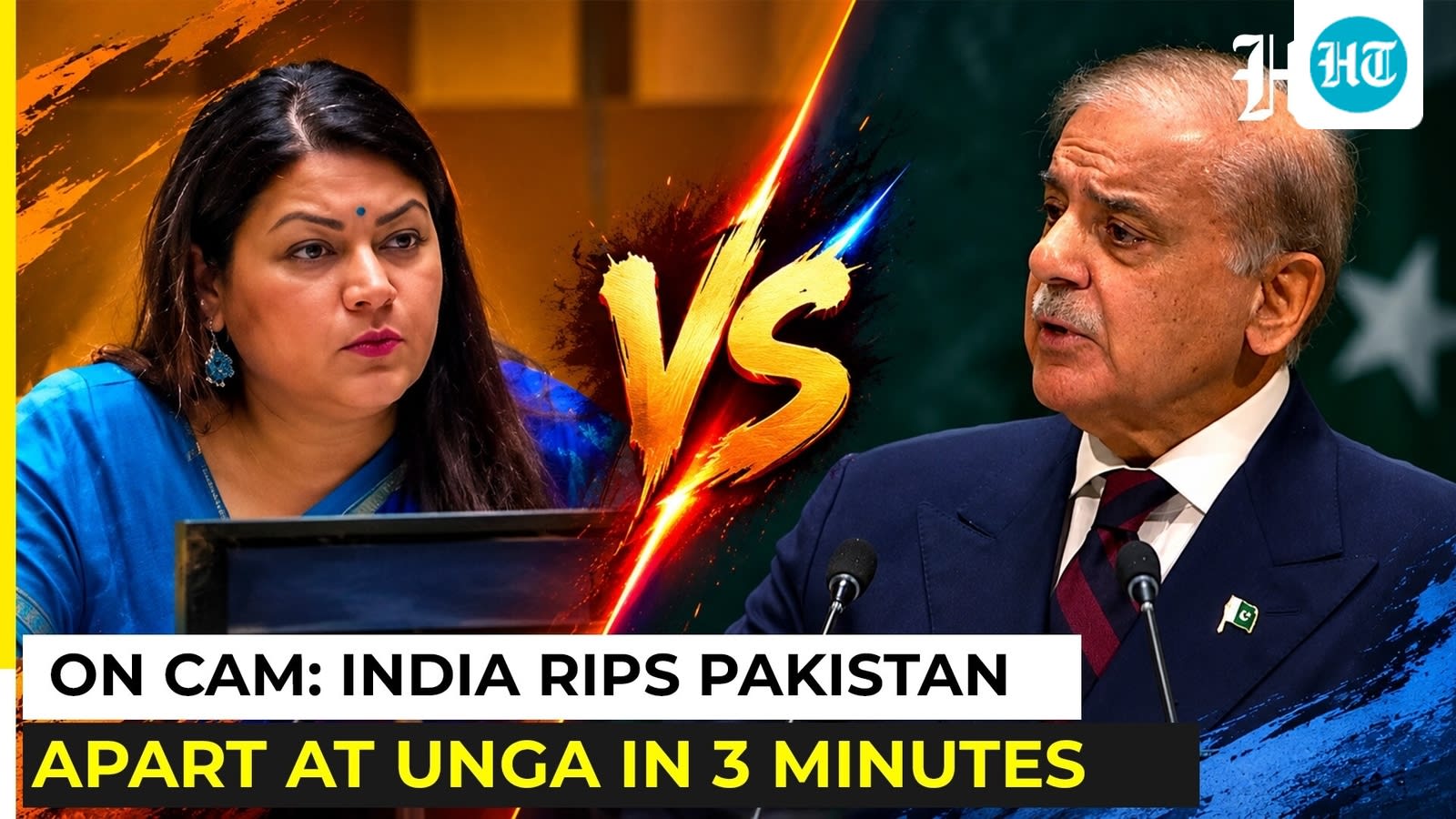
India tears into Shehbaz Sharif’s UNGA claims, calls Pakistan a terror sponsor & army regime
Source Entity
Latest News: Todays Latest News Headlines from India & World | Hindustan Times | Hindustan Times
External Affairs Minister S Jaishankar sharply rebuked a Pakistani journalist at the UN, dismissing their query about state-sponsored terrorism by labeling Pakistan a 'terrorist country.' The exchange occurred following a press briefing on maritime security.
Diplomatic Tensions at the UN: Jaishankar’s Sharp Rebuttal
During a recent press engagement at the United Nations headquarters in New York, Indian External Affairs Minister S. Jaishankar delivered a pointed response to a Pakistani journalist. The interaction occurred following a collaborative briefing between Minister Jaishankar and Liberian Foreign Minister Sara Beysolow Nyanti, which focused on the launch of a new 'Group of Friends' initiative dedicated to the safety and security of global shipping and seafarers.
The Confrontation
As the formal proceedings concluded, a journalist identifying as Pakistani posed a provocative question to Minister Jaishankar, asking when the Indian government would cease sponsoring terrorism in Pakistan. Jaishankar, known for his direct and often assertive diplomatic style, immediately dismissed the premise of the question with the retort: "A terrorist country is asking me that question. Come on." The brevity of the response underscored the Minister’s stance that the accusation lacked legitimacy given the source.
Contextualizing India-Pakistan Diplomatic Friction
This exchange reflects the long-standing, deep-seated diplomatic animosity between India and Pakistan. For decades, India has consistently accused Pakistan of providing safe harbor to militant groups and facilitating cross-border terrorism, particularly in the region of Jammu and Kashmir. Conversely, Pakistan often attempts to frame India as an aggressor in international forums. Jaishankar’s response serves as a masterclass in his 'realist' approach to diplomacy, where he refuses to engage with narratives he views as hypocritical or based on false equivalencies.
The Venue: The UN Stage
Using the United Nations as a platform for this exchange highlights how international summits are frequently utilized by both nations to project their grievances to a global audience. While the primary intent of the event was to discuss the security of maritime commerce and the protection of seafarers, the geopolitical rivalry between New Delhi and Islamabad inevitably dominated the narrative. By shutting down the line of questioning, Jaishankar signaled that India is no longer willing to entertain what it considers to be state-sponsored disinformation campaigns on global stages.
Broader Geopolitical Implications
The incident is unlikely to change the trajectory of India-Pakistan relations, which remain at a near-standstill. However, it reinforces the current Indian government’s policy of 'strategic autonomy' and vocal assertiveness. By labeling Pakistan a 'terrorist country' in such a public forum, Jaishankar has signaled a shift toward a more aggressive diplomatic posture, one that prioritizes calling out perceived hypocrisy over traditional, softer diplomatic decorum.
Future Outlook
As international forums continue to grapple with regional conflicts, the trend of using press briefings for sharp political rebuttals is expected to persist. For India, this represents a move toward framing its own regional security concerns as a matter of global counter-terrorism priority. The incident underscores that the path toward dialogue between the two nuclear-armed neighbors remains obstructed by fundamental disagreements over security, sovereignty, and the definition of state responsibility.
Multiple Citing Sources
Verification Required?