JPMorgan's Dimon says regulators should not set 'false' capital requirements
Source Entity
Yahoo Finance
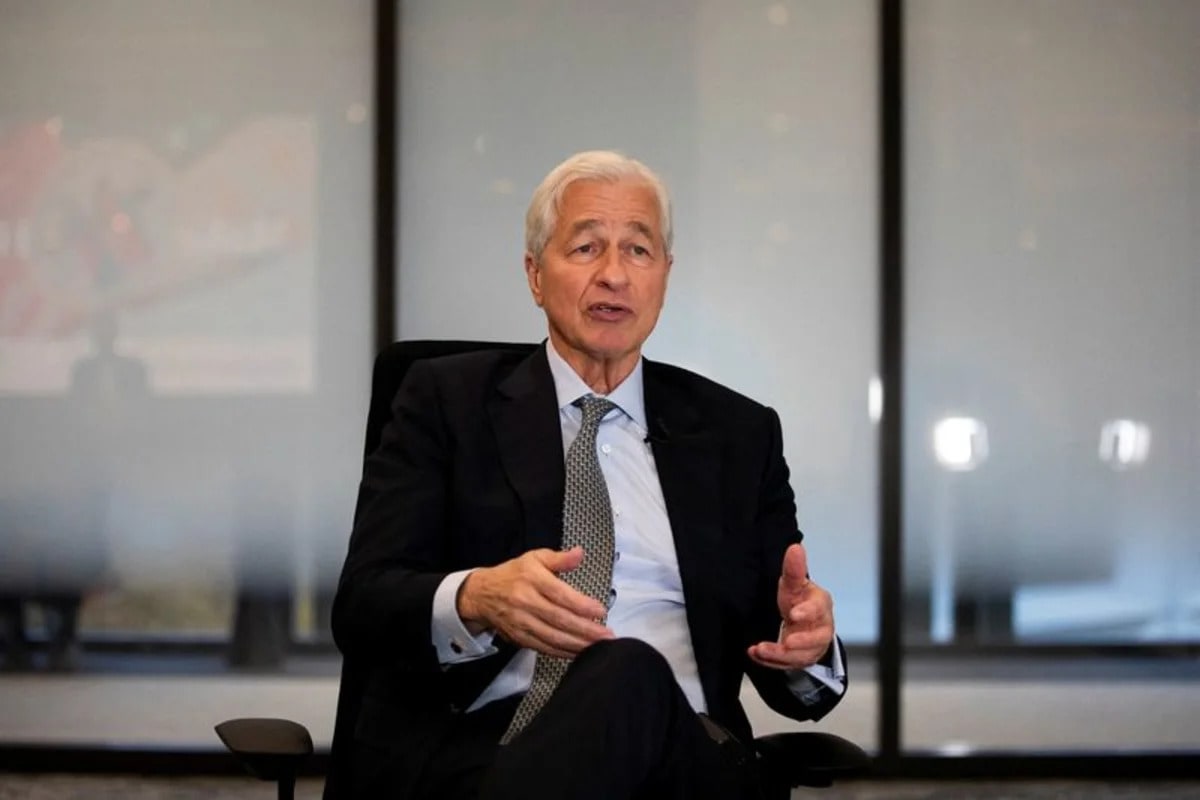
JPMorgan Chase CEO Jamie Dimon has criticized U.S. bank regulators, arguing that setting artificially high capital requirements is counterproductive and based on 'false' premises, potentially hindering economic growth.
The Clash Over Capital: Jamie Dimon vs. U.S. Banking Regulators
In a significant escalation of the tension between Wall Street and Washington, JPMorgan Chase CEO Jamie Dimon has publicly challenged U.S. bank regulators over their approach to capital requirements. Dimon's assertion that regulators should not set "false" or artificially high capital requirements strikes at the heart of a fundamental debate in financial stability: how to balance the safety of the banking system with the need for banks to lend and stimulate economic growth. This critique is not merely a complaint about profitability, but a strategic argument regarding the efficiency of the U.S. financial architecture.
Understanding the Capital Requirement Conflict
To understand Dimon's frustration, one must first understand what capital requirements entail. These are mandates that require banks to hold a certain percentage of their assets as liquid capital (equity) to act as a buffer against potential losses. While the goal is to prevent a repeat of the 2008 financial crisis, Dimon argues that when these requirements are set too high—or based on flawed risk-weighting models—they become "false." He suggests that forcing banks to hold excessive capital doesn't necessarily make the system safer if the calculations used to determine those levels are detached from the actual risks the banks are taking.
The Shadow of the Basel III Endgame
This dispute is largely situated within the context of the "Basel III Endgame," a set of international banking standards designed to harmonize capital rules globally. U.S. regulators have often sought to implement these rules more stringently than their international peers. By pushing for higher capital buffers, regulators aim to eliminate the possibility of "too big to fail" institutions requiring taxpayer-funded bailouts. However, from Dimon's perspective, this creates a regulatory divergence where U.S. banks may be overburdened compared to European or Asian counterparts, potentially handicapping the competitiveness of American financial institutions on the global stage.
Economic Implications and the Credit Crunch Risk
One of the most critical points of Dimon's analysis is the broader economic implication of over-capitalization. Capital that is locked away in reserves to satisfy regulatory mandates is capital that cannot be deployed into the economy. When banks are forced to hold an artificial surplus, they may reduce their lending to small businesses, tighten mortgage criteria, or scale back infrastructure investments. Dimon is essentially warning that an obsession with theoretical safety could lead to a real-world credit crunch, slowing GDP growth and hindering the ability of the private sector to expand.
The Shift Toward Shadow Banking
Furthermore, there is a systemic risk that overly stringent regulations on traditional banks will simply push financial activity into the "shadow banking" sector. Non-bank financial intermediaries, such as private equity firms and hedge funds, do not face the same capital requirements as JPMorgan Chase. If traditional banks are forced to retreat from certain lending markets due to high capital costs, these activities will migrate to less regulated entities. This paradox means that while individual banks might appear safer on paper, the overall financial system could become more opaque and risky as credit moves away from the supervised banking perimeter.
Conclusion: A Precarious Balance
In summary, Jamie Dimon's critique highlights a precarious balancing act. Regulators are driven by the mandate of systemic stability and the prevention of catastrophic failure, while bank executives are driven by efficiency, growth, and shareholder value. The resolution of this conflict will likely involve a protracted period of lobbying and potential revisions to the proposed rules. As the U.S. economy navigates fluctuating interest rates and inflationary pressures, the outcome of this regulatory battle will determine whether the U.S. banking system remains a primary engine of economic expansion or becomes a heavily buffered, but stagnant, utility.