Big setback for Prashant Kishor! 4 Jan Suraaj leaders switch to BJP before Bankipur bypoll
Source Entity
TOI NEWS DESK
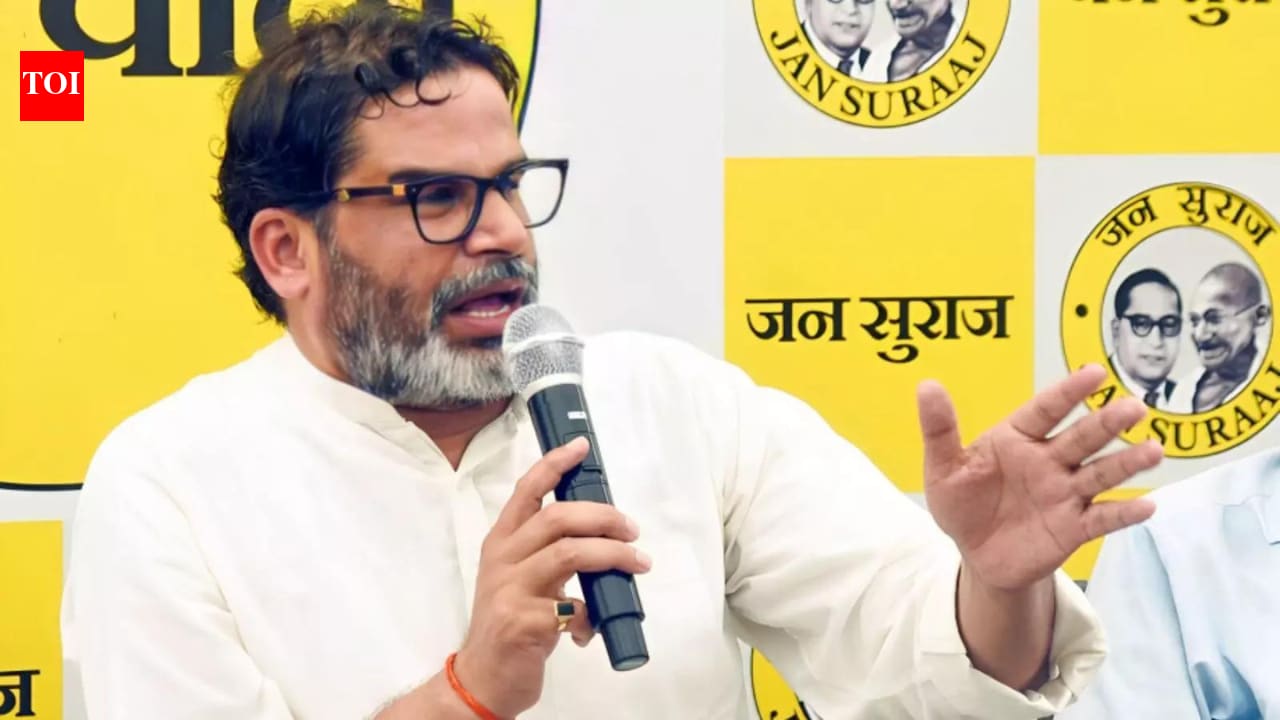
Four leaders from Prashant Kishor's Jan Suraaj movement have defected to the Bharatiya Janata Party (BJP) just before the Bankipur Assembly bypoll scheduled for July 30. This move comes as Kishor prepares to contest the seat against BJP candidate Neeraj Kumar Sinha, following the resignation of Nitin Nabin.
Political Realignment in Bankipur: A Strategic Blow to Jan Suraaj
The political landscape of the Bankipur constituency has undergone a sudden and significant shift with the defection of four key leaders from Prashant Kishor's Jan Suraaj movement to the Bharatiya Janata Party (BJP). This move, occurring just ahead of the July 30 bypoll, represents more than a simple change in party affiliation; it is a calculated blow to the momentum Kishor has attempted to build within the region. The timing of these defections suggests a strategic effort by the BJP to consolidate its base and demoralize the opposition in the final stretch of the campaign.
The High-Stakes Battle for Bankipur
The Bankipur bypoll, necessitated by the resignation of former representative Nitin Nabin, has become a litmus test for Prashant Kishor's transition from a master political strategist to a direct electoral candidate. Facing off against the BJP's Neeraj Kumar Sinha, Kishor is attempting to prove that his Jan Suraaj philosophy can translate into actual votes. However, the loss of four leaders to the opposing camp undermines the organizational stability required to execute a winning ground game. In by-elections, where voter turnout is often lower and local influence is paramount, the loss of experienced local leaders can significantly disrupt the mobilization of the electorate.
The Allure of the BJP's National Narrative
The newly joined BJP members explicitly cited Prime Minister Narendra Modi's leadership and the overarching goal of national development as their primary motivations for switching sides. This highlights a recurring challenge for emerging political movements like Jan Suraaj: competing against a well-entrenched national narrative. By aligning themselves with the BJP, these leaders are pivoting from a localized, reform-centric movement to a party with an established machinery and a powerful centralized leadership, which often provides a more certain path to power and resource allocation.
Analyzing the Jan Suraaj Strategy
Prashant Kishor's Jan Suraaj has long positioned itself as an alternative to traditional party politics, focusing on systemic change and grassroots empowerment. However, this event underscores the inherent difficulty in maintaining loyalty within a nascent political organization when faced with the gravitational pull of a dominant party like the BJP. The defection suggests a potential gap between the ideological aspirations of the movement and the pragmatic ambitions of its local leaders, who may view the BJP as a more viable vehicle for achieving political success in the current climate.
Broader Implications and Future Trends
Looking forward, this development may signal a trend of attrition for Jan Suraaj if it cannot quickly stabilize its leadership core. If Kishor fails to secure a strong showing in Bankipur, it could embolden further defections and weaken the movement's credibility across other constituencies. Conversely, if he manages to overcome this setback, it would demonstrate a resilience that could redefine the political dynamics of the state. The outcome of the July 30 poll will likely dictate whether Jan Suraaj is viewed as a serious political contender or merely a temporary disruption in the established bipartisan or tripartite power structures.
Summary
The defection of four Jan Suraaj leaders to the BJP ahead of the Bankipur bypoll creates a challenging environment for Prashant Kishor. As he contests the seat against Neeraj Kumar Sinha, the shift underscores the tension between new political experiments and established party power. The results on July 30 will be critical in determining the future viability of the Jan Suraaj movement.