Protest venue under a web of cameras and facial recognition systems
Source Entity
India Latest News: Top National Headlines Today & Breaking News | The Hindu
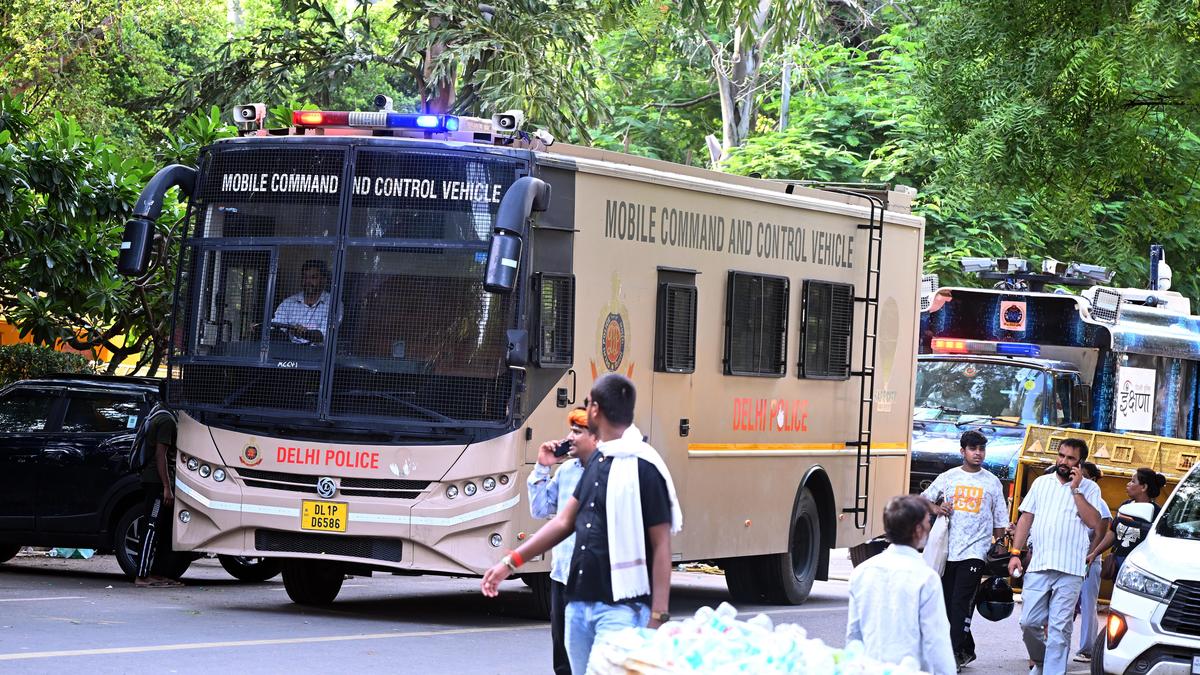
Protesters at Jantar Mantar face severe challenges regarding basic sanitation and privacy as police deploy advanced AI-driven surveillance. The situation highlights a growing tension between the right to peaceful assembly and the lack of a comprehensive legal framework for police conduct.
The Human Cost of Dissent: Navigating Infrastructure and Surveillance at Jantar Mantar
The Crisis of Basic Dignity
As the protest at Jantar Mantar continues to draw participants from across India, the physical reality for those on the ground has shifted from ideological commitment to a struggle for basic survival. Women protesters, in particular, report that the lack of clean, accessible washrooms and reliable water supplies has become the most significant barrier to sustained participation. This deficiency in public infrastructure is not merely an inconvenience; it acts as a structural deterrent, forcing individuals—like Harishma from Bengaluru—to leave the site for hours at a time to find sanitary facilities. This creates a cycle of disruption that hinders the effectiveness of the protest and complicates the efforts of volunteer medical staff attempting to provide care in an environment devoid of basic hygiene.
The Surveillance State and Privacy Concerns
Beyond the logistical challenges, the environment at Jantar Mantar has become increasingly digitized. The deployment of the Delhi Police's 'DP-Dristhi' and 'Ikshana' surveillance vans, equipped with AI-assisted facial recognition, has fundamentally altered the nature of public assembly. By scanning live feeds to cross-reference individuals against criminal databases, these systems have instilled a profound sense of apprehension among younger protesters, such as Delhi University student Anushka. The pervasive nature of this monitoring, characterized by the installation of additional CCTV cameras and mobile control rooms, suggests a shift toward high-tech crowd management that many fear will lead to the chilling of political expression.
Legal Ambiguity in Crowd Control
The situation has reignited a debate regarding the legal standards governing police conduct during public demonstrations. While the Bharatiya Nagarik Suraksha Sanhita (BNSS) provides the state with the authority to disperse unlawful assemblies, there remains a critical gap in statutory oversight. Notably, current laws do not mandate the use of body-worn cameras or compulsory videography of police actions, leaving the accountability process reliant on evolving judicial precedents rather than clear, codified legislative mandates. This legal fragmentation leaves protesters vulnerable and police actions subject to intense scrutiny without a standardized, transparent framework.
The Principle of Proportionality
Constitutional courts have historically emphasized that police powers are strictly bound by the principles of legality, necessity, and proportionality. However, the disconnect between these legal ideals and the reality on the ground at Jantar Mantar remains stark. When the state utilizes advanced surveillance technology while simultaneously failing to provide basic human necessities like water and sanitation, it raises significant questions about the state's role in facilitating, rather than suppressing, the democratic right to protest. The absence of a comprehensive statutory framework for use-of-force further complicates this dynamic, as the lack of transparency in police operations contrasts sharply with the high-tech surveillance imposed on the public.
Looking Toward Future Trends
As India continues to integrate AI-driven surveillance into its public security apparatus, the tension between civil liberties and state security is likely to intensify. The Jantar Mantar case serves as a microcosm of this broader national trend. The future of protest in India will likely be defined by a tug-of-war between the state’s desire for total oversight and the public's demand for the right to dissent without fear of digital tracking or physical neglect. Unless legislative bodies act to codify specific protections for protesters and clarify the limits of surveillance and force, the environment at sites like Jantar Mantar will continue to be a site of friction, where the struggle for basic human rights is overshadowed by the mechanisms of state control.
Multiple Citing Sources
Verification Required?