Swelling crowds, defiant mood as protest stays firm at Jantar Mantar
Source Entity
Latest News: Todays Latest News Headlines from India & World | Hindustan Times | Hindustan Times
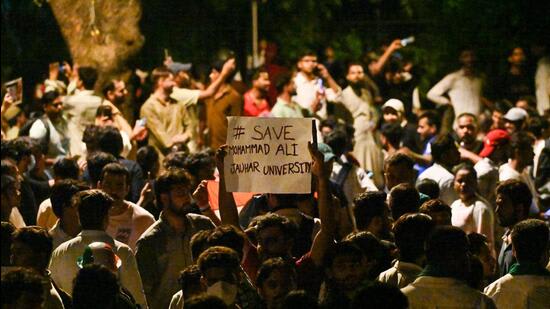
A large-scale, youth-led protest at Jantar Mantar continues to intensify, demanding the resignation of Education Minister Dharmendra Pradhan. Despite ongoing government talks, participants remain defiant, citing deep-seated anxieties over employment and the future of the Indian education system.
The Jantar Mantar Uprising: A Deep Dive into Youth-Led Dissent
The Anatomy of the Protest
The ongoing agitation at Jantar Mantar has evolved into one of the most significant youth-led demonstrations in recent memory. Despite activist Sonam Wangchuk concluding his hunger strike and the Cockroach Janta Party (CJP) engaging in a second round of negotiations with the central government, the energy on the ground remains remarkably high. As of July 24, 2026, the protest site has reached a critical mass, with participants enduring wait times of nearly 100 minutes just to access the area near the Janpath metro station. The sheer diversity of the crowd—ranging from concerned students to farmer unions and legal professionals—underscores the widespread nature of the grievance.
Core Demands and Political Friction
At the heart of the unrest is a singular, focused demand: the immediate resignation of Union Education Minister Dharmendra Pradhan. This call for accountability has galvanized supporters of the CJP, who have transformed the historic protest site into a hub of political activity. The presence of individuals like Satish Deshpande, who traveled from Madhya Pradesh to participate, indicates that the movement has transcended local boundaries, tapping into a national narrative of administrative dissatisfaction.
The Generational Pulse: Anxiety and the Job Market
To understand the intensity of the protests, one must look at the participants, many of whom are Gen Z students like 21-year-old Shivam. For these individuals, the protest is not merely political; it is an existential response to a precarious job market. Shivam, an engineering student, notes that his peers are increasingly forced into gig economy roles—such as delivery partners—due to a lack of professional opportunities. This fear of a stagnant future is the primary driver of the 'angry' sentiment currently defining the movement.
The Constitutional Context of Dissent
The protest has also reignited the national conversation regarding the boundaries of dissent. Political commentators, including Ram Madhav, have emphasized that while Article 19 (1) (a) of the Indian Constitution grants the right to peaceful protest, this freedom must be exercised with discipline. This perspective highlights the tension between the government's expectation of order and the protesters' need to be heard in a system that they feel has failed to address their specific educational and employment-related concerns.
Future Trends and Implications
As the agitation enters its second month, the movement has gained significant momentum. The ability of the CJP to organize sustained, large-scale presence suggests a high level of coordination. Looking ahead, the government's ability to navigate these talks will be a litmus test for its responsiveness to youth-led movements. If the administration fails to provide a concrete resolution regarding the Education Ministry, the protest is likely to maintain its defiant stance, potentially expanding its influence across more regions and demographics in the coming weeks.
Multiple Citing Sources
Verification Required?