Yogendra Yadav writes | I was part of the protest march in Delhi. Democratic politics took a new turn
Source Entity
Yogendra Yadav
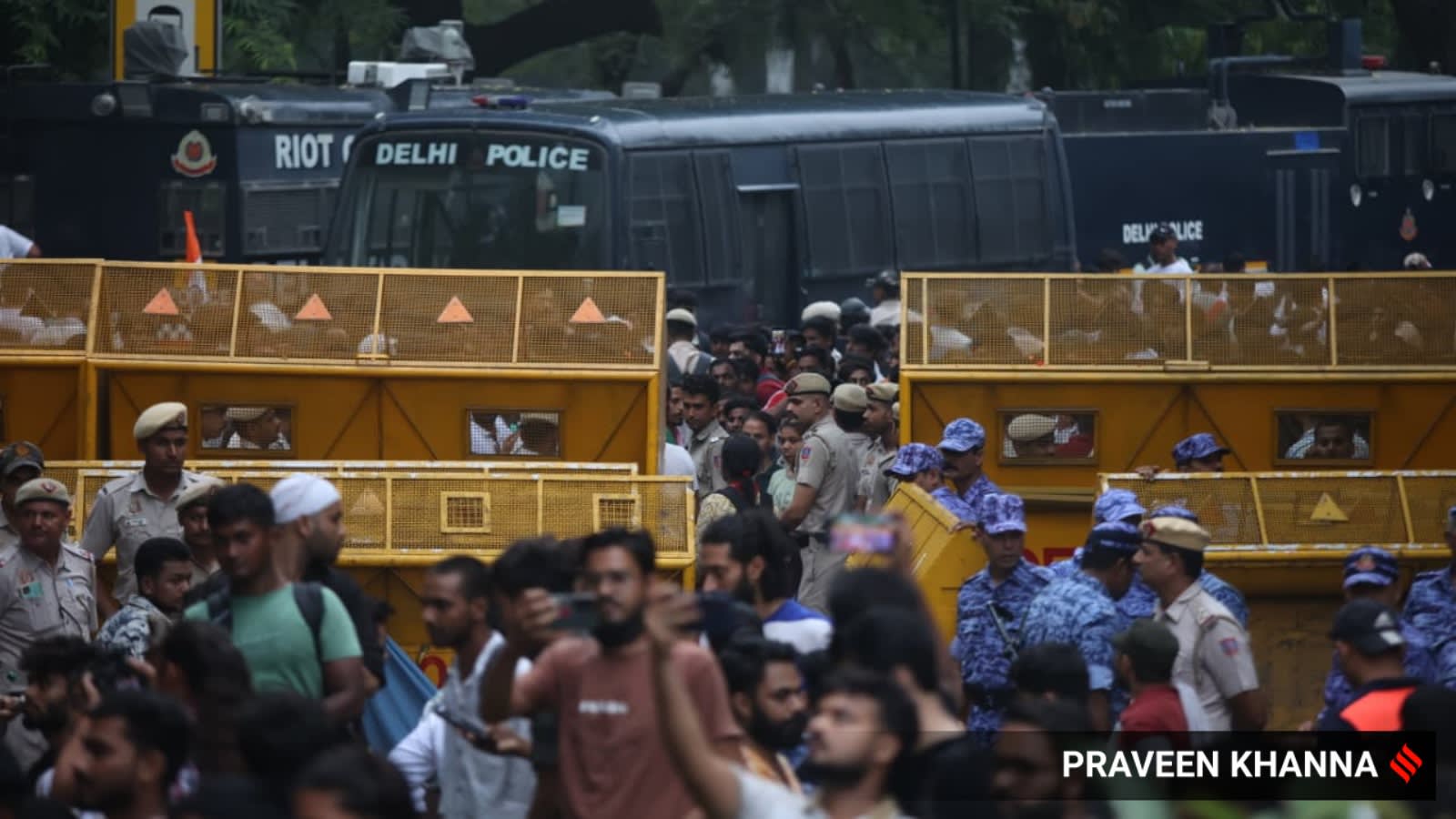
Protestors at Jantar Mantar against the NEET-UG 2026 paper leak are receiving widespread support through food deliveries from strangers. Volunteers and activists are maintaining the site's cleanliness and spirit, marking a significant moment in Indian democratic resistance.
The Resurgence of Democratic Resistance at Jantar Mantar
The ongoing demonstrations at Jantar Mantar, sparked by the NEET-UG 2026 paper leak and the Cockroach Janta Party’s (CJP) mobilization, have evolved into a significant display of public solidarity. As the protests intensified on Monday, the movement drew attention not just for its political demands, but for the unique way citizens across India have engaged with the cause. Through the digital infrastructure of food delivery platforms like Zomato and Swiggy, individuals from as far as Mumbai have been able to provide direct support to students and activists on the ground in Delhi, bridging geographical divides through the simple act of providing a meal.
The Digital-Physical Nexus of Support
This phenomenon of "crowdsourced sustenance" highlights a new era of protest participation. The viral nature of these interactions—specifically the footage of delivery partners navigating inclement weather to reach the protest site—illustrates a decentralized support network. By leveraging modern gig-economy apps, strangers have transformed into active participants, ensuring that the physical endurance of the protestors is sustained by remote supporters. This logistical cooperation represents a shift in how modern movements organize, utilizing everyday services to bypass traditional barriers to entry for political activism.
Voluntary Stewardship and Civic Responsibility
Beyond the influx of food, the protest site has seen a grassroots commitment to order and sanitation. Volunteers like Suhail Khan and Pramod Pal have taken it upon themselves to maintain the hygiene of Jantar Mantar, performing tasks as labor-intensive as clearing clogged drains by hand. This dedication to "seva" (selfless service) reflects a deep-seated belief that public spaces, regardless of their political nature, must be treated with the same respect as places of worship or one's own home. This behavior signals a shift from purely disruptive protest tactics to a model of constructive occupation, where protestors take ownership of their environment.
A New Turn in Democratic Politics
As noted by political commentator Yogendra Yadav, the atmosphere at Jantar Mantar signifies a shift in the nature of Indian democratic engagement. The movement is being characterized not merely as a reaction to a specific policy failure like the NEET-UG leak, but as a broader re-awakening of civil society. The transition from electoral politics to what some observers term a "politics of resistance" suggests that citizens are finding new ways to express discontent in an environment where traditional political channels may feel unresponsive or silenced.
Historical Context and Future Implications
Historically, Jantar Mantar has served as the epicenter of dissent in the capital, yet the current movement carries a distinct flavor of digital-age solidarity. By connecting the struggle of students to the broader national consciousness, the movement has successfully maintained momentum despite the challenges of the rainy season and the pressures of the state. If this trend of localized volunteerism and remote digital support persists, it could serve as a blueprint for future grassroots movements in India, potentially reshaping how power is challenged and how community bonds are formed in the digital age.
Conclusion
The protests at Jantar Mantar represent a confluence of technology, civic duty, and political frustration. Whether this momentum will force tangible policy changes regarding the NEET-UG examination remains to be seen. However, the events of this week have undeniably revitalized the spirit of public protest, proving that even in an era of digital detachment, the physical act of gathering—supported by the invisible hands of thousands of strangers—remains a potent tool for democratic expression.
Multiple Citing Sources