NEET protest: TVK slams Centre; Rahul, Priyanka released from detention — top developments
Source Entity
TOI NEWS DESK
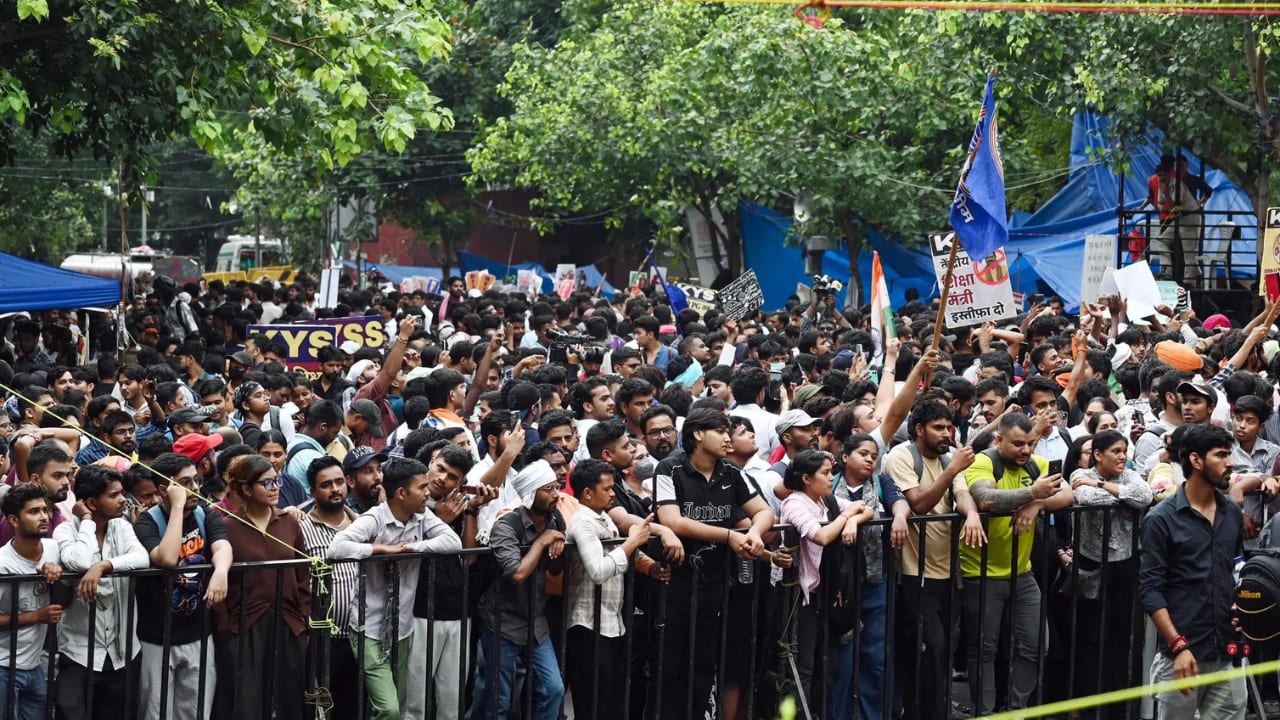
Protests over NEET examination irregularities have intensified across India, leading to the detention of senior Congress leaders and student activists. While government officials have criticized the opposition, solidarity marches continue in cities like Goa despite legal interventions.
The NEET Crisis: Escalating Protests and Political Fallout
The Surge of Public Unrest
The current wave of unrest centered on the NEET examination irregularities has evolved into a significant political challenge for the Union government. Thousands of protesters have converged at Jantar Mantar in New Delhi, demanding accountability for systemic failures in the examination process. The movement, which initially focused on academic integrity, has now expanded to include broader demands, such as the resignation of Union Education Minister Dharmendra Pradhan and Prime Minister Narendra Modi.
Political Confrontation and Detention
The situation escalated significantly when senior Congress leaders, including Rahul Gandhi and Priyanka Gandhi Vadra, were detained by Delhi Police while marching toward the Prime Minister’s residence. This detention sparked immediate condemnation from various political entities, including the Tamilaga Ve (TVK), which has explicitly called for the abolition of the NEET system. The government, represented by Education Minister Pradhan, has hit back at the Congress, framing the protests as politically motivated rather than purely student-led.
Solidarity and Legal Consequences
Beyond the capital, the protest movement has gained national momentum. In Goa, a solidarity march in support of the Delhi protests and environmentalist Sonam Wangchuk—who is currently observing a fast—has resulted in police action. Authorities in Panaji lodged an FIR against unknown participants for unlawful assembly and lack of prior permission, signaling a hardening stance by state law enforcement against the spreading agitation.
The Human Cost of Agitation
The resilience of the protesters is evident in the accounts of individuals like 21-year-old student Sameer Dorwal, who returned to the protest site at Jantar Mantar immediately after being released from overnight detention. With police reporting multiple injuries and the registration of six FIRs in Delhi, the atmosphere remains tense. The persistence of these students, despite the threat of legal action and overnight police custody, underscores the depth of frustration regarding the NEET examination process.
Future Implications and Trends
The convergence of student grievances with opposition political strategy suggests that the NEET issue will remain a flashpoint in national politics for the foreseeable future. As the government attempts to manage the fallout through administrative and legal channels, the opposition is likely to continue leveraging these protests to challenge the current Education Ministry's oversight. The trend of regional solidarity marches, such as the one seen in Goa, indicates that the movement is no longer confined to the capital, making a swift resolution difficult without significant policy concessions or structural reforms to the examination body.
Multiple Citing Sources