Inside Japan’s portable 'human fridge' designed to beat brutal heat
Source Entity
Latest News: Todays Latest News Headlines from India & World | Hindustan Times | Hindustan Times
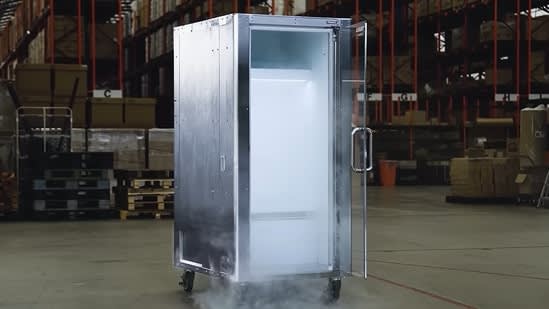
Japan has introduced a portable, human-sized refrigerator designed to provide rapid cooling relief during the country's increasingly brutal summer heat waves. The glass-doored cabin allows individuals to sit inside and experience a swift drop in temperature, highlighting innovative technological responses to climate-driven weather extremes.
Japan’s Innovative Response to Escalating Heat Waves
As Japan grapples with increasingly oppressive summer temperatures, often exceeding 40°C in metropolitan areas like Tokyo, the need for rapid cooling solutions has become a matter of public health. A novel technological intervention has emerged in the form of a portable, human-sized refrigerator. This metallic, glass-doored cabin is specifically engineered to offer immediate relief from the sweltering outdoor environment, functioning as a sanctuary for those struggling with the intense heat.
The Mechanics of Personal Cooling
The device, recently featured in a hands-on demonstration by CNN correspondent Hanako Montgomery, represents a departure from traditional air conditioning systems. Unlike building-wide HVAC units, this freestanding cabin provides a concentrated, rapid cooling experience. Users enter the unit, take a seat on a built-in bench, and shut the door to initiate an immediate temperature drop. The portability of the unit suggests a future where such infrastructure could be deployed in high-traffic urban areas to prevent heat-related illnesses among pedestrians and commuters.
Climate Change and Urban Heat Islands
The development of this 'human fridge' is directly tied to the broader context of climate change and the 'urban heat island' effect prevalent in dense cities like Tokyo. As concrete and asphalt absorb and radiate heat, urban centers often experience significantly higher temperatures than surrounding rural areas. This technology serves as an adaptive strategy, acknowledging that while systemic climate action is essential, immediate, localized mitigation is necessary to protect citizens from extreme weather events.
Societal Implications of Extreme Weather
The emergence of such gadgets underscores the severity of recent Japanese summers, which have become increasingly characterized by brutal, prolonged heat waves. By creating a product that allows individuals to 'step inside' to escape the sun, developers are addressing the physical toll of rising temperatures on human productivity and health. The lighthearted reception of the device, as seen in social media demonstrations, masks a serious underlying reality: the environment is reaching a point where passive cooling methods are no longer sufficient.
Future Trends in Heat Mitigation
Looking forward, we can expect to see a rise in 'micro-climate' infrastructure. If this portable refrigerator proves successful in public trials, it may lead to the widespread integration of similar cooling kiosks in transit hubs, parks, and busy commercial districts. This represents a shift in urban planning where climate adaptation is integrated directly into the streetscape, moving beyond simple shade structures toward active, technology-driven thermal management.
Conclusion
Japan’s initiative serves as a poignant example of human ingenuity in the face of environmental adversity. While this 'human fridge' is a creative solution to provide immediate, short-term relief, it also acts as a barometer for the current state of our climate. As temperatures continue to climb, the demand for such innovative cooling technology will likely grow, fundamentally altering how urban populations navigate and survive the summer months.
Verification Required?