Japan's weed-munching goats to retire early after eating all the grass
Source Entity
Latest News: Todays Latest News Headlines from India & World | Hindustan Times
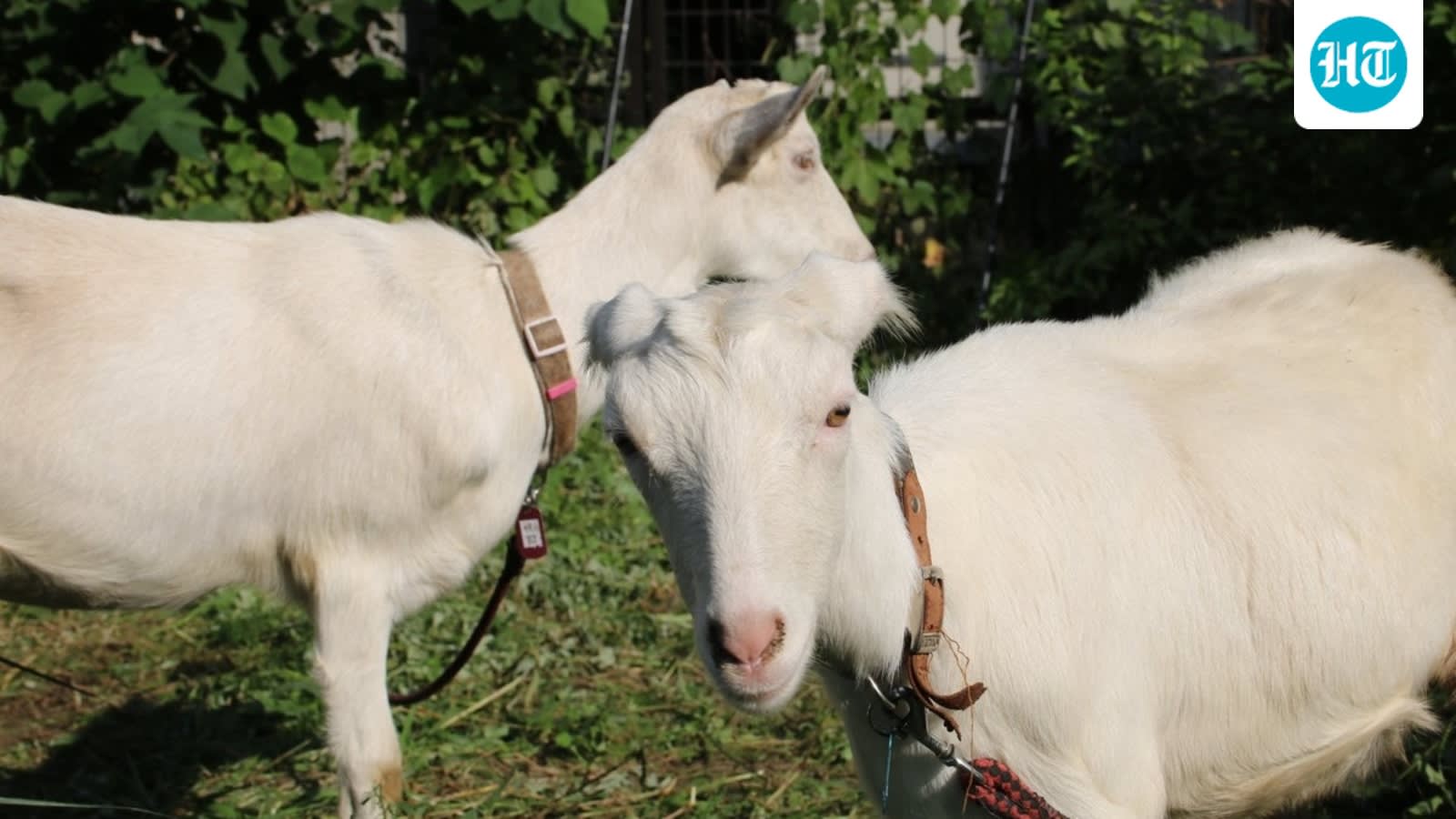
Two goats employed by JR Yotsuya Station in Tokyo for a weed-clearing trial are retiring early after consuming all available vegetation in just six weeks. The animals became a viral sensation, drawing significant public attention and social media popularity during their stay.
The Rapid Success of Tokyo's Unlikely Landscapers
In a charming intersection of modern urban infrastructure and traditional animal labor, two goats—Pokke and Nagi—have prematurely concluded their environmental maintenance trial at JR Yotsuya Station in central Tokyo. Originally contracted for a three-month period starting October 9 to serve as eco-friendly weed clearers, the pair proved to be exceptionally efficient. Within a mere six weeks, they had effectively stripped the station’s greenery bare, demonstrating that biological vegetation control can be significantly more aggressive than anticipated.
Efficiency in Eco-Friendly Maintenance
The decision to employ goats for landscaping at a major railway hub reflects a growing trend in Japan toward sustainable, low-impact maintenance solutions. By utilizing livestock instead of mechanical lawnmowers or chemical herbicides, JR East sought to reduce carbon emissions and noise pollution while managing the steep embankments common in railway infrastructure. The fact that the goats completed their intended three-month task in half the time highlights the potential for such 'green' initiatives to scale, provided there is enough vegetation to sustain the workers.
The Rise of 'Yotsuyagi' and Social Engagement
Beyond their functional role, the goats, affectionately dubbed 'Yotsuyagi' by the public, became a social phenomenon. Their presence transformed a standard railway station into a communal space, attracting commuters, local schoolchildren, and office workers who paused their daily routines to observe the animals. This interaction underscores how integrating nature into urban transit environments can significantly improve the mental well-being of city dwellers, acting as a welcome respite from the high-stress environment of Tokyo life.
Digital Impact and Cultural Connectivity
The popularity of Pokke and Nagi was amplified exponentially by social media, where photos and videos of the goats went viral. In an era where digital connectivity often replaces physical interaction, the 'Yotsuyagi' phenomenon demonstrates how local, tangible experiences can bridge the gap between offline community engagement and online sharing. This digital footprint has turned a routine maintenance trial into a heartwarming news story that transcended local borders.
Future Implications for Urban Green Spaces
As the goats retire early due to their own productivity, railway authorities are left with a successful proof-of-concept. The success of this trial suggests that while the goats may be moving on, the model of biological maintenance is likely to be replicated elsewhere. Future efforts will need to balance the goats' ravenous appetite with the availability of grazing sites to ensure these animal workers remain well-fed and productive for longer durations.
Conclusion
The early retirement of Pokke and Nagi marks the end of a highly effective and popular trial at JR Yotsuya Station. While the grass may be gone, the impact of these two goats on the community and the discourse surrounding sustainable urban maintenance remains significant. Their journey serves as a reminder of the unexpected joy and efficiency that can arise when nature is integrated into the heart of a bustling metropolis.
Verification Required?