Jawaharlal Nehru through an intelligence prism
Source Entity
India Latest News: Top National Headlines Today & Breaking News | The Hindu
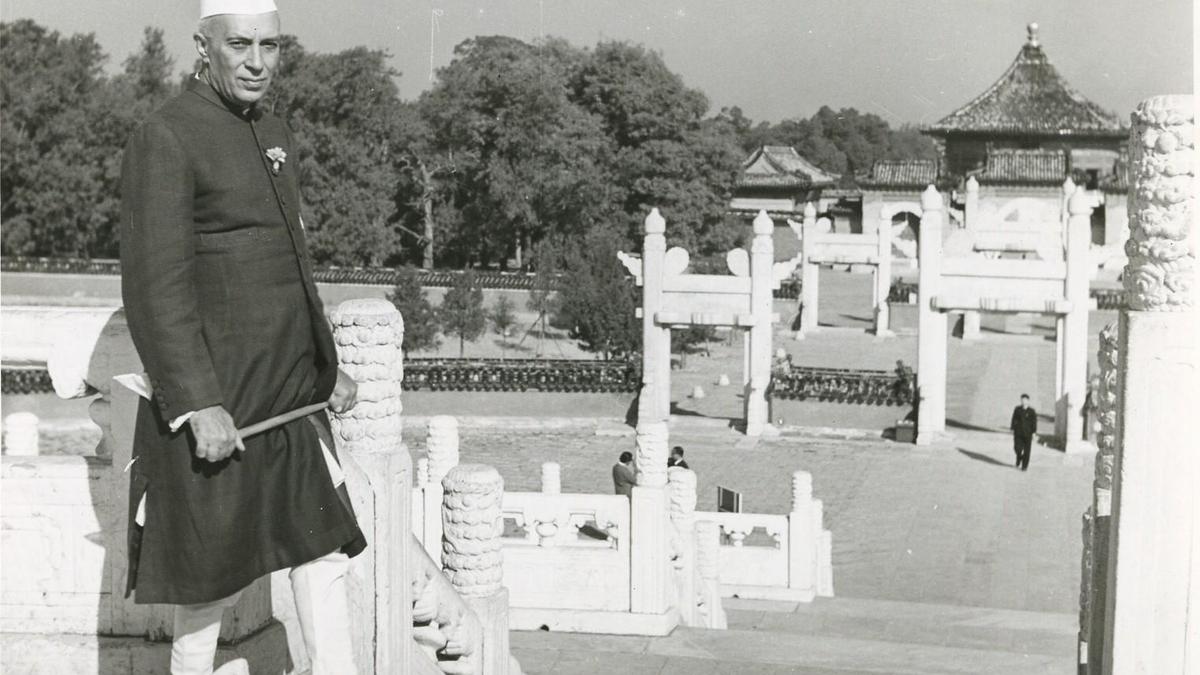
New revelations from the memoirs of intelligence chief Bhola Nath Mullik challenge the narrative that Jawaharlal Nehru was naive regarding China. The documents highlight a more pragmatic, security-conscious dimension of India's first Prime Minister.
Re-evaluating the Nehruvian Intelligence Doctrine
For decades, the historical narrative surrounding India’s first Prime Minister, Jawaharlal Nehru, has often been dominated by criticisms regarding his foreign policy, particularly concerning China. Detractors frequently characterize his approach as idealistic, rosy-eyed, and dangerously naive. However, a significant shift in this perspective emerges when examining the professional relationship between Nehru and his long-standing Director of the Intelligence Bureau (DIB), Bhola Nath Mullik. Mullik’s memoirs offer a rare, unfiltered look into a dimension of Nehru’s leadership that has remained largely obscured by broader political polemics.
The Role of Bhola Nath Mullik
Bhola Nath Mullik served as the DIB from 1950 until shortly after Nehru’s death in 1964. During this era, the modern institutional architecture of Indian intelligence, such as the Research and Analysis Wing (R&AW), did not yet exist. Consequently, the Intelligence Bureau functioned as the sole authority on national security, domestic stability, and external threats. Mullik’s tenure provides a unique vantage point, as he was not merely a subordinate but a constant presence in the Prime Minister's inner circle, tasked with feeding the intelligence necessary for statecraft.
Beyond the Myth of Naivety
Contrary to the popular trope of a leader detached from the realities of geopolitical threats, the evidence provided by Mullik suggests a Prime Minister deeply engaged with the intelligence apparatus. By looking at Nehru through the 'intelligence prism,' we see a leader who relied heavily on the DIB for assessments on border security and regional stability. This indicates that decisions previously labeled as 'naive' were, in fact, based on the intelligence inputs and strategic calculations provided by his security establishment at the time.
Historical Context and Security Architecture
The absence of an external-focused agency like R&AW during the early years of the Republic meant that the Intelligence Bureau carried an immense burden. Nehru’s reliance on Mullik underscores a centralized approach to intelligence, where the DIB served as the primary advisor on both internal and external matters. Understanding this structure is crucial for historians; it allows for a more nuanced analysis of why specific policies were pursued, suggesting that Nehru’s China policy was a product of the information environment he operated within.
Implications for Modern Historiography
The memoirs of Bhola Nath Mullik act as a corrective to the binary narratives that have long defined the discourse on Nehru’s governance. By providing evidence of a structured, intelligence-driven workflow, the historical record begins to shift away from personality-based critiques toward an institutional understanding of the Indian state. This is essential for a balanced view of post-independence India, where the complexities of border management and national security were constantly navigated through the lens of early intelligence gathering.
Conclusion
Ultimately, the insights provided by Mullik’s tenure suggest that Jawaharlal Nehru was far more pragmatic than his critics acknowledge. While historical debate will undoubtedly continue, the integration of intelligence archives and memoirs into the narrative provides a necessary counterweight to simplistic characterizations. Recognizing the role of the Intelligence Bureau under Nehru is not merely an academic exercise; it is fundamental to understanding the foundational security logic of the Indian state.
Verification Required?