Trump’s social media post on Kharg Island a message to Iran, says Vance
Source Entity
Latest News: Todays Latest News Headlines from India & World | Hindustan Times | Hindustan Times
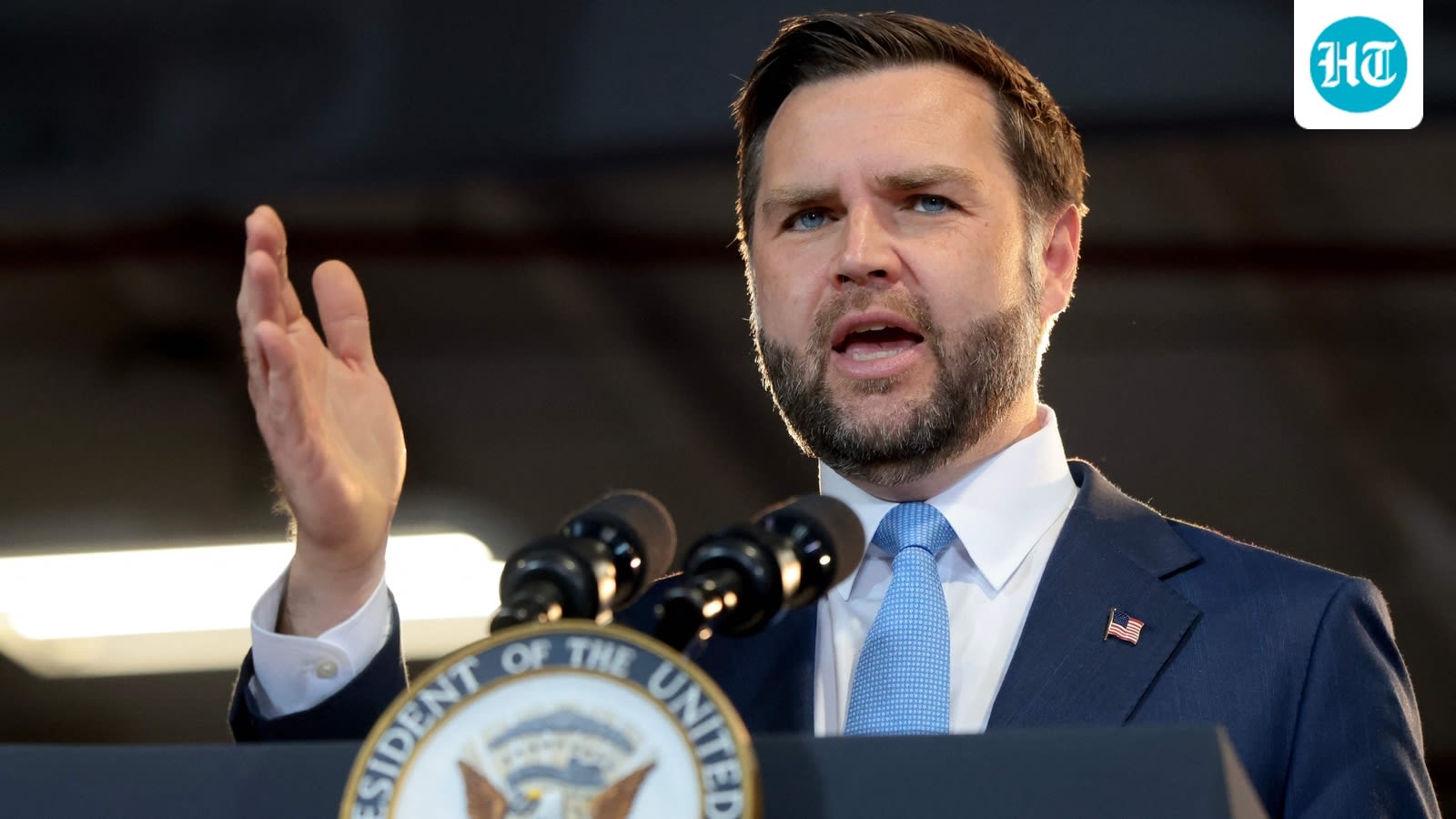
Vice President JD Vance clarified that Donald Trump's AI-generated video depicting the destruction of Iran's Kharg Island was a strategic warning rather than a military announcement. While the video was symbolic, the U.S. confirmed actual strikes against Iranian missile launchers on Larak Island to protect shipping lanes.
The Digital Deterrence: Analyzing the Kharg Island AI Controversy
A New Era of Psychological Signaling
In a departure from traditional diplomatic communication, the recent social media post by U.S. President Donald Trump—featuring an AI-generated video of the destruction of Iran’s Kharg Island—has ignited significant global debate. Vice President JD Vance has defended the maneuver, characterizing it as a calculated message intended to signal American resolve to Tehran. This incident represents a shift toward using synthetic media as a tool of statecraft, blurring the lines between psychological operations and public diplomacy.
The Strategic Significance of Kharg Island
Kharg Island is not merely a geographic location; it is the vital artery of the Iranian economy, responsible for the vast majority of the nation’s crude oil exports. By focusing his rhetoric on this specific site, President Trump underscored the potential economic consequences Iran faces should it continue to threaten international commercial shipping. The choice of imagery, however hyperbolic, serves as a high-stakes warning about the vulnerability of Iran's critical infrastructure to U.S. military capabilities.
Distinguishing Simulation from Reality
While the AI video captivated public attention, U.S. officials have been quick to decouple the simulation from actual military operations. The administration clarified that while the Kharg Island imagery was symbolic, tangible military action did occur on Sunday. U.S. forces conducted precision strikes against two Iranian launchers on Larak Island, which were reportedly being prepared by the Islamic Revolutionary Guard Corps to deploy sea mines into strategically vital shipping lanes.
The Doctrine of Measured Response
Vice President Vance’s statements emphasize a core tenet of the current administration’s approach: that the U.S. maintains a vast toolkit of responses—ranging from digital signaling to kinetic strikes—to maintain maritime security. By explicitly stating that the President does not utilize social media to announce formal military operations, Vance sought to reassure global markets and domestic observers that the AI post was a deterrent, not a declaration of war.
Escalation and Future Implications
Tehran has already vowed a "response and punishment" following the strikes on Larak Island, highlighting the volatile nature of the current U.S.-Iran standoff. The deployment of AI-generated content in this context raises questions about the future of international relations in the digital age. If symbolic digital threats become a standard component of geopolitical posturing, the threshold for miscalculation between nuclear-armed or regional powers may increase significantly.
Concluding Outlook
Ultimately, the Kharg Island incident serves as a prism through which we view the intersection of modern technology and traditional military strategy. As the U.S. balances the need to protect commercial shipping with the desire to avoid total conflict, the use of AI to project power will likely remain a contentious yet permanent feature of the geopolitical landscape. Whether this digital posturing succeeds in de-escalating tensions or inadvertently invites further provocation remains to be seen.
Multiple Citing Sources
Verification Required?