Is Russia preparing its next big move against NATO & US? Tensions spike over 'Kaliningrad invasion'
Source Entity
Latest News: Todays Latest News Headlines from India & World | Hindustan Times | Hindustan Times
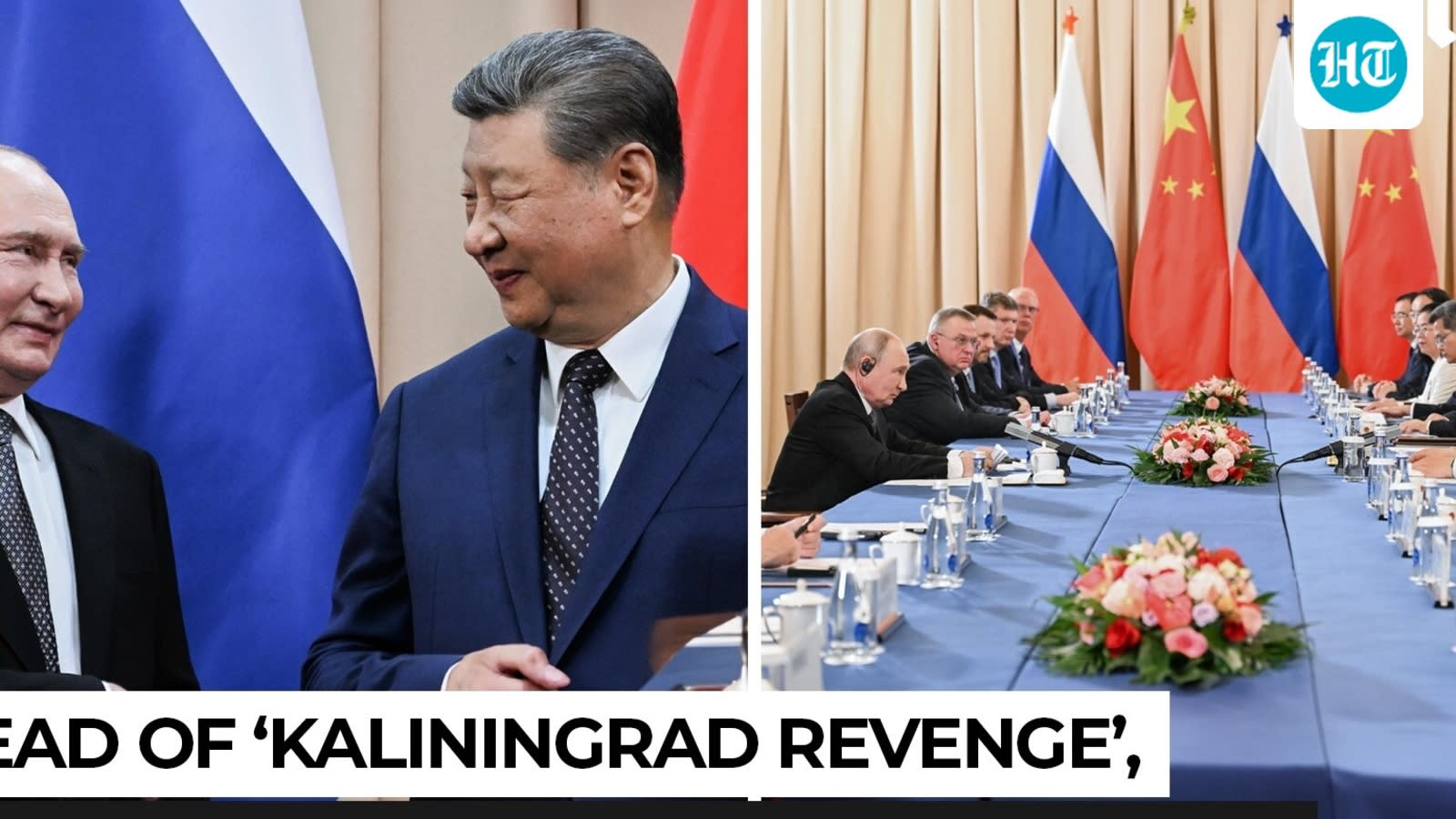
Russia has threatened massive retaliation against Ukraine's energy grid amid ongoing drone warfare. Meanwhile, NATO is increasing military drills and training with allies like Poland to counter potential threats near the Kaliningrad exclave.
The Escalating Energy War and NATO’s Strategic Posture
The ongoing conflict between Russia and Ukraine has entered a phase of intensified mutual targeting, particularly concerning critical infrastructure. Russia has explicitly threatened to launch “massive strikes” against Ukraine’s energy grid, framing this as retaliation for Kyiv’s persistent long-range drone campaigns targeting Russian oil and logistics assets. This tit-for-tat strategy signals a deepening of the war’s economic impact, with both sides seeking to cripple the other's capacity to sustain a prolonged military effort.
The Vulnerability of Ukraine's Energy Grid
Ukraine currently faces a precarious situation as it grapples with chronic air-defense shortages. The Russian threat to hit the energy sector is not merely tactical but existential for the Ukrainian home front, especially as the country continues to endure frequent missile attacks. By targeting power infrastructure, Moscow aims to degrade both the morale of the civilian population and the industrial capacity required to support the front lines, forcing Kyiv to make agonizing trade-offs between protecting cities and defending military positions.
The Kaliningrad Flashpoint
While the conflict rages in Ukraine, the geopolitical spotlight has shifted toward the Baltic region. The Kaliningrad exclave, situated between NATO members Poland and Lithuania, has emerged as a significant point of friction. Recent NATO military drills in the vicinity have heightened concerns regarding the security of the alliance’s eastern flank. Despite these tensions, Finnish President Alexander Stubb has sought to temper fears of an imminent Russia-NATO war, explicitly stating that he sees no evidence of a direct Russian attack on the alliance.
NATO’s Strategic Adaptation
NATO’s response to the evolving nature of the war is evident in its rigorous training programs. U.S. forces recently conducted drills with Polish special forces in Germany, specifically designed to integrate lessons learned from the conflict in Ukraine. By utilizing drones and simulating combat against fortified enemy lines across a massive 3,000-square-kilometre area, NATO is actively refining its doctrine to address the realities of a drone-heavy, modern battlefield.
Deterrence vs. Escalation
President Stubb’s dismissal of predictions regarding a 2029 conflict underscores the alliance’s reliance on military deterrence to maintain stability. However, the juxtaposition of NATO’s military exercises and Russia’s threats to Ukraine illustrates a dangerous paradox: while both sides claim to avoid direct escalation, their tactical maneuvers are increasingly focused on readiness for a potential wider confrontation. The presence of NATO forces near Kaliningrad remains a sensitive issue, serving as a reminder that the war in Ukraine has fundamentally altered the security architecture of Europe.
Concluding Outlook
As the conflict continues, the interplay between energy warfare and regional military posturing will likely define the coming months. Ukraine’s ability to defend its infrastructure will depend heavily on the efficacy of international air-defense support, while NATO's focus on refining its tactical capabilities suggests that the alliance is preparing for a long-term state of heightened readiness. The situation remains fluid, with the stability of the Baltic region and the survival of Ukraine’s energy sector serving as the two most critical barometers for the trajectory of the war.
Verification Required?