Jharkhand IAS officer pens eight-book series on Artificial Intelligence
Source Entity
Latest News: Todays Latest News Headlines from India & World | Hindustan Times | Hindustan Times
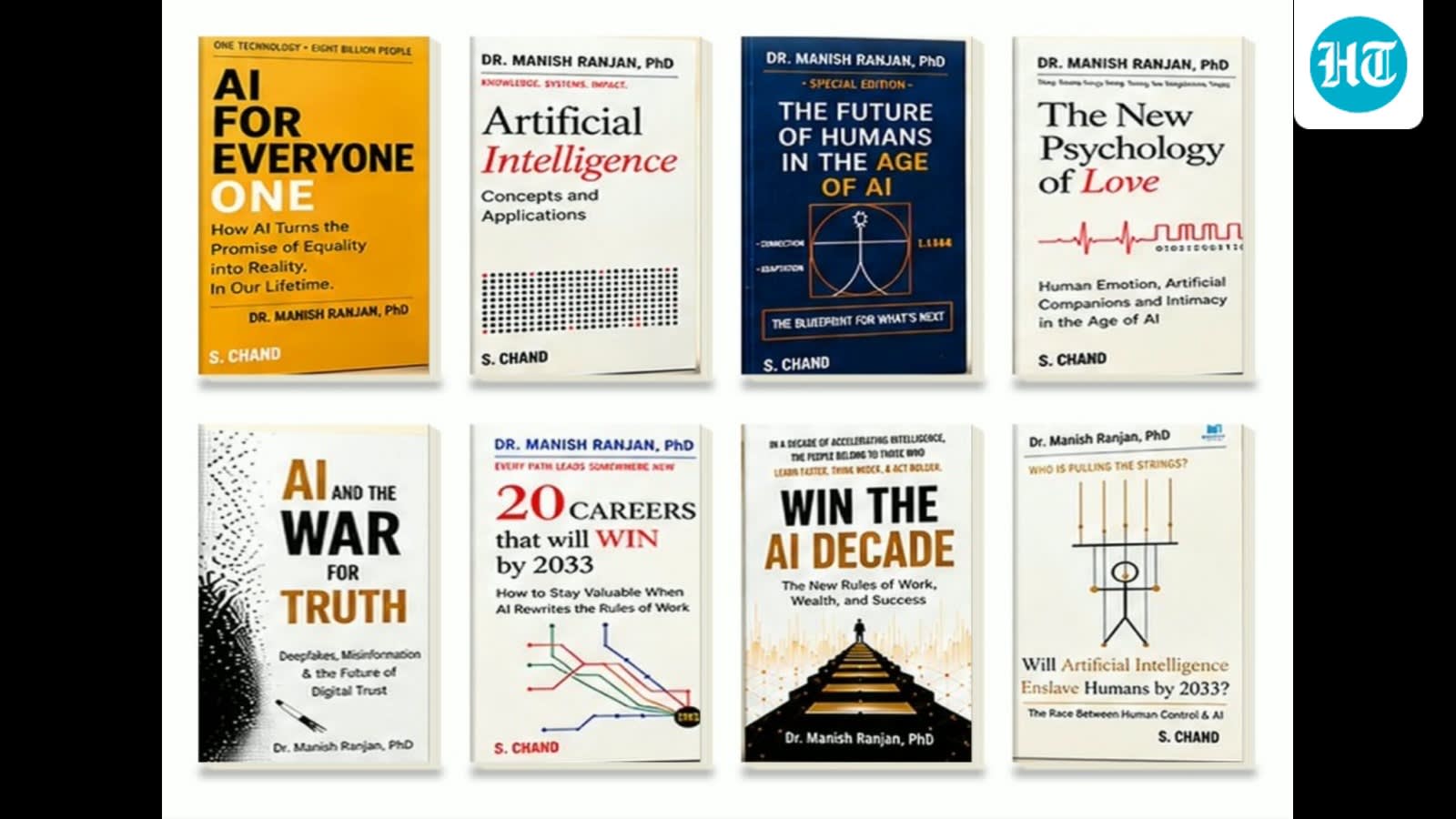
Jharkhand IAS officer Manish Ranjan has authored a comprehensive eight-book series on Artificial Intelligence. The collection bridges the gap between global technological research and India's specific governance goals.
Bridging the Gap: AI in Indian Governance
Senior Indian Administrative Service (IAS) officer Manish Ranjan has made a significant contribution to the discourse on emerging technology by authoring an eight-book series dedicated to Artificial Intelligence. By addressing various facets of AI, the series serves as a bridge between high-level global technological trends and the practical, ground-level implementation of digital tools within the Indian administrative framework. This initiative marks a notable effort to demystify complex technical concepts for the general public, ensuring that the dialogue around AI is not confined to academic or technical circles.
Academic Rigor and Practical Application
Ranjan, who boasts an academic background from esteemed institutions such as Berkeley and Oxford, brings a dual perspective to this project. His work reflects a synthesis of rigorous international research and the nuanced reality of Indian societal aspirations. By distilling complex data into accessible, jargon-free prose, the series aims to educate stakeholders—ranging from students to policymakers—on how AI is poised to touch every aspect of daily life, from urban planning to public service delivery.
The Future of Public Administration
A critical component of this series is its focus on the transformation of governance. As an active administrator, Ranjan provides an 'insider's view' on how AI-driven initiatives can streamline bureaucratic processes, reduce systemic inefficiencies, and enhance the transparency of public services. This perspective is vital for understanding how India’s administrative machinery might evolve to meet the demands of a rapidly digitizing economy while maintaining core social mandates.
Aligning with India's AI Ambitions
The series arrives at a pivotal moment for the nation as it actively shapes its AI future. By highlighting initiatives currently underway across various Indian states, the books provide a roadmap of how technology is being integrated into local governance. This localized analysis is crucial for evaluating how global AI trends can be adapted to fit the unique demographic and economic landscape of India, ensuring that the technology serves the country's specific developmental goals.
Implications for Digital Literacy and Inclusion
Beyond governance, the series emphasizes the democratization of knowledge. By removing the barrier of technical jargon, Ranjan encourages a broader conversation about the ethical and practical implications of AI. This approach fosters a more informed citizenry, which is essential for the successful adoption of any large-scale technological intervention. It signals a shift toward a more proactive, knowledge-based approach to administrative leadership in the digital age.
Conclusion
In summary, Manish Ranjan's eight-book series represents a significant milestone in the intersection of public policy and technology. By balancing global technological insights with the specific needs and aspirations of India, the work serves as a valuable resource for understanding the future of governance. It highlights the potential for AI to act as a catalyst for growth, provided that its implementation is guided by research, transparency, and a deep understanding of the public good.
Verification Required?