Watch: Jharkhand RJD MLA climbs on man’s back to cross knee-deep river, tumbles midway
Source Entity
The Indian Express
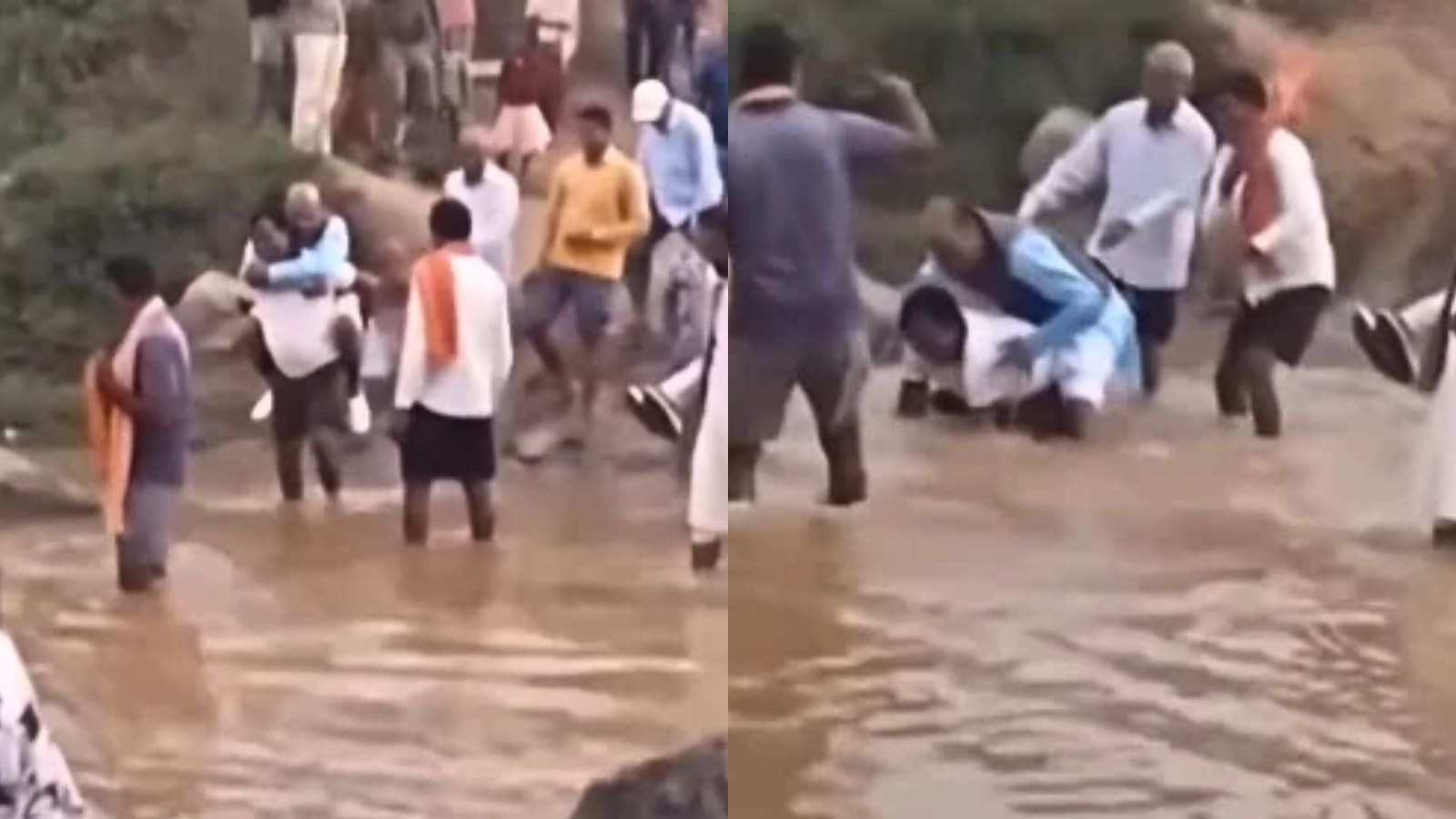
Jharkhand RJD MLA Naresh Prasad Singh faced public backlash after a viral video showed him falling into the Dhuriya River while being carried on a man's back. The incident, which occurred in Palamu district, has reignited long-standing demands from local residents for the construction of a permanent bridge.
The Dhuriya River Incident: A Symbol of Political Disconnect
A viral video capturing RJD MLA Naresh Prasad Singh attempting to cross the Dhuriya River in Jharkhand’s Palamu district while perched on a local man’s back has sparked a significant public outcry. The incident, which occurred on November 11, shows the Vishrampur legislator opting for this unconventional mode of transport to avoid wetting his feet while traveling to a religious event in Ghasidag panchayat. The footage of the carrier stumbling and both men falling into the knee-deep water has since circulated widely, drawing intense scrutiny regarding the conduct of elected officials.
The Optics of Privilege and Public Service
At the core of the controversy is the stark contrast between the legislator's attempt to maintain personal comfort and the reality of the infrastructure challenges faced by his constituents. By choosing to be carried across a river that was objectively shallow—described as merely knee-deep—the MLA has been accused of perpetuating a culture of elitism. In the context of Indian politics, where public representatives are expected to mirror the hardships of the electorate, such visuals are often interpreted as a failure of empathy and a disregard for the dignity of labor.
Infrastructure Neglect in Palamu District
Beyond the immediate spectacle of the fall, the incident has served as a catalyst for renewed demands for a bridge across the Dhuriya River. For the residents of Ghasidag, this river is not merely a geographic obstacle but a daily reminder of the lack of basic development. The fact that an elected representative had to navigate the stream in such a precarious manner highlights the persistent infrastructural deficits in rural pockets of Jharkhand, where the absence of connectivity remains a primary hurdle for socio-economic progress.
Historical Context of Political Accountability
This event is part of a larger trend of increased digital surveillance of politicians. In the age of viral media, every action of a public servant is subject to scrutiny, and 'optics' have become as significant as policy performance. The backlash against Naresh Prasad Singh reflects a growing public intolerance for behaviors that appear to exploit local resources or personnel for personal convenience, especially when those same resources are not being directed toward the collective welfare of the community.
Future Implications and Policy Demands
The fallout from this incident is likely to increase pressure on the local administration to prioritize the construction of a bridge in the Palamu district. As villagers use this viral moment to amplify their grievances, the legislator faces the difficult task of re-engaging with his constituency. Moving forward, this case will serve as a cautionary tale for politicians regarding the importance of grounding their actions in the realities of the people they serve, as the digital era ensures that any lapse in judgment can quickly become a matter of national discourse.