Jharkhand protest, Day 14: Government holds talks with students, seeks time to examine demands
Source Entity
Shubham Tigga
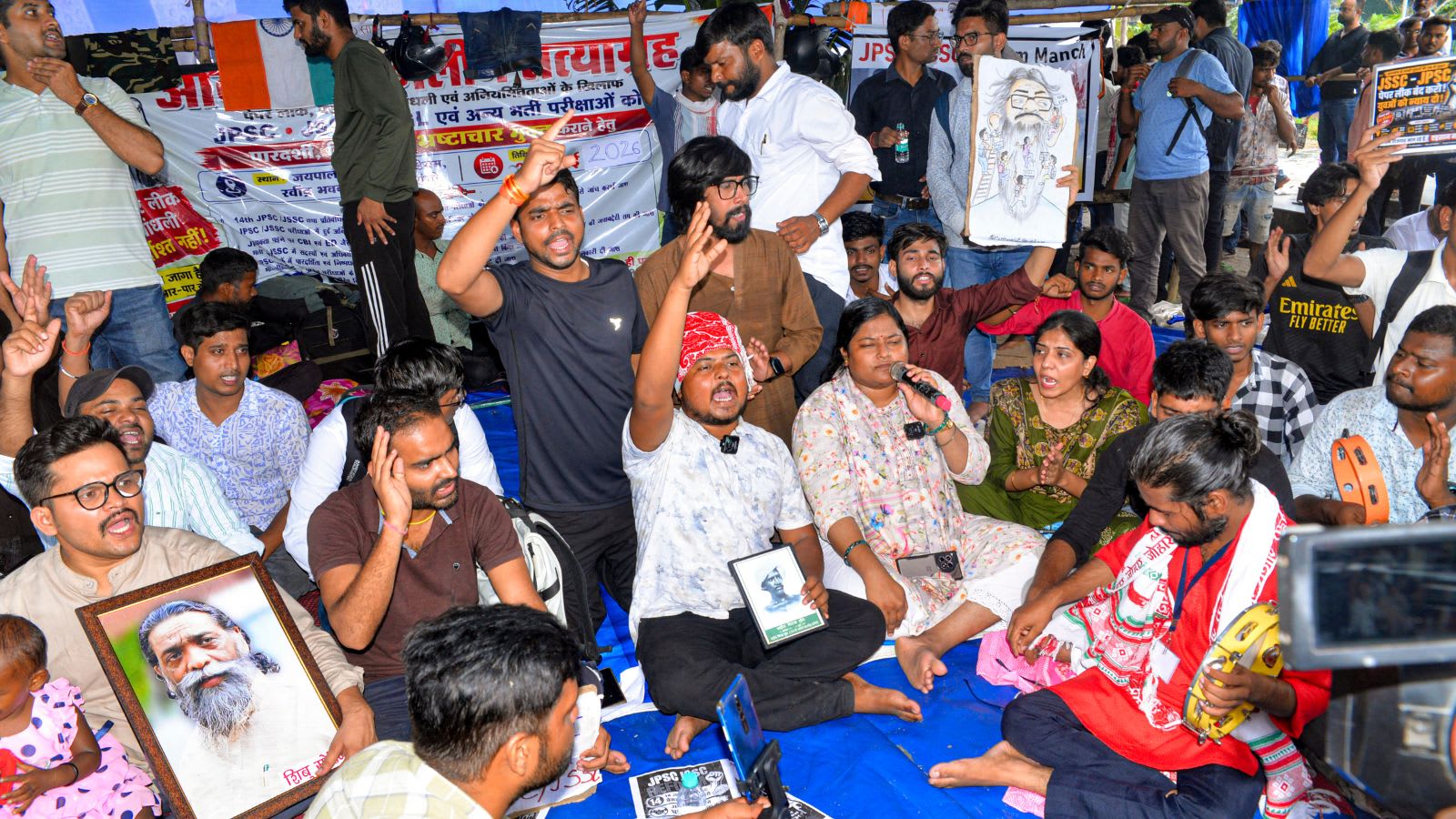
Jharkhand government officials have initiated formal talks with student protesters after 14 days of demonstrations over alleged JPSC and JSSC exam irregularities. Despite the dialogue, students maintain their agitation, with a march to the state assembly scheduled for August 10.
Jharkhand Exam Protests: A Turning Point in State Recruitment Accountability
For fourteen consecutive days, the Jaipal Singh Stadium in Ranchi has served as the epicenter of a significant youth-led movement. Students and job aspirants have been staging an indefinite protest to voice their deep-seated frustrations regarding systemic irregularities, including alleged paper leaks, within the Jharkhand Public Service Commission (JPSC) and the Jharkhand Staff Selection Commission (JSSC). This movement represents a critical juncture in the state's relationship with its youth, highlighting a growing demand for transparency and meritocracy in the public recruitment process.
The Breakthrough: Government Initiates Dialogue
After two weeks of escalating pressure, the Jharkhand government finally moved to address the grievances directly. On Friday night, a 10-member delegation from the JPSC-JSSC Reform Manch—one of the primary factions representing the protesters—met with a team of four state ministers and a senior bureaucrat at the State Guest House. This one-and-a-half-hour meeting marks the first formal attempt by the administration to bridge the divide between the state apparatus and the disillusioned aspirants who feel their future is being compromised by administrative failures.
Core Grievances and the Demand for Reform
The central issue driving the protest is the perceived erosion of fairness in competitive examinations. Aspirants argue that recurring paper leaks and procedural irregularities in JPSC and JSSC processes have created an uneven playing field, effectively disenfranchising those who rely on legitimate merit-based selection. By holding placards and maintaining a continuous presence at the stadium, the protesters are not merely asking for individual exam cancellations; they are demanding structural reforms that guarantee the integrity of future recruitment cycles.
The Path Forward: High Stakes for August 10
Despite the government labeling the initial talks as 'positive,' the protest remains active. The demonstrators have made it clear that dialogue alone is insufficient without tangible outcomes. The atmosphere remains tense, as the JSSC-JPSC Reforms Manch has set a deadline for concrete decisions to be reached by August 10. The protesters have also announced plans to march toward the state assembly on that date, signaling that they are prepared to escalate their movement if their demands for accountability are not met with definitive policy action.
Broader Implications and Future Trends
This incident underscores a broader trend in Indian governance, where competitive examination integrity has become a flashpoint for political and social discourse. The Jharkhand government is now at a crossroads: it must balance the need for administrative order with the necessity of restoring public trust. If the government fails to provide a satisfactory resolution by the August 10 deadline, it risks further alienation of the student demographic, which could have significant implications for the state’s political landscape. Ultimately, the resolution of this protest will serve as a bellwether for how state governments handle youth-led movements regarding institutional integrity.
Multiple Citing Sources