NC, BJP members spar on issue of holiday on anniversaries of Maharaja Hari Singh, Sheikh Mohammad Abdullah
Source Entity
India Latest News: Top National Headlines Today & Breaking News | The Hindu
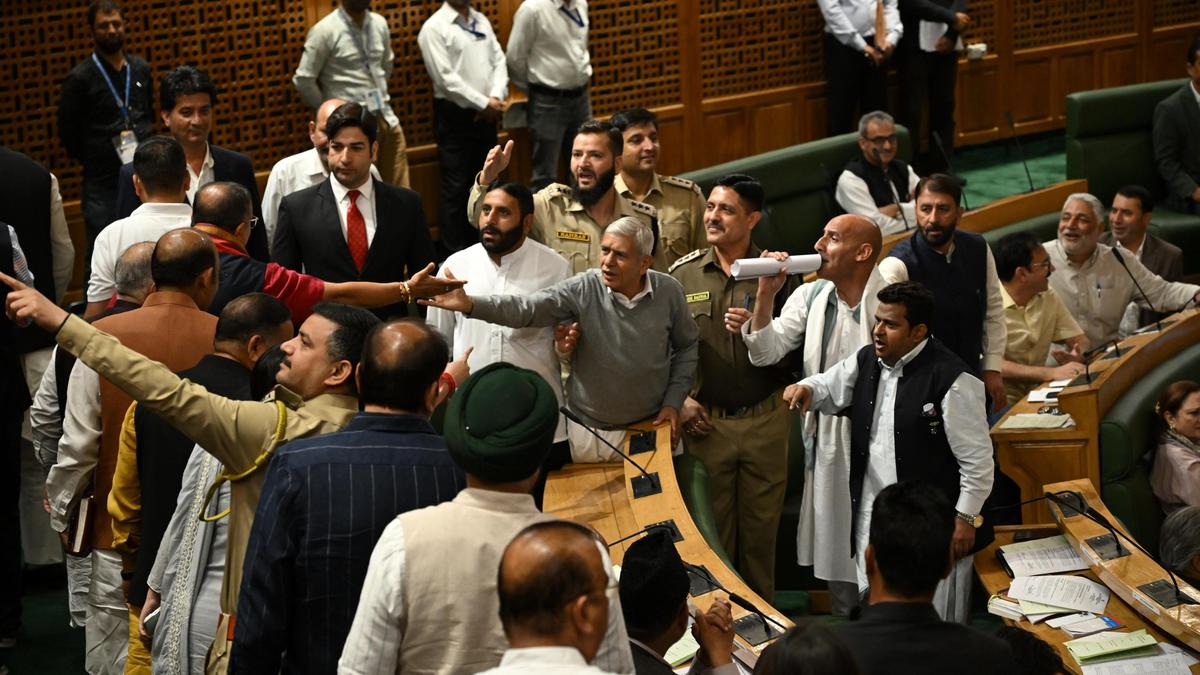
The Jammu and Kashmir Legislative Assembly faced significant disruptions over conflicting demands regarding public holidays for Maharaja Hari Singh and Sheikh Mohammad Abdullah. Tensions flared between NC and BJP lawmakers, requiring the Speaker to intervene to restore order.
Legislative Tensions in Jammu and Kashmir
The Jammu and Kashmir Legislative Assembly experienced significant procedural disruption on September 22, 2026, as lawmakers from the National Conference (NC) and the Bharatiya Janata Party (BJP) engaged in a heated confrontation. The dispute centers on the symbolic politics of public holidays, specifically the birth anniversaries of two foundational figures in the region's modern history: Maharaja Hari Singh and Sheikh Mohammad Abdullah.
The Catalyst for Conflict
The unrest began when NC MLA Abdul Majeed Larmi raised a formal demand during the assembly proceedings. He argued that the current policy regarding public holidays is inequitable, asserting that the government should either restore the holiday honoring the NC founder, Sheikh Mohammad Abdullah, or rescind the holiday designated for Maharaja Hari Singh. This demand directly challenged the current administrative prioritization of commemorative dates, sparking an immediate and vocal reaction from the opposition benches.
Divergent Perspectives on Leadership
The debate highlights the deep-seated ideological divisions within the assembly. BJP MLA Devayani Rana took a firm stance, explicitly stating that the holiday dedicated to Maharaja Hari Singh—the last ruling Maharaja of the princely state—would remain in place. Conversely, NC members, including Nazir Gurezi, defended the legacy of Sheikh Mohammad Abdullah, framing him as the definitive 'peoples' leader' whose historical contributions warrant equal recognition through a state-sanctioned holiday.
Procedural Challenges and Speaker Intervention
As the discourse devolved into slogan-shouting and noisy protests, the legislative process was effectively halted. Speaker Abdul Rahim Rather was compelled to intervene, repeatedly calling for order and urging BJP MLAs to take their seats. His attempts to mediate underscore the difficulty of managing a polarized assembly where symbolic, identity-based issues can rapidly escalate, overshadowing the routine legislative agenda.
Broader Implications for Regional Governance
This row is not merely about calendar dates but reflects a broader struggle over the historical narrative of Jammu and Kashmir. For the NC, restoring the holiday for Sheikh Abdullah is a matter of preserving their political legacy and local identity. For the BJP, maintaining the holiday for Maharaja Hari Singh serves as a cornerstone of their regional platform. The inability of both parties to reach a consensus on these commemorations suggests that the assembly will continue to face challenges in navigating sensitive cultural and historical topics in the near term.
Conclusion
The standoff in the assembly serves as a poignant reminder of the volatility inherent in regional politics, where historical grievances and identity politics frequently intersect with legislative duties. As the Speaker continues to navigate these disruptions, the assembly faces the ongoing challenge of balancing the diverse demands of its members while attempting to maintain functional governance in a highly charged political atmosphere.
Verification Required?