Josh Hazlewood left fuming after collision with Taskin Ahmed cost him a wicket during Australia's Bangladesh rout
Source Entity
Latest News: Todays Latest News Headlines from India & World | Hindustan Times | Hindustan Times
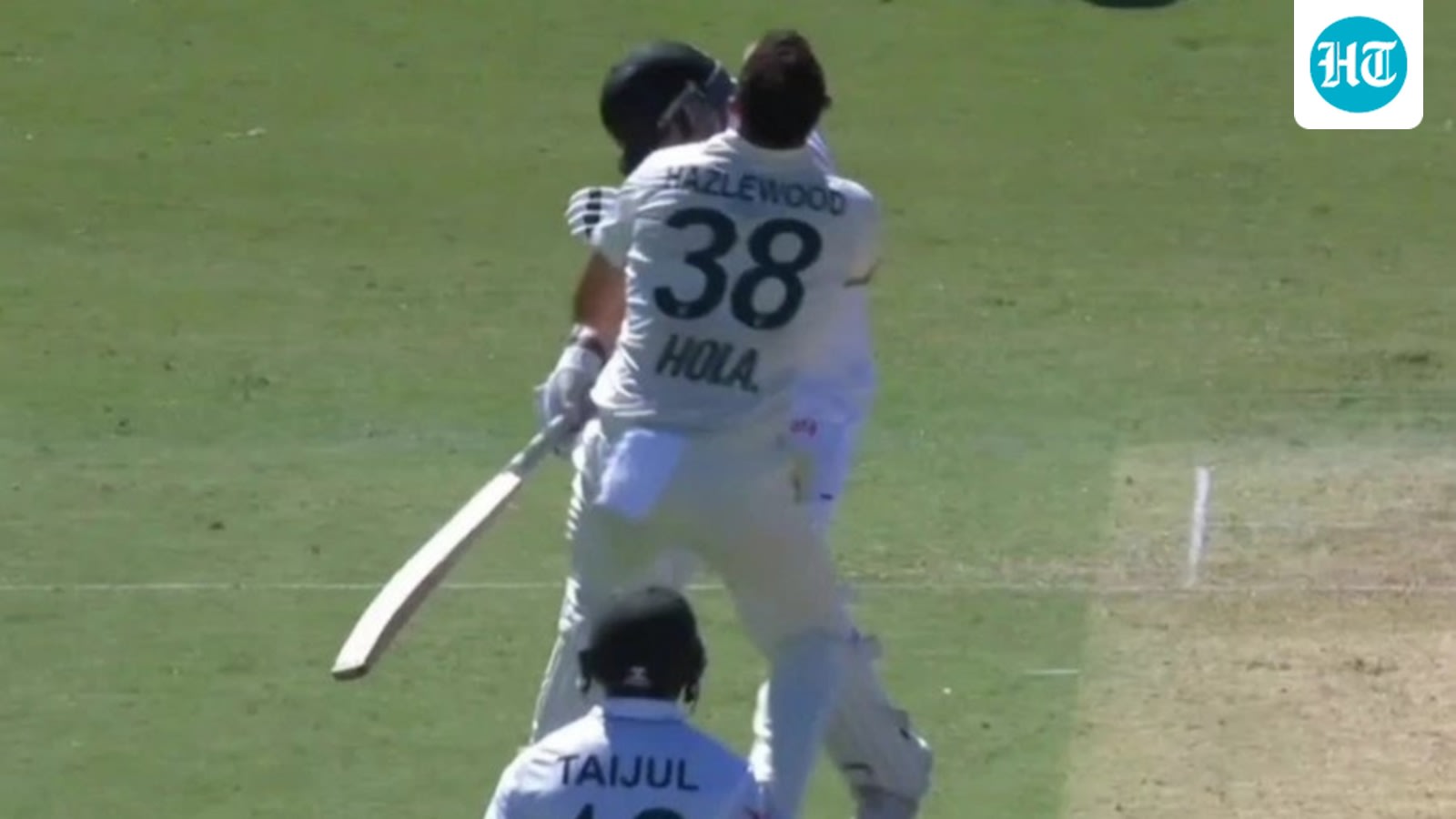
Australian cricketer Josh Hazlewood was denied a wicket following a collision with Taskin Ahmed, while Steve Smith engaged in ongoing DRS mind games with Bangladesh. Both incidents highlight rising tensions and competitive friction during the ongoing Test series.
Tensions Escalate in Australia-Bangladesh Test Series
The recent Test series between Australia and Bangladesh has been marked by mounting on-field friction, characterized by two distinct incidents involving Australian stars Josh Hazlewood and Steve Smith. These events underscore the intense competitive pressure inherent in international cricket, where split-second decisions and psychological warfare play as significant a role as technical skill.
The Hazlewood Collision Incident
During the first innings of the match, an unusual collision between Australian fast bowler Josh Hazlewood and Bangladesh batter Taskin Ahmed resulted in a missed opportunity for a wicket. As Hazlewood attempted to secure a return catch, Taskin moved from his crease in pursuit of a run, leading to a direct physical intersection. Hazlewood, visibly frustrated, immediately sought clarification from the square-leg umpire, while captain Pat Cummins engaged in a formal inquiry with umpire Nitin Menon. The umpires’ decision to allow play to continue without penalty highlights the subjective nature of obstruction rules in cricket, leaving the Australian camp clearly dissatisfied.
Smith’s Continued DRS Mind Games
Parallel to the physical collision, Steve Smith continued his psychological engagement regarding the Decision Review System (DRS). During the ninth over in Mackay, after an lbw appeal against him was turned down by umpire Nitin Menon, Smith proactively encouraged the Bangladesh fielders to challenge the decision. This behavior, reminiscent of previous tactical exchanges in the Darwin Test, prompted the umpires to intervene and issue a warning. Smith’s actions reflect a high-stakes approach to gamesmanship, where the batter attempts to influence the fielding side's decision-making process under pressure.
Broader Implications for International Cricket
These events serve as a microcosm of the modern professional game, where the margins for error are razor-thin. The use of advanced technology like DRS has not only improved accuracy but has also introduced a new layer of tactical maneuvering. Players now utilize the review system as a psychological tool, attempting to unsettle opponents or dictate the flow of the game, which occasionally forces officials to step in to maintain the spirit of the sport.
Historical Context and Future Trends
Cricket has long navigated the delicate balance between competitive intensity and sportsmanship. As seen in the interactions between the Australian and Bangladeshi squads, the evolution of the game requires constant vigilance from officials. The current trend suggests that as long as the stakes remain high in Test cricket, players will continue to push the boundaries of conduct. Moving forward, match referees may need to adopt more stringent guidelines to ensure that tactical gamesmanship does not overshadow the athletic performance on the pitch.
Conclusion
In summary, the incidents involving Hazlewood and Smith demonstrate the high-octane environment of the current Australia-Bangladesh series. While the collision was a physical disruption to play, Smith’s interactions highlight the mental battle that defines modern Test cricket. As the series progresses, the focus will likely remain on how both teams navigate these tensions while maintaining the integrity of the game.
Verification Required?