A Kantian Critique of "Sorry" by Justin Bieber
Source Entity
Hacker News
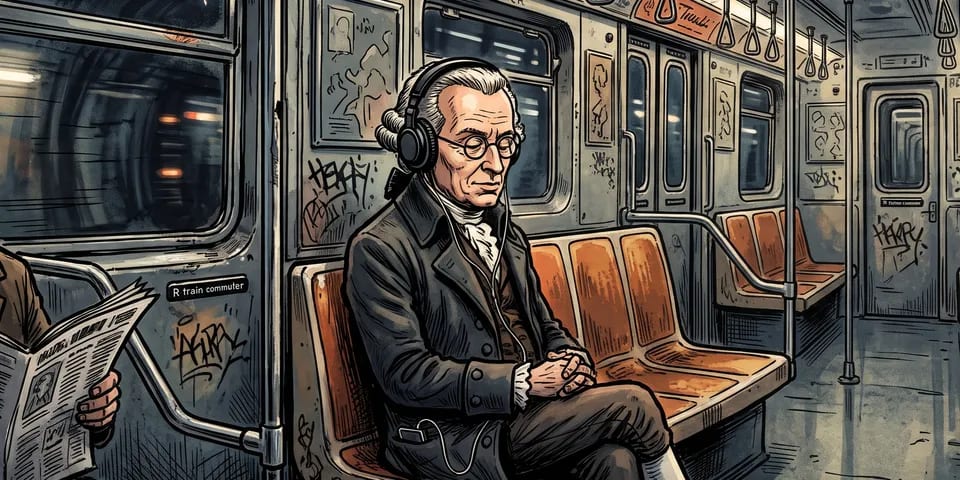
This analysis explores the philosophical underpinnings of Justin Bieber's 2015 hit 'Sorry' through a Kantian ethical framework. It argues that the song's central question reflects a fundamental misunderstanding of the nature of moral apologies.
The Ethical Paradox of Pop Music
In the landscape of 2015 pop music, Justin Bieber’s hit single "Sorry" became an anthem of contrition. However, when subjected to the rigorous scrutiny of Immanuel Kant’s moral philosophy, the song’s central inquiry—“Is it too late to say sorry?”—reveals itself to be a philosophical category error rather than a genuine moral dilemma. By analyzing the lyrics through a Kantian lens, we can see how the song struggles with the concepts of autonomy, duty, and the categorical imperative.
The Failure of the Categorical Imperative
Kant’s moral framework relies on the Categorical Imperative, which posits that an action is moral only if it can be willed as a universal law. In the context of "Sorry," the act of apologizing is treated as a tactical negotiation rather than an unconditional duty. If an apology is contingent upon the passage of time or the receptivity of the other party, it ceases to be a moral act and becomes a self-serving instrument of social repair. The song’s preoccupation with whether it is 'too late' suggests that the singer views the apology as a transaction rather than an obligation of the moral agent.
Time as a Distraction from Moral Duty
From a Kantian perspective, the temporal dimension introduced in the chorus is entirely irrelevant to the act of moral restitution. A true apology, in the Kantian sense, is an affirmation of the moral law and a recognition of the other person as an end in themselves. By focusing on whether the window of opportunity has closed, Bieber shifts the focus from the inherent duty to rectify a wrong to the subjective anxiety of the perpetrator. This effectively voids the moral weight of the apology, turning it into a query about social efficacy.
Misunderstanding the Nature of the Apology
Furthermore, the song fundamentally misconstrues what an apology is. Under Kantian ethics, an apology is not meant to secure a specific outcome or to alleviate the guilt of the actor; it is a declaration of intent to adhere to moral principles. By asking if it is 'too late,' the singer implies that the utility of an apology is measured by its success in restoring a relationship. This instrumentalization of the apology is antithetical to Kantian thought, which demands that moral duties be performed regardless of their consequences or the likelihood of forgiveness.
Conclusion: A Performative Contradiction
The inquiry posed by Bieber serves as a performative contradiction. By asking if it is too late, the singer demonstrates that he has not yet grasped the nature of the wrong committed. If he truly understood the moral imperative to apologize, the question of timing would be rendered moot. Ultimately, the song serves as a fascinating study in how pop culture often prioritizes the aesthetics of emotional vulnerability over the rigorous requirements of ethical consistency, leaving us with a catchy melody that fails the test of philosophical coherence.