'E20 petrol by PSUs meets prescribed quality standards': Oil min rejects K'taka charge
Source Entity
AASTHA JHA
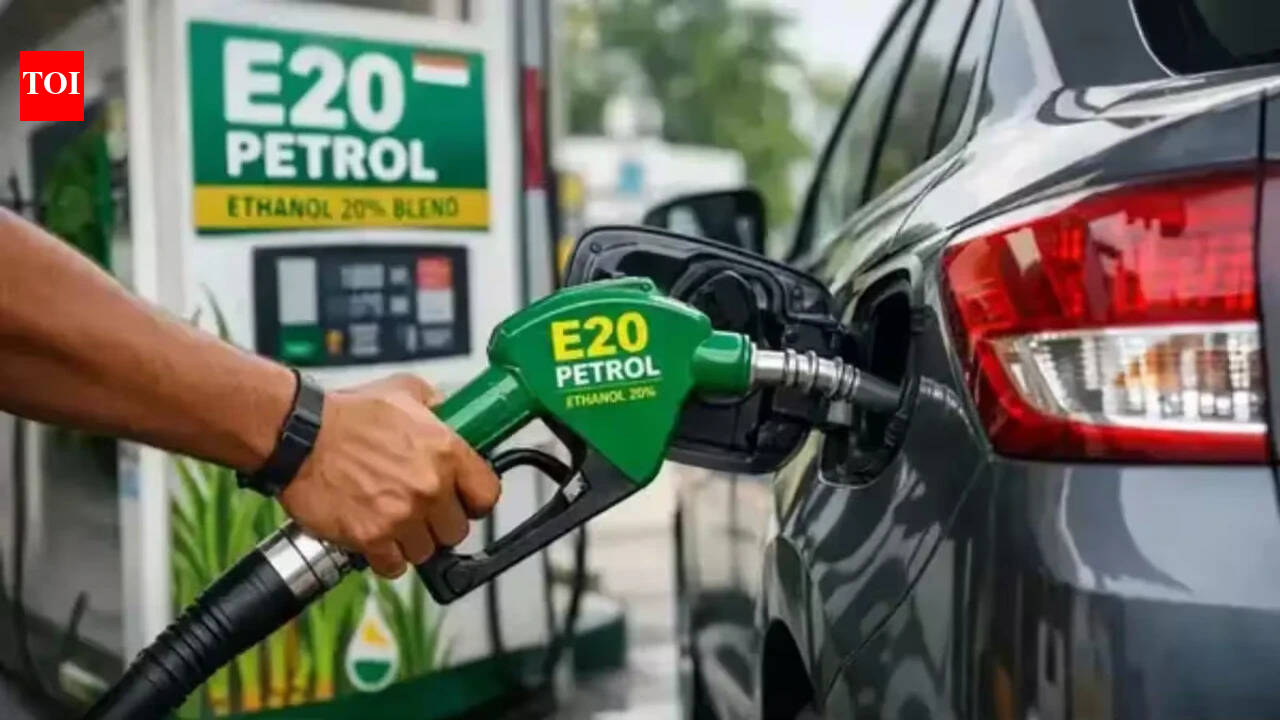
The Karnataka government has alleged that major oil companies are selling petrol with ethanol blends as high as 31%, exceeding the 20% legal limit. Oil Marketing Companies have rejected these findings, questioning the state's testing methodology and sampling processes.
The Karnataka Ethanol Controversy: A Conflict of Standards
The recent allegations by the Karnataka government regarding the ethanol blending percentage in petrol have ignited a significant debate over fuel quality and regulatory oversight. State officials, led by Minister Rizwan Arshad, claim that tests conducted at the NABL-accredited and ISO-certified Shriram Research Institute revealed ethanol concentrations as high as 31.2% in samples taken from major Oil Marketing Companies (OMCs) like Indian Oil Corporation (IOCL) and Hindustan Petroleum (HPCL). This stands in stark contrast to the national E20 mandate, which limits ethanol blending to 20%.
The Disputed Methodology
Central to this row is the reliability of the testing protocols. While the Karnataka government maintains that its sampling across districts such as Bengaluru, Kolar, and Dakshina Kannada is robust, the OMCs have formally questioned the integrity of these procedures. By rejecting the state's 'test' methodology, the oil majors are essentially challenging the evidentiary basis of the claims, suggesting that the discrepancy may lie in how samples were collected or analyzed rather than in the fuel supply chain itself.
Political and Economic Implications
The controversy has transcended technical disputes, evolving into a political flashpoint. With Opposition leader Rahul Gandhi criticizing the Union Government’s handling of the ethanol-blended petrol rollout, the issue is now tied to broader narratives of transparency and consumer protection. The Karnataka government’s demand for an 'E20 spoilage fund' to compensate motorists highlights the potential economic anxiety regarding vehicle performance and engine longevity when fuel exceeds mandated specifications.
The Broader Context of India’s Energy Transition
India’s push toward E20—a blend of 20% ethanol and 80% petrol—is a cornerstone of the nation’s strategy to reduce crude oil imports and lower carbon emissions. However, the implementation of this policy requires strict adherence to technical standards to ensure vehicle compatibility. Any deviation in these percentages, as alleged by Karnataka, poses significant risks not only to vehicle engines but also to public trust in the transition toward greener fuels.
Future Trends and Regulatory Scrutiny
Looking ahead, this clash is likely to trigger a more rigorous, centralized audit of fuel quality across India. The tension between state-level consumer protection departments and nationalized oil giants suggests a need for an independent, third-party verification mechanism that is mutually accepted by both parties. As the government continues to promote ethanol blending, ensuring that the infrastructure can maintain precise ratios will be the defining challenge for policy success and consumer safety.
Multiple Citing Sources