Sthanika Bhattars make contradictory statements on the lighting of deepam
Source Entity
India Latest News: Top National Headlines Today & Breaking News | The Hindu
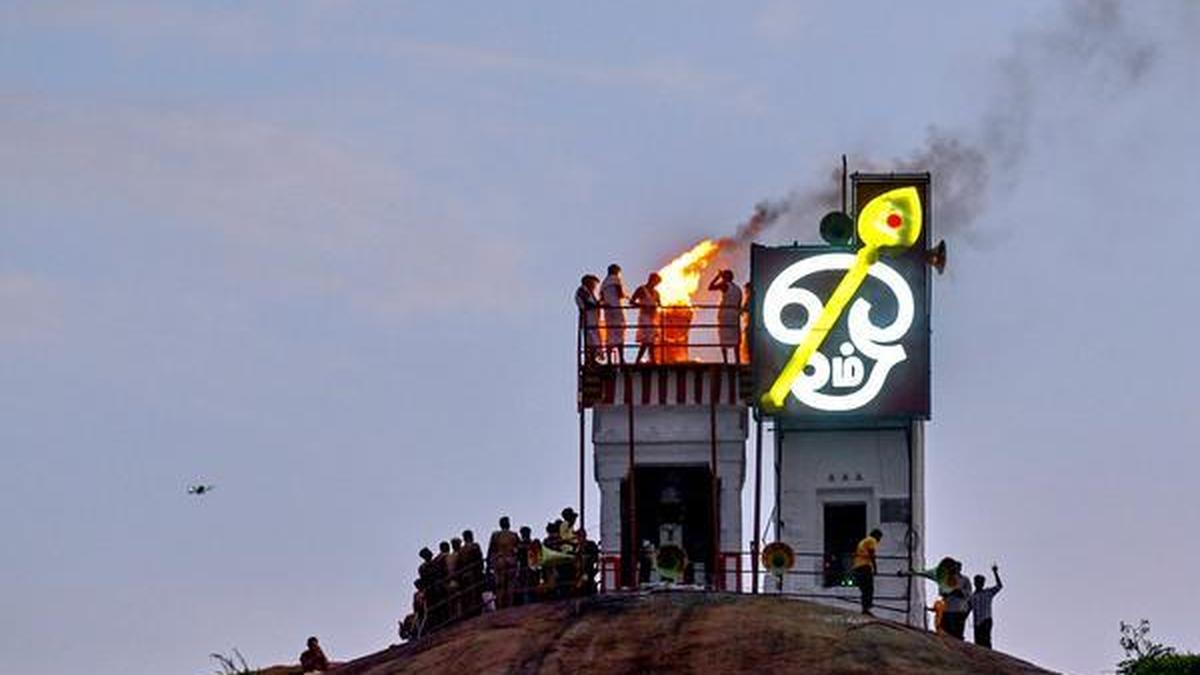
The Karthigai Deepam festival saw massive celebrations at Tiruvannamalai's Arunachaleswarar Temple. Meanwhile, a legal and traditional dispute emerged in Thirupparankundram over the location of the ritual flame.
The Significance of Karthigai Deepam in Tamil Nadu
The Karthigai Deepam festival stands as one of the most revered cultural and religious milestones in Tamil Nadu, symbolizing the triumph of light over darkness. On Tuesday, the town of Tiruvannamalai witnessed a massive influx of devotees who gathered at the historic Arunachaleswarar Temple to participate in the culmination of this sacred event. The atmosphere was charged with fervor as thousands chanted ‘Arunachaleshwara,’ marking the climax of a festival that began on November 15 with the traditional hoisting of the flag.
Rituals and Administrative Oversight in Tiruvannamalai
The festival's proceedings in Tiruvannamalai were meticulously managed, beginning with the ‘Bharani Deepam’ at 4 a.m. and concluding with the lighting of the ‘Maha Deepam’ atop the Arunachala Hill at 6 p.m. The presence of high-ranking officials, including Minister for Hindu Religious and Charitable Endowments S. Ramesh and District Collector Vandhana Garg, highlights the state government’s active role in ensuring the logistical success of such large-scale religious gatherings. This event serves as a testament to the enduring nature of traditional practices in the region.
The Legal and Traditional Standoff at Thirupparankundram
In contrast to the seamless celebrations in Tiruvannamalai, the Karthigai Deepam in Thirupparankundram became the center of a complex legal and cultural controversy. The temple administration, citing adherence to ‘Agama’ rules, sought to preserve the sanctity of traditional ritual spots. This led to a direct conflict with a Supreme Court directive, which had authorized a “limited one-time arrangement” to light the lamp at a newly identified location on the hillock.
Judicial Compliance and Political Friction
The situation in Madurai escalated when the lamp was lit only at the traditional spot, defying the Supreme Court’s order despite an undertaking by Madurai Collector Nishant Krishna to comply. This failure triggered significant protests from the BJP and various Hindu outfits. Conversely, the decision to prioritize the traditional site was met with support from ruling allies, including the Left parties, VCK, and MDMK, who framed the act as a defense of local religious tradition against external judicial oversight.
Broader Implications for Temple Governance
These events underscore the delicate balance between state administration, judicial mandates, and the rigid requirements of ‘Agama’ shastras that govern Hindu temples. When legal directives clash with deeply held religious customs, it often results in administrative gridlock and political mobilization. The events of this Tuesday reflect a broader trend where temple traditions in Tamil Nadu are increasingly becoming flashpoints for identity politics and jurisdictional debates.
Future Trends in Religious Observances
Looking forward, the tensions observed in Thirupparankundram suggest that future religious festivals may face increased scrutiny regarding site selection and traditional protocols. As the state continues to manage the intersection of secular law and religious practice, the role of local administration in navigating these competing interests will remain critical. Ensuring that festivals remain peaceful while respecting the legal framework will require a more nuanced dialogue between the judiciary, temple authorities, and the devotees who drive these cultural phenomena.
Multiple Citing Sources
Verification Required?