Tamil Nadu runs Supreme Court contempt risk: Lamp lit, but not at pillar on Madurai hill
Source Entity
Arun Janardhanan, Apurva Vishwanath
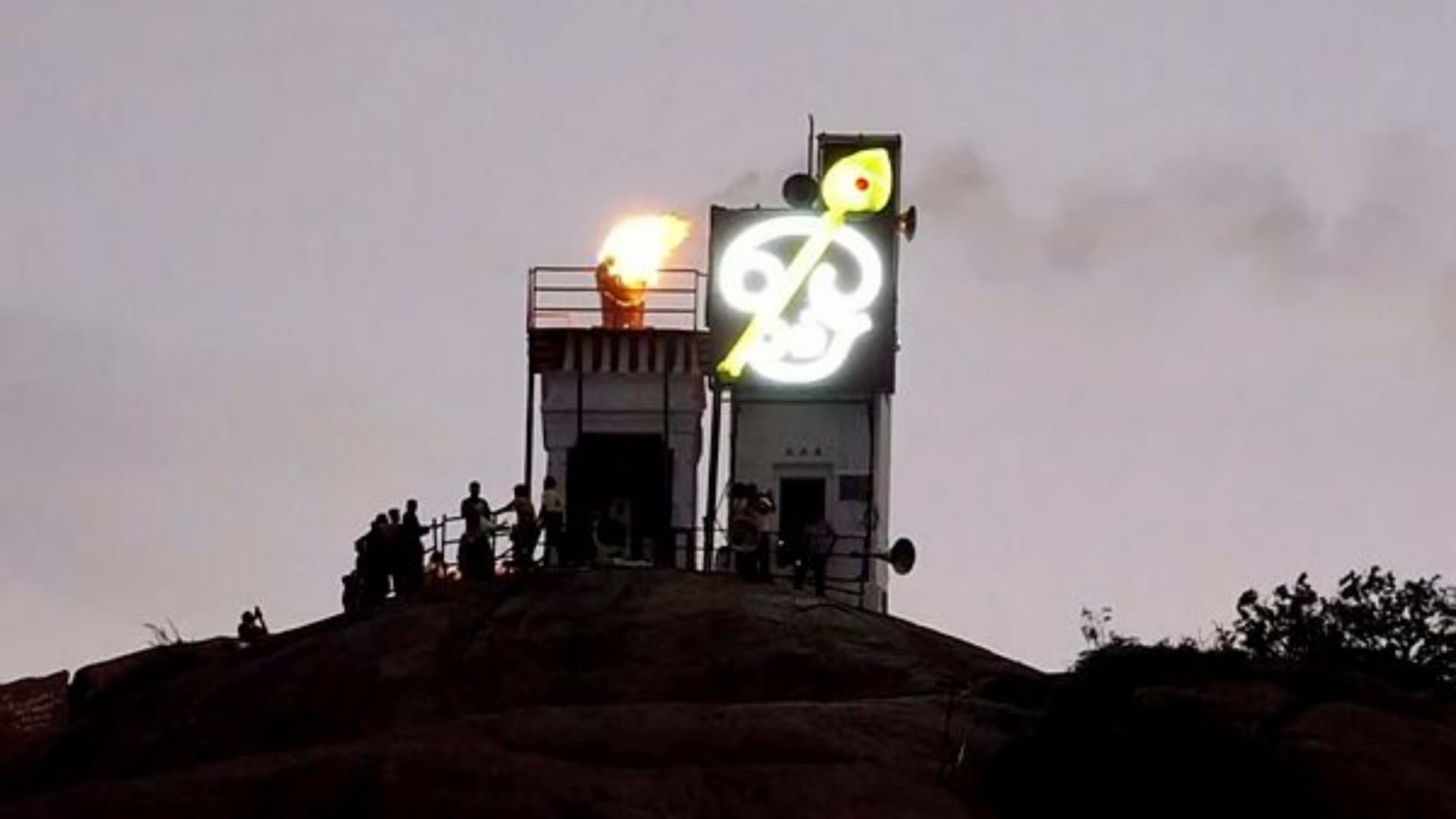
The Karthigai Deepam festival saw massive celebrations at Tiruvannamalai's Arunachaleswarar Temple, while a legal and traditional dispute emerged over the lighting location at Thirupparankundram. Authorities face intense scrutiny as they navigate Supreme Court directives against long-standing local religious customs.
The Significance of Karthigai Deepam: Tradition vs. Legal Mandates
The Karthigai Deepam festival, a profound spiritual event in Tamil Nadu, recently drew thousands of devotees to the Arunachaleswarar Temple in Tiruvannamalai. The atmosphere was charged with devotion as the 'Maha Deepam' was lit atop the Arunachala Hill, marking the culmination of days of ritualistic observances that began on November 15. The presence of state officials, including Minister S. Ramesh and District Collector Vandhana Garg, underscored the event's cultural and administrative importance.
A Tale of Two Traditions
While the celebrations in Tiruvannamalai proceeded with fervor, the situation in Thirupparankundram presented a starkly different narrative. A significant controversy erupted concerning the specific location for lighting the ceremonial lamp. The temple administration maintained that their rituals are strictly governed by 'Agama' rules, which dictate the sanctity of traditional spaces, setting the stage for a clash between institutional legal orders and established religious practices.
The Legal and Political Quagmire
At the heart of the Thirupparankundram dispute lies a conflict between a Supreme Court directive and local tradition. The Court had previously authorized a 'limited one-time arrangement' to allow the lighting of the lamp at a newly identified 'deepathoon' on the hillock. However, the decision to light the lamp only at the traditional spot sparked intense political fallout. Madurai Collector Nishant Krishna faced significant pressure, having previously undertaken to comply with the Supreme Court's orders, only to see that commitment challenged by the eventual decision to favor traditional placement.
Political Polarization and Public Reaction
The divergence in execution led to a volatile reaction on the ground. Protests erupted at the foothills of the Thirupparankundram site, spearheaded by the BJP and various Hindu outfits who viewed the deviation from the Court's order as a failure of administrative duty. Conversely, the ruling TVK’s allies, including the Left parties, the VCK, and the MDMK, supported the government's choice to prioritize traditional protocols, highlighting the deep political fissures that religious governance can ignite in the state.
Future Implications for Temple Governance
This event highlights an ongoing tension in Indian administrative law: the delicate balance between secular judicial oversight and the autonomy of religious institutions governed by ancient 'Agama' texts. As administrative bodies like the Hindu Religious and Charitable Endowments department continue to mediate these events, the likelihood of future litigation remains high. The state's ability to reconcile Supreme Court mandates with the deeply held beliefs of temple communities will remain a critical factor in maintaining social and religious harmony in the region.
Conclusion
The Karthigai Deepam festival serves as a lens through which we can view the broader challenges of contemporary governance in India. While the spiritual essence of the festival continues to unite thousands in devotion, the administrative hurdles encountered in Thirupparankundram signal a growing need for clear, collaborative frameworks that respect both the rule of law and the sanctity of historical religious traditions.
Multiple Citing Sources