In Supreme Court-Appointed Judges' Presence, Deepam Lit On Madurai Hilltop Pillar
Source Entity
NDTV News Search Records Found 1000
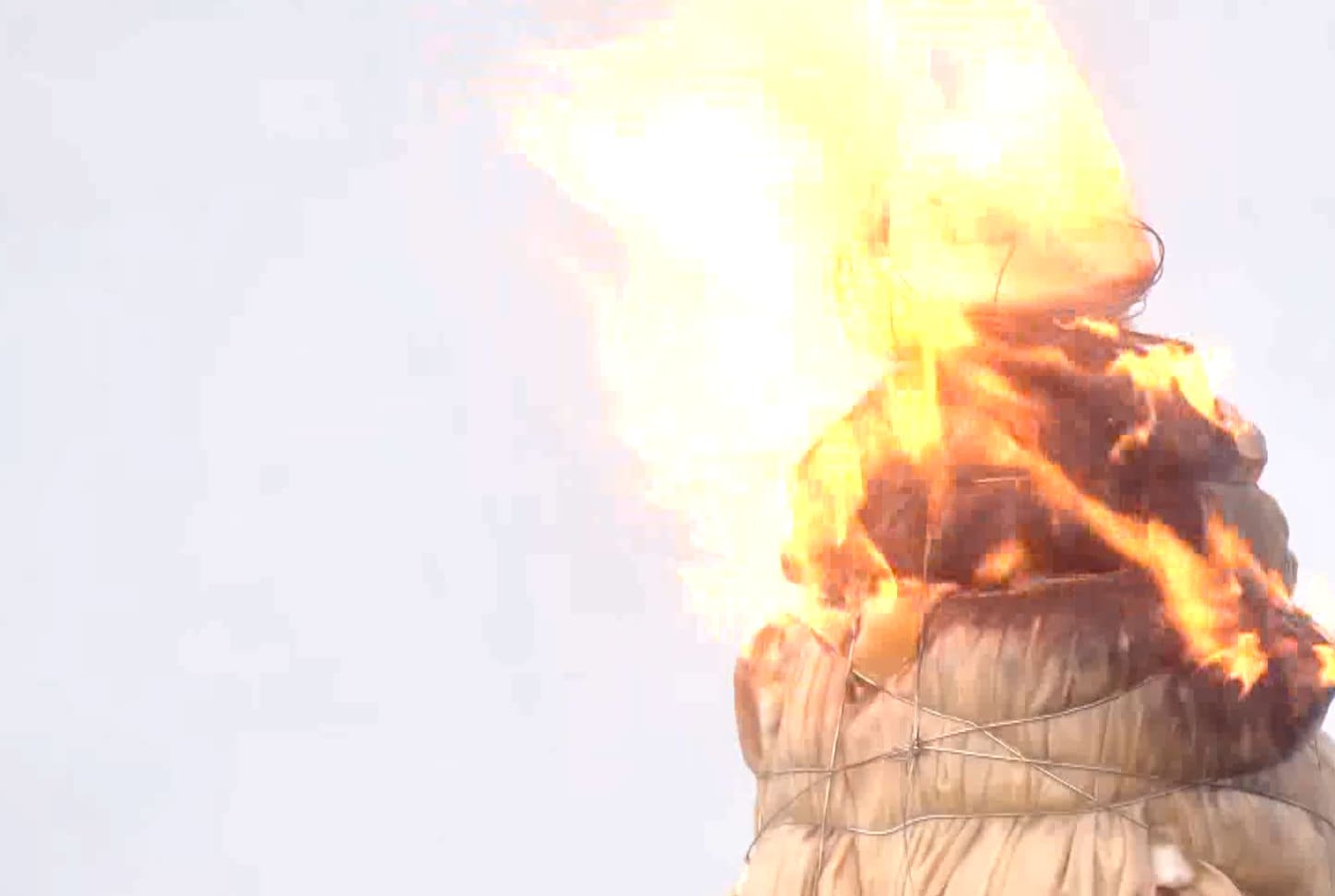
The Karthigai Deepam festival saw massive celebrations at Tiruvannamalai's Arunachaleswarar Temple, while a controversy erupted in Thirupparankundram over the location of the ritual lamp. Authorities faced legal and political pressure regarding adherence to traditional versus court-mandated sites for the ceremony.
The Significance of Karthigai Deepam: A Tale of Two Temple Towns
The Karthigai Deepam festival, a profound celebration of light and spirituality, recently witnessed two distinct manifestations of cultural expression in Tamil Nadu. In the temple town of Tiruvannamalai, the Arunachaleswarar Temple became the epicenter of devotion as thousands of pilgrims gathered to witness the lighting of the 'Maha Deepam' atop the sacred Arunachala Hill. This event, which began with flag hoisting on November 15, serves as a cornerstone of the region's religious identity, drawing massive crowds and high-level government officials, including Minister S. Ramesh and District Collector Vandhana Garg, to oversee the culmination of the day-long rituals.
The Legal and Ritualistic Conflict
Contrasting sharply with the orderly festivities in Tiruvannamalai, the celebration at the Thirupparankundram hillock was marked by intense friction between judicial mandates and traditional practices. The core of the dispute revolved around the location of the ceremonial lamp. While the Supreme Court had issued a 'limited one-time arrangement' to allow lighting at a newly identified 'deepathoon', local administration and temple authorities opted to prioritize 'Agama' rules, ultimately lighting the lamp only at the traditional, historic spot on the hill.
Administrative and Judicial Implications
This deviation from the Supreme Court’s direction placed the Madurai District Collector, Nishant Krishna, in a precarious position. Having previously recorded an undertaking before the Madurai Bench of the Madras High Court to ensure strict compliance with the Supreme Court, the decision to ignore the new site ignited immediate legal and political repercussions. The administration's choice to favor established tradition over modern judicial directives underscores the complex tension between statutory authority and long-standing religious customs in India's temple management.
Political Polarization and Public Sentiment
The incident in Thirupparankundram triggered a polarized response from the political spectrum. BJP members and various Hindu outfits staged massive protests at the foothills, viewing the failure to comply with the Supreme Court as a disregard for legal process. Conversely, the ruling government’s allies—including the Left parties, the VCK, and the MDMK—publicly supported the administration’s decision, framing it as a necessary defense of traditional ritualistic integrity against external interference.
Looking Ahead: The Future of Temple Traditions
The events at both Tiruvannamalai and Thirupparankundram highlight the evolving nature of temple governance in India. As courts increasingly intervene in the logistical aspects of religious festivals, the challenge for administrators lies in balancing the preservation of 'Agama' traditions with the necessity of upholding the rule of law. The aftermath of these celebrations will likely lead to further judicial scrutiny, as the state must now navigate the fallout of ignoring court-mandated arrangements in favor of local religious consensus.
Conclusion
Ultimately, the Karthigai Deepam festival remains a powerful symbol of faith, yet its execution this year has laid bare the underlying friction between modern institutional governance and ancestral practice. While Tiruvannamalai experienced a peaceful and spiritually charged event, the controversy in Thirupparankundram serves as a reminder that the intersection of law, politics, and religion remains a highly volatile and significant domain in contemporary Indian society.
Multiple Citing Sources
Verification Required?