Rival sadhu groups and a question: Who will conduct Kerala’s Kumbh Mela?
Source Entity
Shaju Philip
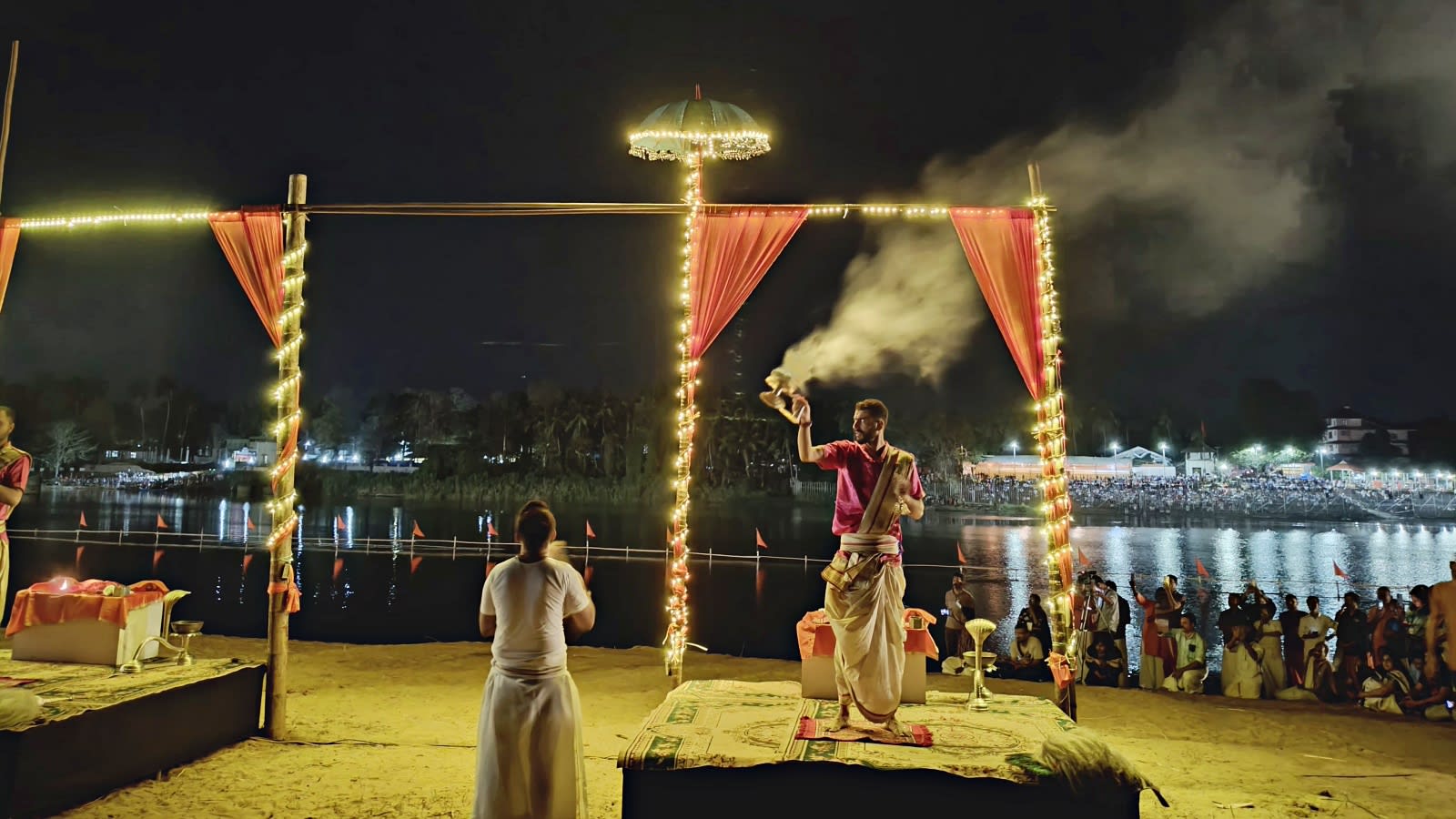
The 2027 Mahamagham in Kerala is facing a leadership dispute between two factions of sannyasins. Rival groups have announced separate event schedules, creating tension over the management of this significant religious festival.
The Mahamagham Dispute: A Clash of Traditions and Authority
The upcoming 2027 Mahamagham in Kerala, an event that has ascended to the status of the 'Kumbh Mela of the South,' is currently mired in a significant administrative and ideological conflict. This centuries-old religious congregation, traditionally held every 12 years on the banks of the Bharathapuzha near the historic Nava Mukunda temple, is now the focus of a face-off between two distinct factions of Hindu sannyasins and their respective support organizations.
Conflicting Visions for the 2027 Observance
The dispute centers on the logistics and leadership of the festival. Swami Anandavan Bharati, representing the Varanasi-based Shri Panch Dashnam Juna Akhada, has declared plans for a 51-day Mahamagham to be held at Thirunavaya in Malappuram, commencing on January 15. Conversely, a coalition of monks associated with the Kerala Margadarshak Mandal has proposed a separate 28-day observance. This second faction has garnered high-profile support, naming spiritual leader Amritanandamayi as patron and renowned engineer E. Sreedharan—famously known as the 'Metro Man'—as the chairperson of their organizing committee.
Historical Context and Cultural Significance
Historically, the Mahamagham is not merely a local gathering; it is a profound cultural milestone that reflects the deep-rooted spiritual heritage of Kerala. By drawing comparisons to the Kumbh Mela, the event has gained national visibility, significantly increasing the stakes for those involved in its oversight. The transition of the Mahamagham from a regional tradition to a major national-level congregation has necessitated complex organizational structures, which appears to be the catalyst for the current friction regarding who possesses the legitimate authority to conduct the rites.
Broader Implications of the Factional Divide
The existence of two competing committees suggests a deeper divide concerning the management of religious institutions and the influence of national versus local organizations. The Juna Akhada’s involvement represents an external, pan-Indian religious authority, while the Kerala Margadarshak Mandal group emphasizes local leadership and state-based spiritual icons. This tension highlights a broader debate in contemporary India regarding the standardization of religious festivals versus the preservation of regional nuances.
Future Trends and Potential Resolution
As the 2027 date approaches, the potential for logistical confusion and social friction remains high. If these two groups fail to reach a consensus, the integrity of the Mahamagham—an event historically defined by its unity and collective participation—could be compromised. Future trends suggest that unless a mediation process is initiated, the public may be forced to choose between competing versions of the event, which could dilute the cultural impact of this historic tradition. The involvement of civil society leaders like E. Sreedharan suggests an attempt to bring professional governance to the event, yet the core theological and administrative dispute between the sannyasin factions remains the primary hurdle for a unified festival.