Quad leaders meet today, signal to China before talks with US, Russia
Source Entity
Shubhajit Roy
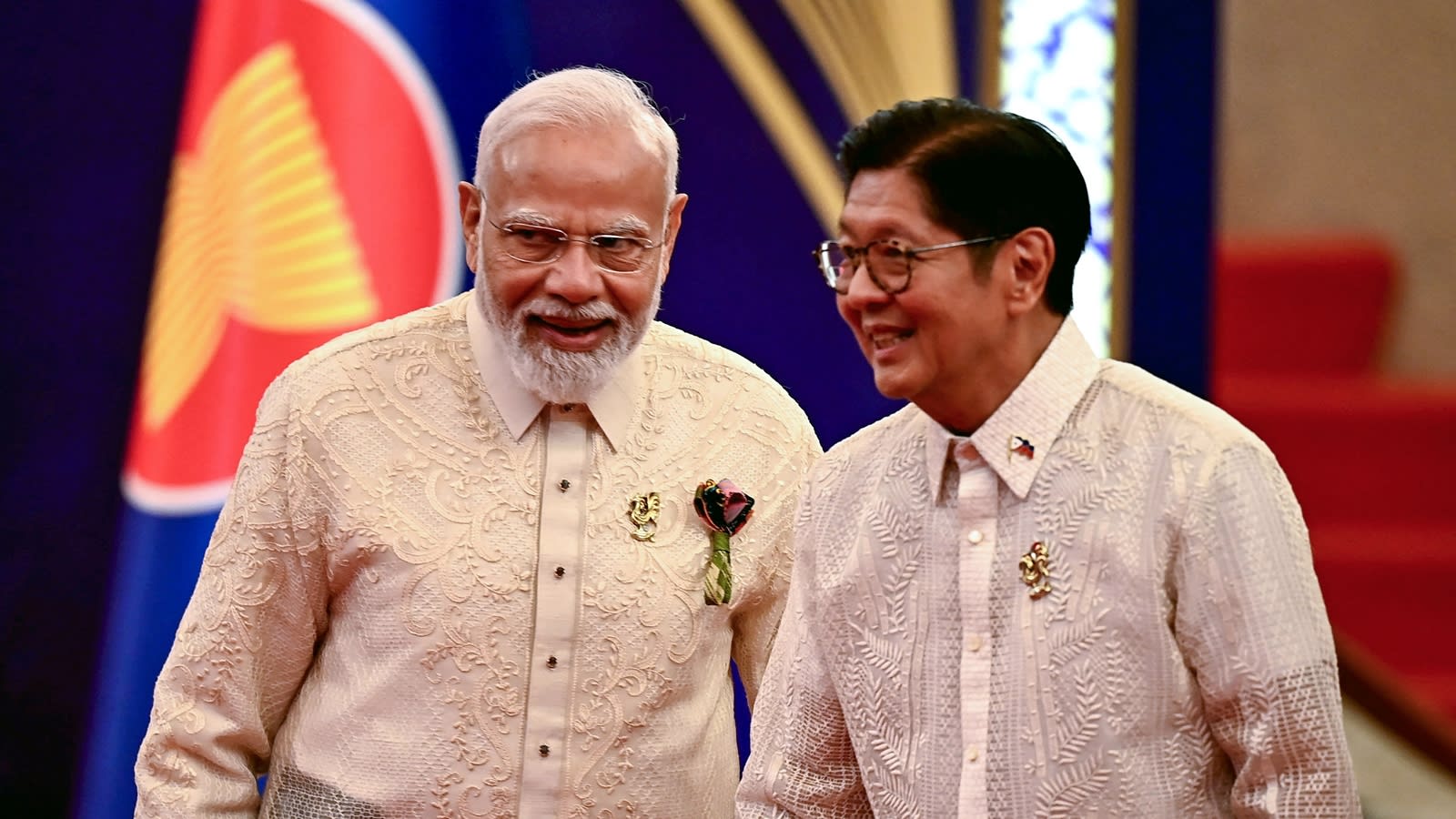
The Quad has reconvened in Manila to address Indo-Pacific security, while a landmark trilateral summit between the leaders of the US, China, and Russia is set for November 19 in Shenzhen. These high-level meetings signal a pivotal shift in global diplomacy as major powers navigate intense geopolitical competition.
A New Era of Geopolitical Realignment
The landscape of international relations is undergoing a profound transformation as two critical diplomatic events converge. In Manila, the Quad—comprising India, Australia, Japan, and the United States—reconvened for the first time in two years. Simultaneously, a historic trilateral summit involving the presidents of China, the US, and Russia has been scheduled for November 19 in Shenzhen, marking an unprecedented effort to bring the world's most influential leaders to the same table.
The Quad and Indo-Pacific Stability
For the Quad, the meeting on the sidelines of the ASEAN Summit serves as a vital recalibration. Since its revival in 2017, the grouping has aimed to act as a countervailing force against regional dominance. The meeting in Manila, attended by PM Narendra Modi, PM Anthony Albanese, PM Sanae Takaichi, and President Donald Trump, explicitly signaled strong opposition to unilateral military action and economic coercion. This reaffirmation is crucial for India, which continues to navigate a complex path of multi-alignment to balance its strategic interests against the backdrop of an evolving global order.
The Shenzhen Trilateral: A Diplomatic Milestone
While the Quad focuses on regional security, the upcoming meeting in Shenzhen represents a broader, global-scale engagement. The confirmation from the Kremlin, the White House, and the Chinese Foreign Ministry underscores the gravity of this event. Hosting this summit during the 33rd APEC Economic Leaders' Meeting provides a platform for Presidents Xi, Trump, and Putin to address systemic challenges that have long strained international relations, particularly regarding the current state of global conflict and strategic rivalry.
Strategic Implications and Global Agendas
Observers expect the trilateral agenda to be heavy with consequence, focusing on critical issues such as nuclear arms regulation and the governance of artificial intelligence. These topics are not merely technical; they represent the core of 21st-century power competition. By bringing together the leaders of these three nuclear-armed states, the summit aims to establish a framework for dialogue that could prevent miscalculation in an era of heightened military tensions.
Navigating Diverse Interests
The contrast between these two diplomatic tracks highlights the complexity of modern diplomacy. The Quad remains a mechanism for like-minded nations to protect the status quo in the Indo-Pacific, while the trilateral meeting in Shenzhen acknowledges the reality that global stability requires direct engagement between the world's most powerful, and often competing, nations. India’s active role in the Quad demonstrates its commitment to a rules-based order, even as it observes the high-stakes diplomacy occurring between the US, China, and Russia.
Future Outlook and Conclusion
As we look toward the conclusion of these summits, the efficacy of these meetings will be judged by their ability to produce tangible de-escalation. The transition from the Quad's regional focus in Manila to the trilateral focus in Shenzhen suggests that world leaders are attempting to manage a multi-polar environment through both institutional partnerships and direct, top-level communication. The coming weeks will be a definitive test of whether these diplomatic channels can mitigate the risks of unilateral action and economic coercion that currently threaten global stability.
Multiple Citing Sources