CPI(M) general secretary M.A. Baby slams Islamic scholar Kanthapuram’s anti-women remarks
Source Entity
India Latest News: Top National Headlines Today & Breaking News | The Hindu
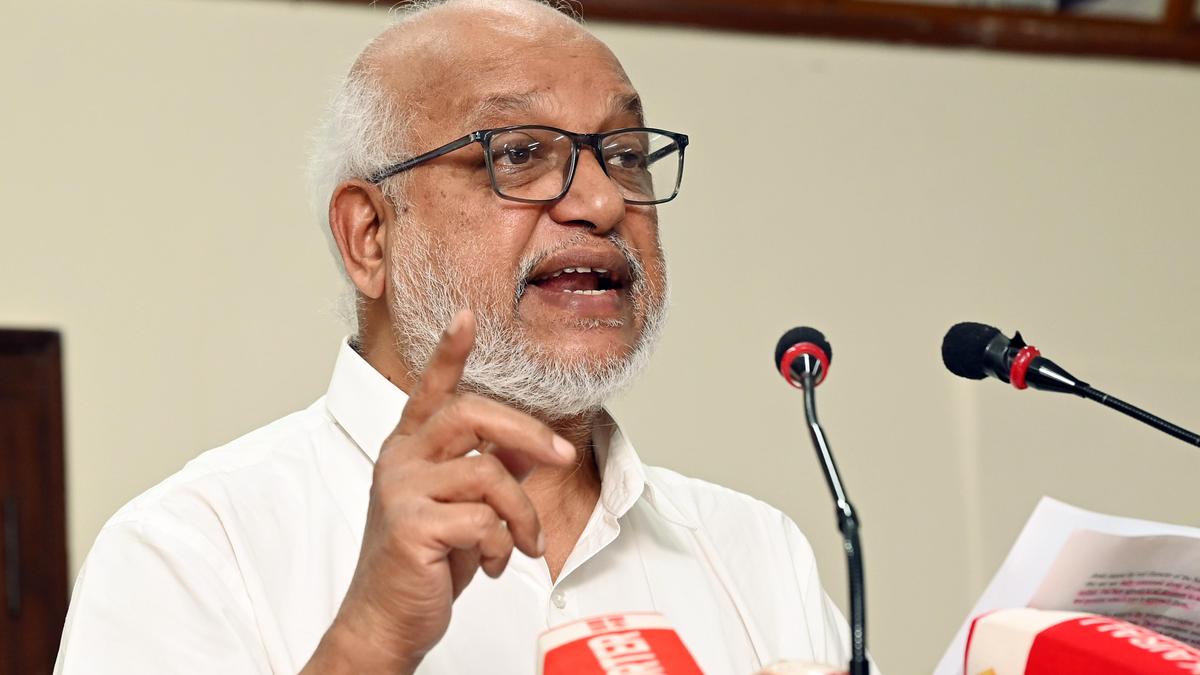
A heated debate has emerged in Kerala following Islamic scholar Kanthapuram A.P. Aboobacker Musliar's controversial remarks on women's public participation. While political leaders like M.A. Baby have condemned the statements as anti-women, major religious factions are rallying to defend the autonomy of religious discourse.
The Intersection of Religious Doctrine and Public Discourse
The recent controversy sparked by Islamic scholar Kanthapuram A.P. Aboobacker Musliar regarding the public presence of women has ignited a complex debate in Kerala. By asserting that women's public appearance would cause "great destruction," Kanthapuram has placed himself at the center of a firestorm involving religious orthodoxy, political intervention, and the evolving standards of gender equality in public life.
Political Backlash and Ideological Comparisons
Political figures, including CPI(M) general secretary M.A. Baby and Kerala Chief Minister V.D. Satheesan, have been vocal in their criticism. M.A. Baby explicitly condemned the remarks, characterizing them as a reflection of a broader reluctance within religious institutions to embrace gender equality. Notably, Baby drew a controversial parallel between Kanthapuram’s rhetoric and the ideological positions of the RSS, effectively framing the debate as a struggle between secular governance and regressive religious mandates.
The Defense of Religious Autonomy
In response to this mounting political pressure, the Sunni Mahallu Federation (SMF)—an affiliate of the Samastha Kerala Jamiyyathul Ulama—has mounted a defense of religious freedom. During a state council meeting in Chemmad, the SMF argued that religious scholars possess the prerogative to issue rulings for their specific followers. They contend that these teachings are not intended to be universal laws imposed on the general public, but rather internal guidance for those who adhere to their specific theological framework.
The Role of Scholarly Preaching
Syed Mohammed Jifri Muthukoya Thangal, leader of the rival Samastha faction, has further complicated the narrative by defending the fundamental right of religious leaders to preach doctrine. By suggesting that scholars should not be disparaged or attacked for explaining religious teachings to their followers, Thangal has shifted the focus from the content of the remarks to the principle of freedom of expression within religious contexts. This stance highlights a rare moment of alignment between competing Sunni factions when faced with what they perceive as external encroachment on religious authority.
Broader Societal Implications
The tension here represents a classic conflict between the preservation of traditional religious identity and the modern secular state's commitment to gender parity. As political leaders continue to pressure religious figures to modernize their views, the latter are doubling down on the distinction between private religious practice and public civil law. This friction suggests that future discourse in Kerala will likely continue to grapple with where the boundary between "religious freedom" and "human rights" truly lies.
Conclusion: A Path Toward Polarization
The ongoing row demonstrates that religious doctrine remains a potent force in shaping public life. As the divide between political secularists and religious traditionalists deepens, the challenge remains in facilitating a dialogue that respects the constitutionally protected rights of religious practice while simultaneously upholding the principles of gender equality in an increasingly interconnected and progressive society.
Multiple Citing Sources
Verification Required?