Video: Free For All At Trinamool's Kolkata Office As Men Flee With Flat Screens
Source Entity
NDTV News Search Records Found 1000
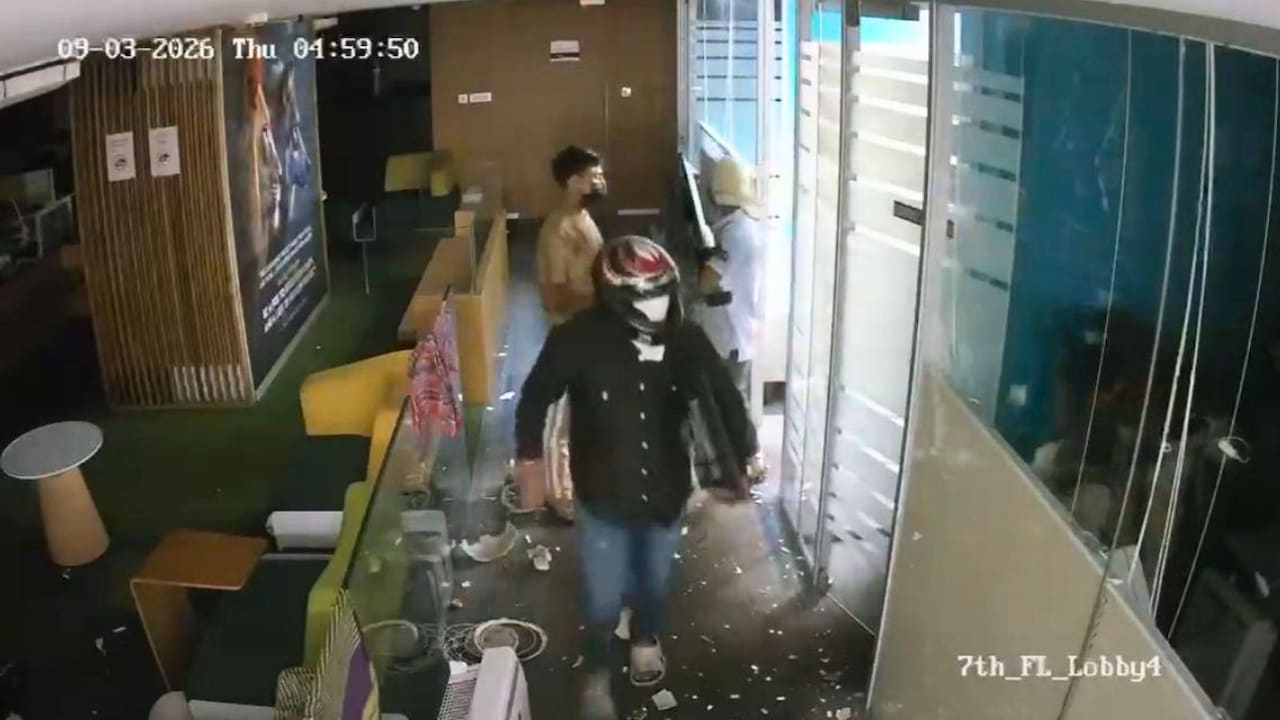
Trinamool Congress MP Abhishek Banerjee's Kolkata office was ransacked by masked men, who looted electronic equipment early Thursday. Banerjee has directly blamed the BJP for the violence, calling for immediate intervention from state and central authorities.
Vandalism at TMC Office: A Deep Dive into Political Tensions
The Incident at Camac Street
In the early hours of Thursday, September 3, 2026, an office belonging to Trinamool Congress (TMC) leader and Member of Parliament, Abhishek Banerjee, located on Camac Street in Kolkata, was subjected to a targeted raid. Reports indicate that at approximately 4:30 a.m., a group of three to four masked individuals breached the premises. CCTV footage released by the TMC leadership captures these intruders systematically removing electronic equipment, including television sets and various gadgets, before fleeing the scene. The aftermath revealed a scene of destruction, with shattered glass and office materials strewn across the floor.
Allegations and Political Accusations
Abhishek Banerjee has unequivocally pointed to the Bharatiya Janata Party (BJP) as the perpetrator behind this act of vandalism. By labeling the incident as an expression of "violence, vandalism and intimidation," Banerjee has framed the attack not merely as a criminal burglary, but as a calculated political maneuver aimed at silencing or intimidating the Opposition. The use of masks and the specific targeting of electronic equipment suggest a level of premeditation that goes beyond opportunistic theft, reinforcing the TMC’s narrative that this was a politically motivated strike.
Demands for Accountability
Following the incident, Banerjee issued a stern public challenge to constitutional and executive authorities. His public inquiry—directed at the West Bengal Governor, the Union Home Minister, and the Prime Minister’s Office—serves as a pressure tactic to compel a response from the central government. By questioning whether these high-ranking officials will "look the other way," Banerjee is attempting to highlight what he perceives as a failure of the state and central administrative machinery to protect the rights and property of political opponents in West Bengal.
The Role of the Judiciary and Public Discourse
Beyond the executive branch, Banerjee has explicitly called upon the Calcutta High Court to take cognizance of the situation. By invoking the judiciary, the TMC is attempting to elevate the incident from a local police matter to a systemic issue regarding the state of democracy in West Bengal. This move suggests a strategic intent to create a legal paper trail that may force a more formal investigation into the patterns of political violence that have long plagued the region's discourse.
Broader Implications for West Bengal Politics
This event underscores the deep-seated polarization characterizing current West Bengal politics. When an office belonging to a high-profile figure like Abhishek Banerjee is targeted, it signals a breakdown in the norms of political competition. The incident provides fodder for both sides of the aisle to argue over the erosion of democratic values. For the TMC, this is evidence of the BJP's "political thuggery," whereas the BJP will likely frame such accusations as desperate political posturing from a party facing internal and external pressure.
Future Trends and Conclusion
As investigations progress, the focus will shift toward the identification of the masked individuals seen in the CCTV footage. The outcome of this case will likely set a precedent for how future political disputes are handled in the state. If the authorities fail to bring the perpetrators to justice, it could embolden further acts of political vandalism. Conversely, a swift resolution could serve to de-escalate tensions. Regardless of the immediate outcome, this incident highlights the volatile nature of West Bengal's political landscape, where the line between criminal activity and partisan warfare remains dangerously thin.
Multiple Citing Sources
Verification Required?