'No complaint, no insult': MP denies nod to prosecute BJP neta for Col Qureshi remarks
Source Entity
ANKUR SIROTHIA
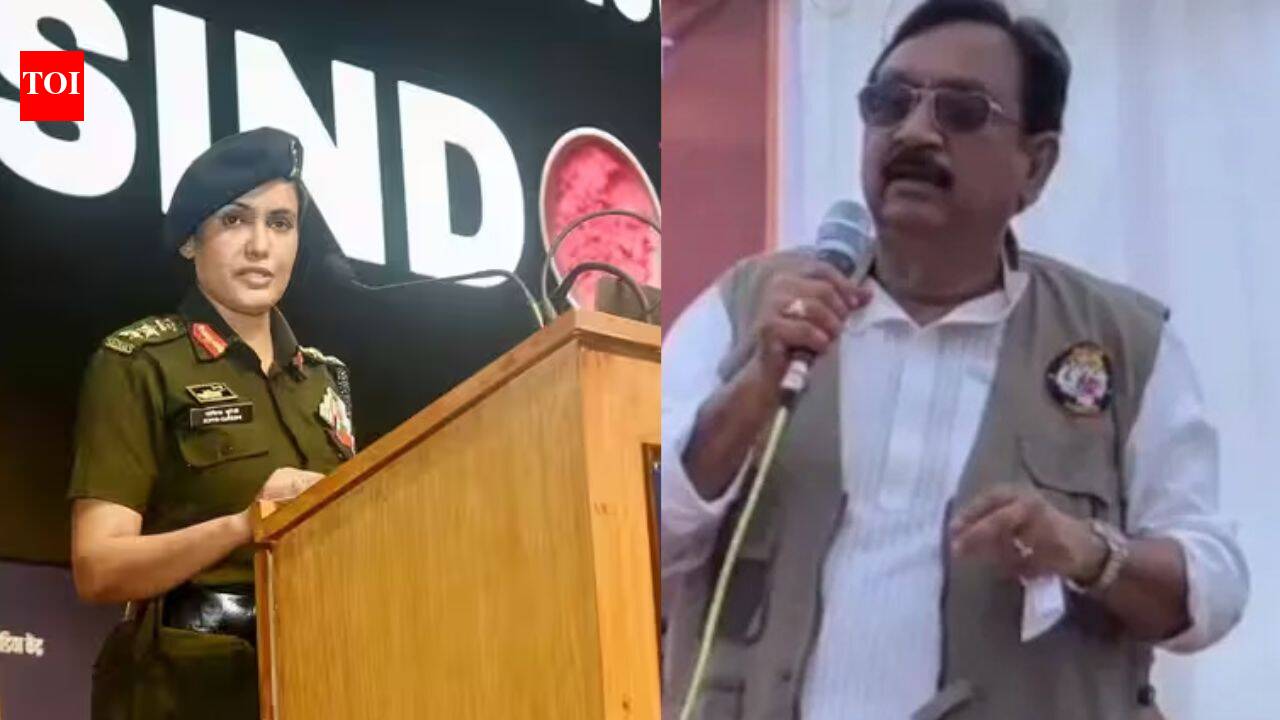
The Madhya Pradesh government has declined to grant prosecution sanction against minister Kunwar Vijay Shah regarding his remarks on Colonel Sofiya Qureshi. Officials cite the lack of formal complaints and the minister's failure to target a specific officer as the basis for their decision.
Legal and Political Implications of the Madhya Pradesh Government's Decision
The Stance on Non-Prosecution
The Madhya Pradesh state cabinet has formally decided against granting sanction for the prosecution of senior minister Kunwar Vijay Shah. This decision follows a period of scrutiny regarding comments made by the minister concerning Army officer Colonel Sofiya Qureshi. The government’s official justification rests on a five-point reply prepared for submission to the Supreme Court, emphasizing that no formal complaints have been lodged against the minister in relation to the incident.
Absence of Targeted Grievance
A central pillar of the state’s defense is the assertion that the minister’s remarks did not identify or target a specific individual. By maintaining that no specific officer was named, the government seeks to categorize the rhetoric as generalized rather than actionable defamation or harassment. This distinction is crucial in legal proceedings where the intent and the target are primary determinants of whether a statement crosses the threshold into criminal liability.
The Role of Procedural Compliance
The government’s decision also highlights the necessity of formal grievances in the legal process. The cabinet noted that because no party has stepped forward to file a complaint, the state lacks the necessary catalyst to initiate prosecution. This argument underscores a strictly procedural approach to ministerial accountability, where the absence of a complainant is viewed as a functional barrier to judicial intervention.
Ministerial Conduct and Public Accountability
The ongoing discourse surrounding Kunwar Vijay Shah reflects broader challenges in balancing political speech with public decorum. While the government maintains that the minister did not fail to apologize—implying a level of administrative resolution—the incident has sparked a debate on the standards expected of public officials. The state’s refusal to prosecute suggests a preference for internal or non-judicial resolution over the criminalization of political statements.
Future Trends in Legal Scrutiny
This case serves as a precedent for how state governments may handle future allegations against high-ranking officials. By framing their decision through the lens of 'no complaint, no insult,' the Madhya Pradesh government is setting a high bar for what constitutes grounds for legal sanction. This approach likely signals a trend where the government will rely heavily on the absence of specific, named victims to shield its members from litigation, potentially reshaping the landscape of political accountability in the state.