Sunni Mahallu Federation urges Kanthapuram critics to stop interfering in religious matters
Source Entity
India Latest News: Top National Headlines Today & Breaking News | The Hindu
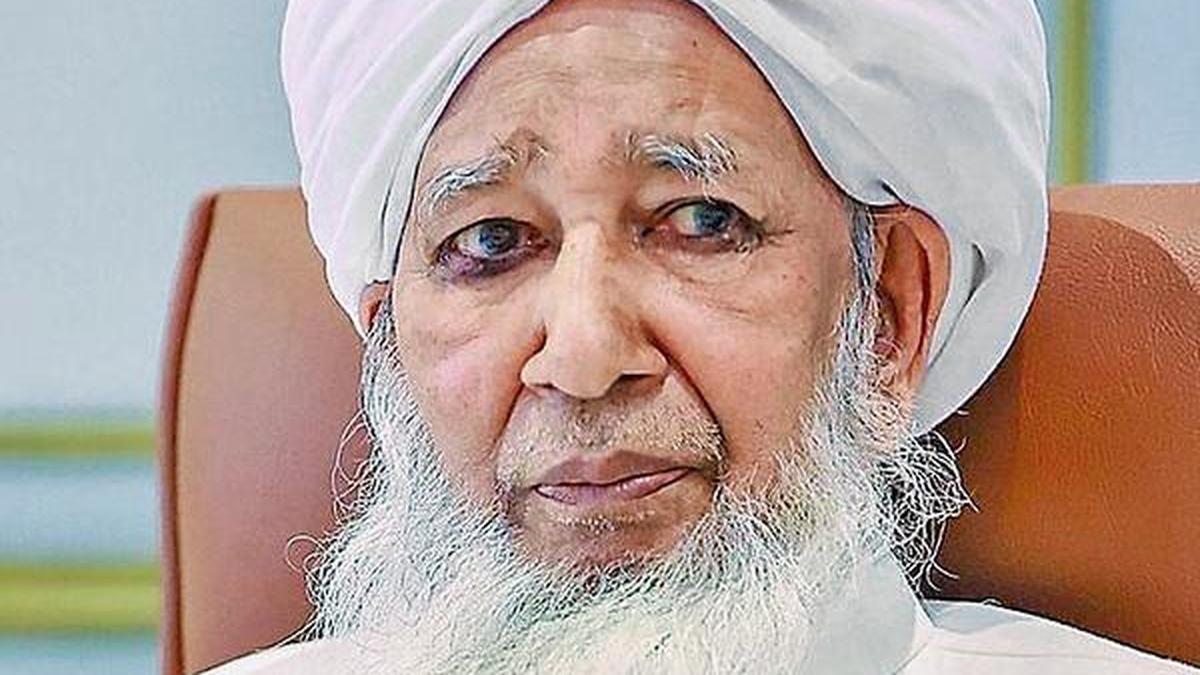
A heated debate has erupted in Kerala following Islamic scholar Kanthapuram A.P. Aboobacker Musliar's remarks against women's public participation. While political leaders like M.A. Baby have condemned the statements as anti-women, major Sunni organizations are defending the scholars' right to interpret religious doctrine.
The Intersection of Religious Autonomy and Gender Equality in Kerala
The public sphere in Kerala has recently become the site of a volatile debate surrounding the role of religious authority in modern society. At the center of this controversy is Islamic scholar Kanthapuram A.P. Aboobacker Musliar, whose recent comments suggesting that women’s public appearance and mixing with men could lead to "great destruction" have ignited a firestorm of criticism across political and social lines.
Political Backlash and Ideological Clashes
Prominent political figures, including CPI(M) leader M.A. Baby and Kerala Chief Minister V.D. Satheesan, have publicly rebuked these sentiments. M.A. Baby explicitly framed the discourse as a broader issue of gender inequality inherent in many religious institutions, even drawing a controversial parallel between Kanthapuram’s views and the ideological stances of the RSS. This political intervention highlights the ongoing tension in secular democratic states where traditional religious mandates frequently collide with constitutional commitments to gender equality.
The Defense of Scholarly Autonomy
In response to the mounting public and political pressure, the Sunni Mahallu Federation (SMF)—an affiliate of the Samastha Kerala Jamiyyathul Ulama—has issued a firm defense of religious autonomy. Their argument rests on the principle that religious scholars hold the mandate to interpret doctrine for their specific community of followers. The SMF asserts that these rulings are not intended to be universal laws, but rather internal guidance, and they have called upon external critics to refrain from interfering in what they characterize as private religious matters.
The Role of Internal Rivalries
Interestingly, the controversy has bridged some of the divides within the Sunni community. Syed Mohammed Jifri Muthukoya Thangal, leader of the rival Samastha faction, provided a nuanced intervention by emphasizing that religious scholars should not be disparaged for explaining their teachings. While he did not explicitly endorse Kanthapuram’s specific remarks, his defense of the 'right to preach' suggests an underlying anxiety among religious leaders that political criticism of their discourse constitutes a threat to the broader freedom of religious expression.
Broader Implications and Future Trends
This incident underscores a deepening divide between those advocating for a liberalized public sphere and those seeking to preserve traditional religious hierarchies. As the debate continues, it is likely to force further dialogue on where the boundary lies between the protection of religious freedom and the state's obligation to ensure gender parity. The resistance from the SMF and the Samastha leadership suggests that any attempt to modernize these social structures from the outside will likely be met with organized pushback, marking a challenging path forward for social reform in the region.
Conclusion
The ongoing row illustrates that the friction between traditional religious doctrine and secular values remains a potent force in contemporary Indian discourse. With political parties and religious bodies firmly entrenched in their respective positions, the debate over women's participation in public life is unlikely to reach a simple resolution, instead serving as a litmus test for how religious communities navigate the pressures of a modernizing, pluralistic society.
Verification Required?