Statues vandalised, vehicles torched after students rally turns violent in Meghalaya
Source Entity
LAIRENLAKPAM WARLI
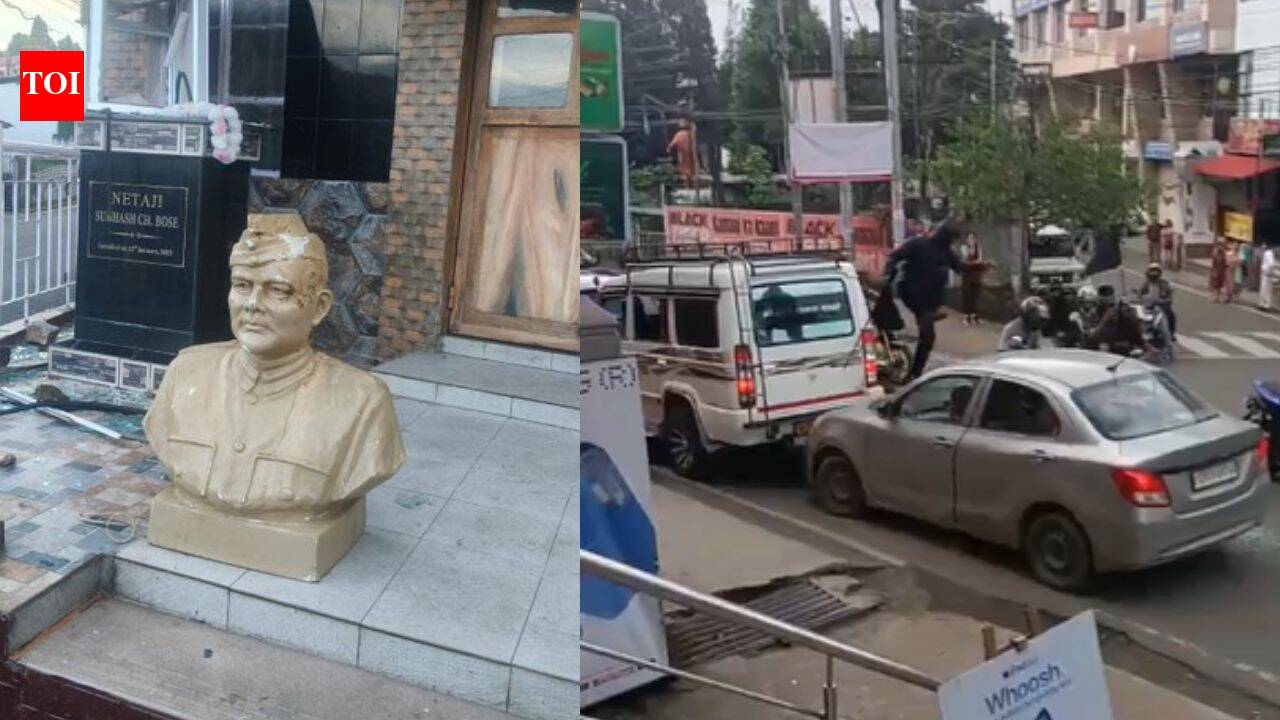
Three leaders of the Khasi Students' Union have been jailed following violent protests in Shillong that resulted in vandalized statues and torched vehicles. The unrest stems from a five-point charter of demands and opposition to a local limestone mining project.
Tensions Escalate in Shillong: KSU Leaders Arrested Following Violence
The Incident: A Rally Turned Violent
The recent unrest in Shillong, Meghalaya, marks a significant escalation in regional tensions. During a motorcycle rally organized by the Khasi Students' Union (KSU), the demonstration devolved into violence, resulting in the destruction of public and cultural property. Reports confirm that statues of national icons, specifically Swami Vivekananda and Netaji Subhas Chandra Bose, were vandalized, and multiple government vehicles were set ablaze, leaving a trail of damage across the city.
Underlying Causes: A Five-Point Charter of Demands
This volatility is rooted in the KSU’s ongoing agitation regarding a five-point charter of demands. While the specific nature of these demands remains a focal point of their activism, the group has utilized symbolic actions, such as black-flag demonstrations, to signal their dissatisfaction. The rally served as a flashpoint for these underlying grievances, which appear to have reached a breaking point, leading to the direct confrontation between the union and local authorities.
Environmental and Economic Disputes
A critical driver of this specific protest was the KSU’s vocal opposition to a public hearing regarding a proposed limestone mining project. The intersection of environmental concerns and local economic control is a recurring theme in Meghalaya’s political landscape. By targeting the hearing process, the KSU has signaled that development projects in the region face significant resistance if they are perceived to bypass local interests or environmental standards.
The Legal and Social Aftermath
In response to the destruction, authorities have taken swift legal action, resulting in the arrest and jailing of three prominent KSU leaders. This move is intended to restore order, but it also risks deepening the divide between the state administration and student-led advocacy groups. The situation has already triggered ripple effects, including a tit-for-tat blockade of cabs along the Assam-Meghalaya border, indicating that the agitation has transcended the immediate confines of Shillong.
Broader Implications for Regional Stability
The desecration of statues of figures as culturally significant as Vivekananda and Bose has added an inflammatory layer to the conflict, drawing condemnation and intensifying the political discourse. As the state government balances the need for law and order with the necessity of addressing the KSU’s grievances, the potential for further instability remains high. Future trends suggest that unless a formal dialogue is established to address the five-point charter and the mining project concerns, the cycle of protests and retaliatory blockades may continue to disrupt regional connectivity and social harmony.
Multiple Citing Sources