How to head into VR without wearing a headset
Source Entity
Hacker News
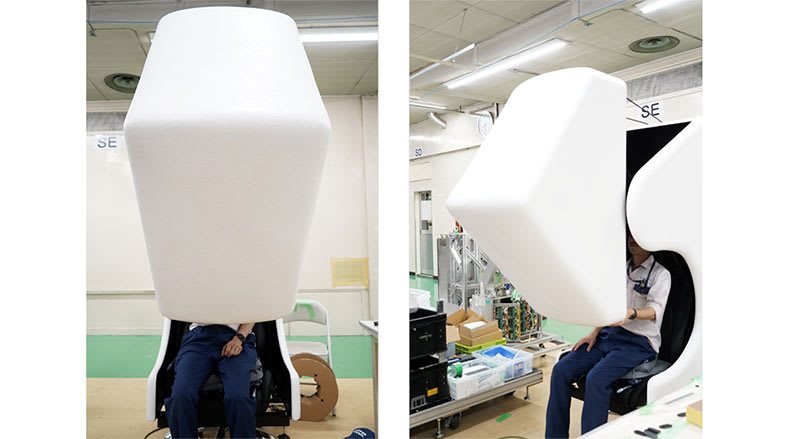
Researchers at Kyushu University have developed a VR system that uses aerial imaging optics integrated into a chair. This innovation allows users to experience immersive virtual environments without the need for cumbersome headsets.
Redefining Immersive Reality: Beyond the Headset
The traditional perception of virtual reality (VR) has long been tethered to the image of a user isolated by bulky, opaque goggles, often disoriented by the physical limitations of their environment. However, a groundbreaking development from Kyushu University, detailed in a paper presented at the SIGGRAPH Emerging Technologies '26 conference on July 19, 2026, signals a significant departure from this paradigm. By rethinking the fundamental architecture of VR displays, researchers have introduced a system that prioritizes user comfort and natural interaction over hardware-heavy immersion.
The Mechanics of Aerial Imaging
At the core of this innovation is a specially designed chair that utilizes advanced aerial imaging optics. Unlike standard headsets that place screens mere millimeters from the eyes, this system projects a stereoscopic virtual scene that appears to exist far beyond the physical confines of the chair itself. By manipulating light fields and optical paths, the team has successfully created a depth-perceived environment that feels expansive, effectively transforming a compact, stationary seat into a gateway for a theater-like visual experience.
Overcoming the 'Goggle' Barrier
One of the most persistent hurdles in VR adoption is the physiological and social friction caused by wearing headsets. Issues such as motion sickness, eye strain, and the complete occlusion of the user's real-world surroundings have hindered widespread integration in professional and domestic settings. The Kyushu University approach addresses these concerns directly by removing the device from the user’s face. This shift not only enhances long-term comfort but also maintains the user's awareness of their physical surroundings, potentially opening doors for collaborative work environments.
Broader Implications for Human-Computer Interaction
This technology suggests a future where VR is an ambient feature of our furniture rather than an intrusive accessory. By integrating high-fidelity visual displays into everyday objects like chairs, the barrier to entry for virtual experiences is significantly lowered. This could revolutionize how we approach remote meetings, digital training, and entertainment, shifting the focus from 'entering' a virtual world to having a virtual world seamlessly integrated into our existing reality.
Future Trends and Scalability
As we look toward the evolution of spatial computing, the work presented at SIGGRAPH '26 highlights a move toward 'invisible' technology. If this aerial imaging method can be scaled or adapted for different form factors, we may see a transition away from wearable displays in favor of localized, high-resolution light-field projections. The success of this research indicates that the next phase of VR will likely be defined by how well it hides its hardware, rather than how powerful its sensors become.
Conclusion
The research from Kyushu University represents a vital pivot in the trajectory of virtual reality. By successfully demonstrating that immersive, stereoscopic experiences can be delivered without the need for headsets, the team has opened new avenues for practical, comfortable, and intuitive digital interactions. As this technology matures, it promises to redefine the user experience, making virtual environments as accessible as sitting in a chair.